

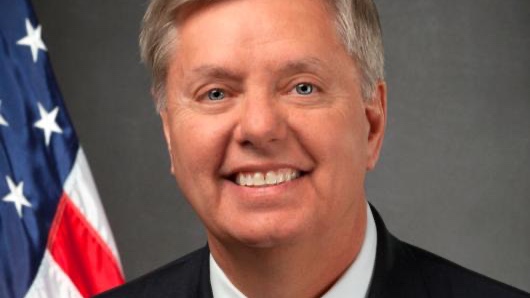
Lindsey Graham spent three decades in Congress perfecting a very specific magic trick: appearing reasonable while voting like a man who believed gay Americans were a zoning violation. He died on July 11, 2026, mid-campaign for a fifth Senate term, and the tributes have been rolling in ever since — the foreign policy hawk, the Trump whisperer, the guy who could golf his way into any administration. What the softer eulogies keep politely stepping around is the ledger. So let's open it.
Because here is the thing about Lindsey Graham that separates him from the average culture-war arsonist: he was never a bomb-thrower on LGBTQ issues. He didn't scream. He didn't rant about grooming on cable news. He delivered his opposition in that syrupy Carolina drawl, usually wrapped in phrases like "without animosity" and "respect for the Court," and then he walked onto the floor and voted no. Every time. For thirty years. On marriage. On adoption. On military service. On employment. On hate crimes. On codifying rights the Supreme Court had already granted.
He was, in other words, the most polite "no" in American politics. And a polite no, delivered across three decades and a dozen landmark bills, does exactly as much damage as a loud one. Arguably more, because nobody ever made him pay for it.
1996: A Freshman Finds His Signature Move
Graham arrived in the House in January 1995, a fresh-faced JAG lawyer from Seneca, South Carolina. It took him barely a year to find the issue that would become his life's most consistent through-line. In 1996, he co-sponsored the Defense of Marriage Act — not merely voted for it, co-sponsored it, put his name on the letterhead — defining marriage in federal law as the union of one man and one woman and inviting states to refuse recognition of same-sex marriages performed anywhere else.
DOMA became law that September. It would spend the next seventeen years denying legally married gay couples over a thousand federal benefits — Social Security survivorship, joint tax filing, immigration sponsorship, the boring machinery of ordinary married life — until the Supreme Court began dismantling it in 2013. Graham defended it the entire way down.
He followed that up in July 1999 by voting for an amendment to prohibit same-sex couples from adopting children in Washington, D.C. Sit with that one for a second. Not marriage. Not benefits. Adoption. Children in the foster system, and couples willing to raise them, and Congressman Graham deciding the better outcome was: no family for you. It remains one of the most nakedly cruel votes on his record, and it never came with an apology, a revision, or even one of his trademark shrugs.
Then, in September 2000, when Congress debated adding sexual orientation to federal hate crimes law — this was two years after Matthew Shepard was beaten, tied to a fence, and left to die in Wyoming — Graham argued the legislation wasn't needed and would "divide Americans." The Americans being beaten to death, presumably, were already divided from their attackers in a fairly meaningful way, but Graham felt the real risk was hurt feelings in the abstract.
This was also, let the record show, the same period in which Graham served as a House impeachment manager against Bill Clinton, prosecuting the president's sexual conduct with the moral fervor of a small-town revival preacher. Other people's private lives: a federal matter demanding the full machinery of the Constitution. Gay people's public rights: not needed, too divisive, next question.
The 2000s: Traditional Marriage Is Under Attack (By People Wanting to Get Married)
Graham ascended to the Senate in 2003, taking the seat of Strom Thurmond — a torch-passing so on-the-nose that a novelist would have cut it. He wasted little time. When the Federal Marriage Amendment came up in May 2006 — an attempt to hard-code a same-sex marriage ban into the actual Constitution of the United States, a document previously amended to end slavery and extend the vote — Graham voted for it and released a statement explaining that "traditional marriage is now under attack."
Under attack. By couples. Wanting to file joint tax returns and visit each other in the hospital. The siege of Vicksburg, this was not.
The amendment failed, as constitutional amendments designed to write a minority out of a founding document tend to do. But it's worth pausing on what Graham was willing to put his vote behind: not a law, which can be repealed, but a permanent constitutional exclusion. That's not caution. That's not federalism. That's trying to weld the door shut.
2010: Battlefield Preparedness, or, The Commandant Made Me Do It
By December 2010, the country had largely made up its mind about "Don't Ask, Don't Tell," the policy that had drummed more than 13,000 service members out of the military for the crime of being honest about who they were. The repeal passed the Senate 65 to 31. Eight Republicans crossed over. Joe Lieberman championed it. The Pentagon's own review said the sky would not fall.
Graham — a colonel in the Air Force Reserve, a man who wore his military credentials the way other people wear cologne — voted no.
His press release that day is a small masterpiece of the genre. He was "very disappointed" the repeal was "jammed through the lame duck Congress." He invoked the Commandant of the Marine Corps and warned that repeal "would affect battlefield preparedness potentially leading to increased risk of casualties."
Increased casualties. From gay people. Serving openly. The gay people who were already serving — already flying the planes, already patching the wounded, already dying in Afghanistan — just now with permission to mention a boyfriend without being fired for it.
Fifteen years later, the battlefield-casualties-via-openness apocalypse has stubbornly failed to materialize, the military integrated open service without incident, and Graham never once stood up to say he'd been wrong. Being Lindsey Graham meant never having to update the file.
2013: Without Animosity™
In November 2013, the Senate passed the Employment Non-Discrimination Act, 64 to 32 — a bill saying, in essence, you can't fire someone for being gay or transgender. Ten Republicans voted yes. This was the softest of softballs: not marriage, not the military, just the radical proposition that your boss shouldn't be able to can you for who you love.
Graham voted no.
That same year, he offered up the quote that best captures his entire approach: "I believe in traditional marriage — between a man and a woman, without animosity. I don't mind if people are able to transfer their property, visit their loved ones in hospitals..."
Without animosity. Truly the load-bearing phrase of the Graham era. He didn't mind if gay people could visit their dying partners in the hospital — how generous, how expansive — he just voted, reliably, against every mechanism that would guarantee it. It's the political equivalent of holding the door open with one hand while dead-bolting it with the other, and smiling the whole time. He also worked to keep protections for same-sex couples out of the 2013 immigration overhaul he was otherwise busy negotiating, because binational gay couples apparently threatened the delicate ecosystem of bipartisan compromise.
2015: The Pragmatist Cometh (Checks Polling First)
Then came Obergefell, and with it the version of Graham the profile writers loved: the pragmatist. He declared himself "a proud defender of traditional marriage" but said he would "respect the Court's decision." He told Kim Davis, the Kentucky clerk refusing to issue licenses, to comply with the law or resign. He told his own party to abandon the push for a constitutional amendment.
Progress? Read his actual reasoning. He explained there was no "chance for a constitutional amendment defining marriage between one man and one woman to get a two-thirds vote," and that pursuing it would "hurt us in 2016."
Not: it's wrong. Not: I've evolved. It can't pass and it polls badly. Graham's celebrated moderation was a math problem, not a moral awakening. He continued backing the First Amendment Defense Act framework — legislation critics accurately described as a license to discriminate with a religious permission slip — which is a funny thing for a man to support right after urging everyone to "move on."
2021–2022: Talking Until He Fell Over
If you want to know where Graham's heart actually sat, skip the Obergefell statement and go to March 2021, when the Equality Act — federal nondiscrimination protections in housing, employment, credit, public accommodations — came before the Senate. Graham vowed to "talk until I fell over" to stop it, claiming it would be "destroying the difference between men and women."
A 65-year-old man promising to filibuster himself unconscious to preserve the right to deny gay people housing. In 2021. Without animosity, of course.
Then, in November 2022, came the cleanest test of his entire career: the Respect for Marriage Act, which repealed his beloved DOMA and required federal recognition of same-sex and interracial marriages already legally performed. This was the "move on" bill. The "respect the Court" bill. The bill that asked nothing except that the government keep honoring marriages that already existed. Twelve Republicans voted yes. It passed 61 to 36.
Graham voted no. Twenty-six years after co-sponsoring DOMA, given the chance to simply let it die with dignity, he threw his body on the casket. Every ounce of that famous pragmatism evaporated the moment it was asked to do something.
The Final Act: Coach Tuberville's Wingman
Graham's last years were spent riding the era's designated culture-war vehicle. In 2025 he co-sponsored Tommy Tuberville's Protection of Women and Girls in Sports Act, and when Democrats blocked it, he raged that "the radical Left still controls Democrat Senators" and warned of the dangers of "biological males" — the septuagenarian statesman, the elder of the Senate, closing out his career punching down at a handful of transgender kids who wanted to run track. From DOMA to this: a perfect thirty-year arc, ending exactly where it began, just with smaller targets.
The Ledger, Closed
For the record, this piece will not traffic in the rumors that trailed Graham his whole career. He denied them; they're unverifiable; and frankly the innuendo always let him off easy — it turned a policy record into a punchline and a psychodrama, when the votes need no backstory. The votes are the story. A man does not need a secret to explain co-sponsoring DOMA, blocking adoptions, opposing DADT repeal, killing ENDA, filibustering the Equality Act, and voting against the Respect for Marriage Act. He just needs to keep doing it, decade after decade, while the consequences land on other people's families.
Graham died at 71, never married, mourned by a president at 3:21 in the morning, and survived by a body of legislative work that told millions of Americans, politely, consistently, and without animosity, that their marriages, their jobs, their service, and their children were negotiable.
The courtly manner was real. So was every single vote. History gets to keep both, but only one of them ever changed anybody's life.