

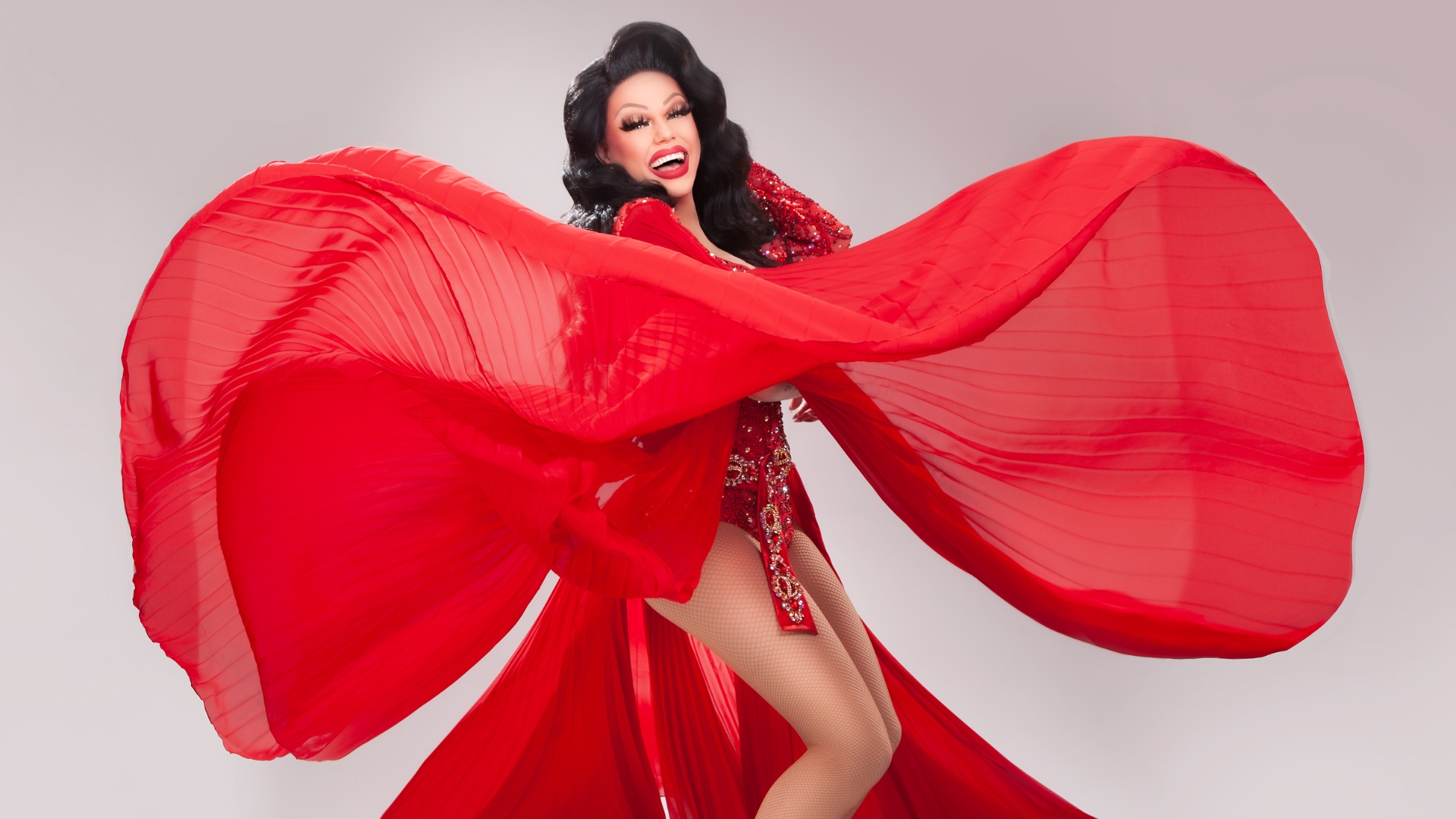
Andrew Ryan has spent a decade producing Las Vegas's most anticipated night out. This year, AFAN's Black & White Party turns 40 — and enters a new chapter under the Center.
The first time Andrew Ryan walked into a Black & White Party, he was not carrying a clipboard. He was in drag.
He'd been invited by his castmates from a show he was performing in, and the group decided to go together. He knew enough about the event's reputation to understand it wasn't the HRC gala and it wasn't the honorarium — the theme ran a little more risqué, the room a little looser, the costumes a lot more committed. So he committed.
"I remember I was wearing a very revealing costume," Ryan says now, more than a decade later. "Looking back at the pictures, I'm glad it was more than a decade ago, because I don't think I have the body for it now."
That was Ryan the attendee. Ryan the producer arrived a few years later, and he arrived at the deep end.
The Aria year
Ryan marked ten years with Aid for AIDS of Nevada in June. This year's Black & White Party is his tenth — and his first, on the production side, happened to be the 30th anniversary edition, held at Aria. It remains the only time in the party's history it has been staged there.
"Because it was the 30th anniversary, they really went all out," he says. "Everything was bigger, everything was better than it had been before." There was a sprawling roster of liquor and food vendors. The Las Vegas Weekly put the party on its cover — the kind of mainstream placement that most LGBTQ+ fundraisers in this town spend years chasing. For a young event producer, watching that level of community support land in real time was thrilling.
It was also, he admits, terrifying.
"It raised the bar for every event that came after. And me getting into it not knowing that I was going to be responsible for a piece of that was exciting, but also really scary — because it's a legacy event that people have really come to know and love in the community."
That's the particular burden of inheriting something that already works. Nobody hands you a Black & White Party and asks you to fix it. They hand it to you and ask you not to break it, then quietly expect you to make it better anyway.
A year to build one night
Ten years later, that anxiety has become a working method.
Ryan describes the annual cycle as a full twelve months — brainstorming, then close collaboration with the small group of people who make the event physically possible, then what he calls a slow build: a pyramid of staff, volunteers and supporters assembled underneath the party until it can hold the weight of a thousand expectations.
The pressure, fittingly, comes from the people having the best time.
"The most feedback I get is usually when I'm at the door at the end of the event and people are, shall I say, stumbling out," he says. They mumble their excitement. Best one ever. Can't wait for next year. "Which sort of sets the expectation that you always have to outdo yourself."
In a decade, he says, there has never been a serious complaint about the party — remarkable for an open-bar event of this scale. What he gets instead are suggestions. Things people would love to see. Ideas they've had since last October.
That's the design problem he's been solving for ten years. The cause doesn't change. HIV doesn't take a year off. So the reinvention has to happen everywhere else — in the theme, the room, the run of show, the reason someone who came last year needs to come again.
"We have to reinvent ways to keep people interested and excited about it," he says. "It takes a lot of time and a lot of collaborative work and a lot of creative thinking to reinvent the wheel every year."
The night the room went quiet
Ask Ryan for the moment that has stayed with him and he doesn't reach for a headliner or a sold-out room. He reaches for a silence.
Two years ago, at the Palms, AFAN marked the organization's own 40th anniversary — an occasion that arrived two years ahead of the party's. The team decided the night needed to do more than raise money. It needed to remind the room why the room existed.
"A lot of people want to go out and have a drink and party," Ryan says. "But when you forget the purpose behind that, it can dilute the energy in the room."
What they built was a video package. It opened with a recorded ballad that transitioned into a live vocal performance, then moved through the global history of HIV and AIDS — imagery Ryan describes as genuinely painful to look at, and honest about what the era actually was. From there it cut to AFAN's own archive: the AIDS Walk on the Las Vegas Strip, the party's migration into larger and larger properties, the themes growing more ambitious year over year.
The timing of that decision matters. Each year, a larger share of the people in that ballroom did not live through the crisis. They came up in an era of PrEP and single-tablet regimens, where an HIV diagnosis is a manageable chronic condition rather than a death sentence — which is a triumph, and also a kind of amnesia. AFAN used its own 40th to pull the room back toward the thing that made it necessary.
"There was a moment I remember very vividly, looking around, where everyone had their eyes glued on this giant screen and had tears in their eyes," Ryan says. "As an event producer, that's a moment I'll never forget. It reminded me of the power we hold to impact people's hearts and minds and inspire them to make change."
It's the same thing he wants from every AFAN production — Black & White, the AIDS Walk, Blue Christmas. After ten years, he says, the DNA of those events is more or less indistinguishable from his own.
What he wants out of them comes in two parts. First, that anyone attending for the first time leaves inspired to make an impact, whatever that means for them: a donation, a volunteer shift, or simply a sharper instinct toward generosity.
Second — and this is the one he repeats — that the people AFAN serves recognize themselves in the room.
"The people we serve are at the event," he says. "It's equally important for them to look around and see they're surrounded by a community that will stand up for them, walk for them, cheer for them, support them, and fill their heart with a sense of hope. The person you're impacting might be someone you'll never meet. But they also might be standing right next to you."
Powered by the Center
This year's party is the first since AFAN and Golden Rainbow came under the umbrella of the LGBTQIA+ Community Center of Southern Nevada — a consolidation of three of the most established organizations in the valley, now operating as one.
Ryan's read from the events side is straightforward: more room to grow, and a bigger audience to grow into.
"These are three beloved organizations in the community, and the feedback has been overwhelmingly positive," he says. "It's all about figuring out ways to make the line from diagnosis to care a very straight and easy line for anyone, regardless of their access."
That line, he argues, has gotten harder to walk over the past decade, not easier. The obstacles between a person and the organizations built to help them have multiplied — in eligibility paperwork, in transportation, in the simple problem of knowing which door to knock on first. A single point of entry, covering general health rather than HIV and AIDS alone, is his answer to that.
"Seeing the availability and access to care streamlined, becoming more of a one-stop shop for all health — I think that's really important for our community, especially in these challenging times," he says. "We're now powered by an organization with wonderful resources and an incredible team who are already out there making a huge difference. I think you'll see very quickly a much bigger impact in the way we're able to serve the community."
What's new: a touch of ruby
Which brings us to the 40th. Ruby is the stone of the fortieth anniversary, and while red is historically reserved for honorees, the dress code is bending to accommodate a color.
Black and white ensembles still rule the night. But guests are now invited to enhance them with a touch of ruby — and Ryan expects the room to take that invitation and run with it. Ruby jewelry. Ruby shoes. Ruby clutches. A great deal of sparkle in a room that has spent four decades in monochrome.
"We've had themes, but we've never expanded with a color," he says.
The bigger swing is that the ruby isn't staying on the guests. This year it's being embodied — by Las Vegas legend Larry Edwards, better known as Hot Chocolate, who will appear as the Ruby itself. Edwards factors into the run of show, anchors a photo op that stays live through the evening, and then leads the crowd out to the official afterparty at Piranha and Gipsy.
Ryan is clear-eyed about why that matters beyond the gag. Even a decade ago, he says, the future of events was already Instagrammability — the vignette, the backdrop, the shot that leaves the room and keeps working all week. A theme is fun. A theme that generates twenty distinct photo opportunities is a marketing budget.
"What's exciting about this year is that you're going to have so many different photo ops that stand alone outside of the theme," he says, "but still wrap in the black and white elements people have come to know and love."
The fiftieth
So what does the 50th look like?
"The goal of anybody working in a nonprofit space is to put yourself out of work," he says. "It would be the ideal situation that you've done all you could do for your community, and your job doesn't need to exist anymore. And that's true of everyone in the nonprofit sector."
Short of that, he wants expanded access to PrEP, and he wants U=U to keep doing what it has already done. The shorthand — Undetectable equals Untransmittable — refers to the now well-established finding that a person on effective treatment with a sustained undetectable viral load cannot transmit HIV sexually. It has reshaped prevention messaging, and, Ryan argues, it has reshaped something harder to measure.
"It's changed the way that people look at HIV and AIDS," he says. "I think we've seen it come so far so quickly."
His asks for the next decade follow from that: access pushed deeper into the communities disproportionately affected, and sustained government support to keep that messaging reaching the people who most need to see it. In a funding environment that has grown considerably less friendly to exactly that kind of outreach, neither is guaranteed.
Which may be the strongest argument for a party that has survived four decades of politics without missing a year.
"People are already planning their outfits for next year, and the people who didn't get to go are having major FOMO," Ryan says. "Regardless of what happens on the politics side of HIV and AIDS, you're always going to see the community rallying behind these events."
Forty years in, that's not nostalgia. It's a business plan.