

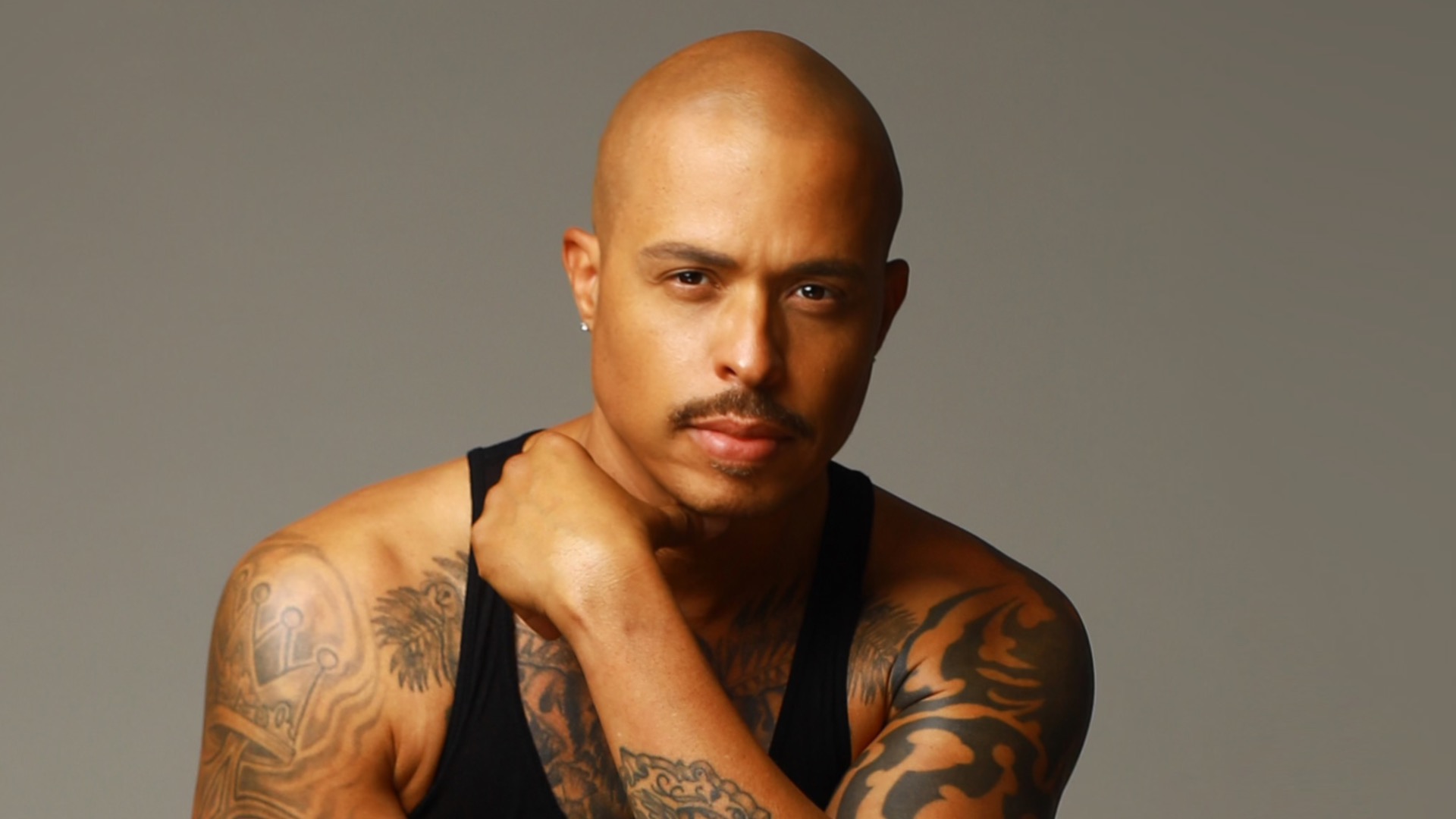
It’s a quiet afternoon in Las Vegas, but for Jamal Sims, the energy is always live. As the choreographer, creative director, and producer behind some of the biggest names in entertainment—from Madonna and Usher to Miley Cyrus and RuPaul—Sims knows how to keep the show going. But it’s his current role shaping the glitz, glam, and groundbreaking spectacle of "RuPaul’s Drag Race Live" at the Flamingo that has him firmly planted in the glittering legacy of Vegas entertainment.
From Living Room Shows to Legends
“I can’t remember a time I wasn’t dancing,” Sims recalls. “My parents would throw parties, and when a song came on, they’d call me out like a little show pony—'Do the splits!'—and I’d do a little dance, then run back into the other room.” It’s the kind of early training only a true performer could thrive on. From living room performances to choreographing for global icons, Sims has turned that instinct into a dazzling career.
Growing up, musical storytelling had a grip on him. "I saw The Wiz when I was eight and it blew my mind," he says, still lit up by the memory. “Diana Ross, Michael Jackson—that was it for me. That VHS? I watched it so many times my mom had to hide it.” He was equally obsessed with Grease, and by high school, was choreographing Bobby Brown-style routines with his friends for talent shows. Before long, he joined a boy band, scored a record deal, and seemed poised for pop stardom.
"The deal fell through," Sims admits, "but it turned out to be a blessing. I went back to what I knew I could do—and that was dance. My first professional gig? Michael Jackson. The second? Dancing for RuPaul."
That second job sparked a creative friendship that would span decades and ultimately birth one of the Strip’s most magnetic, high-camp stage extravaganzas: RuPaul’s Drag Race Live.
The Birth of Drag Race Live
The idea for a Vegas adaptation of the Emmy-winning TV phenomenon had been simmering long before Sims got the call. “Ru had always wanted to do it,” Sims says, “but when they called me in, it was like, ‘We want this to open in Vegas in two months.’”
Cue panic. Or at least controlled chaos.
“I had all these big ideas—fountains, waterfalls, you name it—but Ru reminded me: Why reinvent the wheel? Just bring the show to life. That was the ‘aha’ moment. We didn’t need to overcomplicate it. We needed to make people feel like they were inside the show.”
And they did—fast. With only six to eight weeks of production time, Sims and his team transformed the Flamingo Showroom into a drag mecca. But tight timelines didn’t faze him. “The queens are built for this,” he laughs. “They know how to work under pressure. They’re used to making magic happen overnight.”
The Moving Parts of Drag Spectacle
Behind the sequins and stiletto kicks is a meticulously choreographed machine. "People see the show and think it's effortless," Sims says, "but putting a new number together? It’s everything."
From selecting and mixing songs, to coordinating video content for the massive LED walls, syncing choreography, programming lighting, managing dancers, costumes, tech cues—it's an endless puzzle.
And then there’s the cast.
With guest queens rotating in and out, and swing queens ready to fill in, Sims leans on a tight production team to keep things smooth. "We bring new queens in about two weeks early," he explains. "They watch the show, rehearse, get the feel. Swings have set tracks they know in advance. It’s all about prep and communication."
Thanks to Sims’ background, both in dance and technical theater, he's fluent in the language of staging a Vegas-level spectacle. And it shows. From the lighting effects to aerial work, the show is a feast for the senses—without ever losing its signature Drag Race sass.
Despite being the mastermind behind the Strip’s top drag production, Sims doesn’t stay put for long. “I’m usually in Vegas three or four times a year,” he says. “I’ll pop in for new queen rotations, or sometimes unannounced just to keep everyone sharp. Ru does that too. She’ll show up out of nowhere, and suddenly everyone’s like, ‘Oh damn, she’s here!’”
The rest of Sims’ time is spent filming RuPaul’s Drag Race—currently in its 18th season—or developing other projects, including a new film.
The Road Ahead
Even as Sims dreams of Broadway, the Vegas empire continues to expand. “I’ve done Rent, The Lion King, Encanto—all at the Hollywood Bowl—but I haven’t done a tttfull Broadway production yet,” he says. “That’s the next goal. To choreograph and direct something from the ground up on the Great White Way.”
Representation, Legacy, and the Next Generation
For Sims, being a queer Black creative at the helm of a high-profile Las Vegas production isn’t just an achievement—it’s personal.
"If someone had told 18-year-old me that I’d be directing a drag show on the Vegas Strip with RuPaul? I wouldn’t have believed them. But now, young people can look at me and say, ‘I can do that.’ That’s everything."
Representation matters. Sims knows that visibility—seeing someone who looks like you, lives like you, succeeds like you—is the spark that ignites possibility. “You just need one example. That one idea that says, ‘This is possible.’”
And he hopes Drag Race Live offers that. For kids dreaming in front of a mirror. For dancers grinding in rehearsal studios. For queens in small towns gluing on lashes in the dark. The show isn’t just a production—it’s a promise.
“Study the queens,” he urges. “The new ones, the legends. Listen to their stories. Learn how they got there. Take what speaks to you, and build your own path.”
A Cultural Powerhouse
While Drag Race Live is about performance and polish, it’s also something more: a cultural beacon that’s fueled an entire economy.
People think it’s just the queens who benefit, but it’s not. There’s lighting, costuming, PR, graphic design, sound engineers, venue staff, press, merch designers—Drag Race has built industries.
In Las Vegas, the ripple effects are even more visible. "The queens live here now. They brunch, they perform at clubs, they show up at fundraisers and community events. They’re not just visiting—they’re part of the local culture."
That presence matters. It makes Vegas feel like home, and it turns drag into more than a show—it becomes a way of life, an anchor for belonging, and a powerful employment engine.
The Art of Working with Icons
Over the years, Sims has worked with a dazzling roster of celebrities. Madonna, JLo, Usher, Miley Cyrus, Snoop Dogg—the list reads like a music industry Hall of Fame. But he’s quick to point out: no two stars are the same.
“Some want to be involved in every step of the creative. Some just want to show up, learn the moves, and perform,” he says. “Same with the queens. Some have a vision and want help realizing it. Others are like, ‘Tell me what to do.’ You have to adapt. That’s how you survive in this business.”
It’s that empathy and flexibility that has made Sims not just a choreographer, but a true collaborator—and why so many performers trust him to help bring their art to life.
The Glitter Keeps Growing
“Drag’s not going anywhere. It’s pop culture now. Rock stars, but in wigs and heels.”
And he’s not wrong. Every new queen, every rotating cast, every thunderous curtain call proves it: drag is not a trend. It’s an institution. And thanks to visionaries like Jamal Sims, the house it built has room for everyone.
As Sims puts it, “You’re one idea away from being on that stage at the Flamingo in all your beaded glory.”
Booked. Blessed. And still just getting started.