

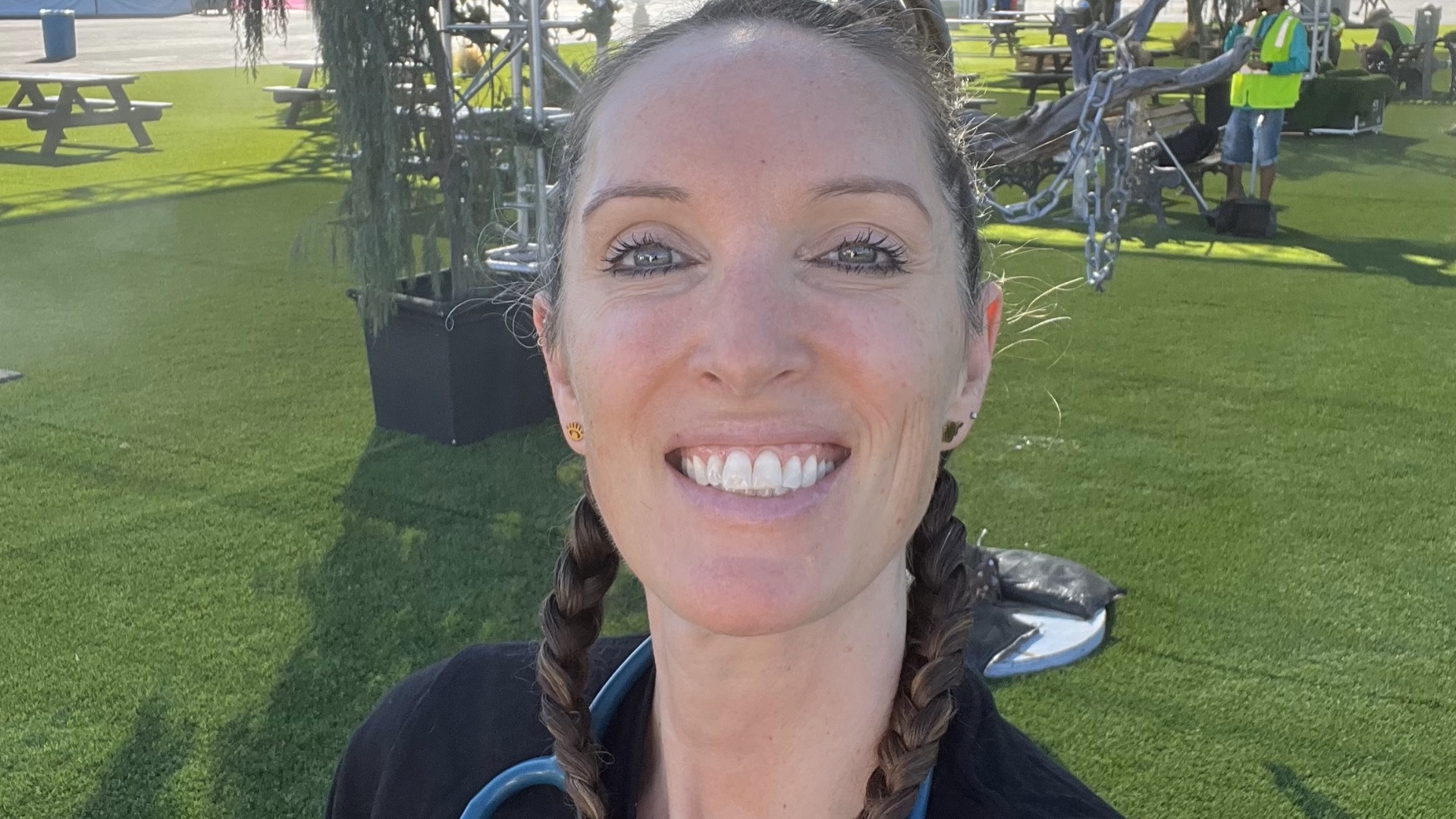
“I’ve always been into health,” says nurse practitioner Emily Browand, reflecting on more than twenty years in clinical practice. “I knew that I wanted to take care of people. I also knew that the marginalized, the underserved communities were where the biggest need is—and that’s been my focus my whole career path.” For Browand, who practices at The LGBTQ+ Center of Southern Nevada’s new Gavin J. Goorjian Community Health Center, the journey into LGBTQ+ and HIV care is personal as much as professional. Growing up in the 1980s, her best friend identified as transgender, and the two of them encountered a healthcare world that was “very challenging, if not impossible altogether” to navigate. “I really had a passion for helping others who couldn’t help themselves,” she says. The memory of doors closed and questions deflected became a promise: to build the kind of clinic where people are welcomed—fully and immediately—for who they are.
Why a Dedicated Clinic Matters in 2025
In an era when more clinicians are learning to ask pronouns and discuss sexual health, Browand believes a dedicated center still makes a profound difference. “There are doctors all over who will know what to say,” she acknowledges. “But they’re serving a whole other population as well.” Here, visibility is the point and the promise. “What’s really important is having a space where we say this is who we primarily serve. We are visible, so people know they don’t have to fear being misgendered or deadnamed,” she explains. The experience begins at the door: bright colors, rainbows, and staff trained to welcome, not gatekeep. “This is a deserving community. We are a deserving community.”
Making Complex Terms Human-Sized
From PrEP to U=U to newer tools like doxy-PEP, sexual health vocabulary can feel like a maze. Browand’s approach is disarmingly simple: let the patient set the pace. “If we’re really nervous and don’t know anything about sexual health, let’s navigate that together. Baby steps,” she says. If a patient arrives with deeper knowledge, she meets them there and builds. The goal is curiosity without overwhelm: “I encourage and challenge patients to come in with questions. Write them down. Let’s work through them. And if it’s too much for one visit, we table it and pick it up next time.” She’s still surprised by how many people haven’t heard of interventions like doxy-PEP even after several years. “That tells me the education gap is real—and fixable.”
Intake, Reframed: Start with “How Can I Help You Today?”
Browand’s first visit follows a ritual of respect. “I introduce myself—‘I’m Emily, she/her pronouns. What’s your name, your pronouns? How can I help you today?’” From there, the assessment is comprehensive, but the tone remains patient-driven. She isn’t interested in delivering a script; she’s building a relationship. “The intake for me is, ‘How can I help you today?’” That question, asked earnestly, unlocks candor and choice. It also lays the groundwork for accountability: “I want patients to understand their labs, why we ordered them, how lifestyle affects them. People often tell me no one’s ever explained labs before. That has to change.”
Rebuilding Trust After Harm
For patients burned by other systems, Browand leads with validation. “I never minimize it because that person’s lived experience is their lived experience,” she says. “I recognize that you might not trust this right now—and I value that.” Her promise is modest and powerful: show up, follow up, and keep the focus on what patients need to make informed choices. “Let’s create a relationship and build trust because that trust has been broken in the past.”
The Measurable Power of Affirming Care
If you want proof that affirming care changes outcomes, Browand points to her adolescent patients receiving gender-affirming treatment. She prepares families for the emotional complexity of a “second puberty,” including the possibility of heightened feelings early on. “But truthfully,” she says, “100% of the time when I follow up, anxiety and depression have decreased. They’re finally feeling affirmed. They’re finally seeing the person in the mirror they always knew was there.” The result still gives her chills. “Every single time, it is diminished—which is incredible.”
What She’s Determined to Retire—and What She’s Determined to Raise
Browand wants to bury the myth that LGBTQ+ health belongs in the shadows. “It’s not a secret, dirty lifestyle where you have to go into dark corners to love who you love or be who you are,” she says. On the flip side, she’s laser-focused on raising the bar for care in Las Vegas. “On a small scale, the quality of healthcare in Las Vegas is pretty garbage across the board,” she says candidly. “I strive every day to show up and follow up. I want to improve the quality of each individual’s care, give them options, educate them, and make sure they leave understanding what we did and why.”
Meeting People Where They Are—Every Time
Whether she’s caring for youth, trans and nonbinary folks, people of color, immigrants, sex workers, or people experiencing homelessness, the approach is constant: meet people where they are. “I’m not going to lose a teenager in jargon. I’ll use language and ideas they understand,” she says. “For every patient, from any background, I’m asking, ‘What can I do for you?’ Then we build the plan together.”
As the Gavin J. Goorjian Community Health Center opens its doors and the ribbon falls on October 3, 2025, Browand’s wish for every patient is simple and precise. “Patients should leave our clinic feeling affirmed, validated—like the incredible individuals they are.”