

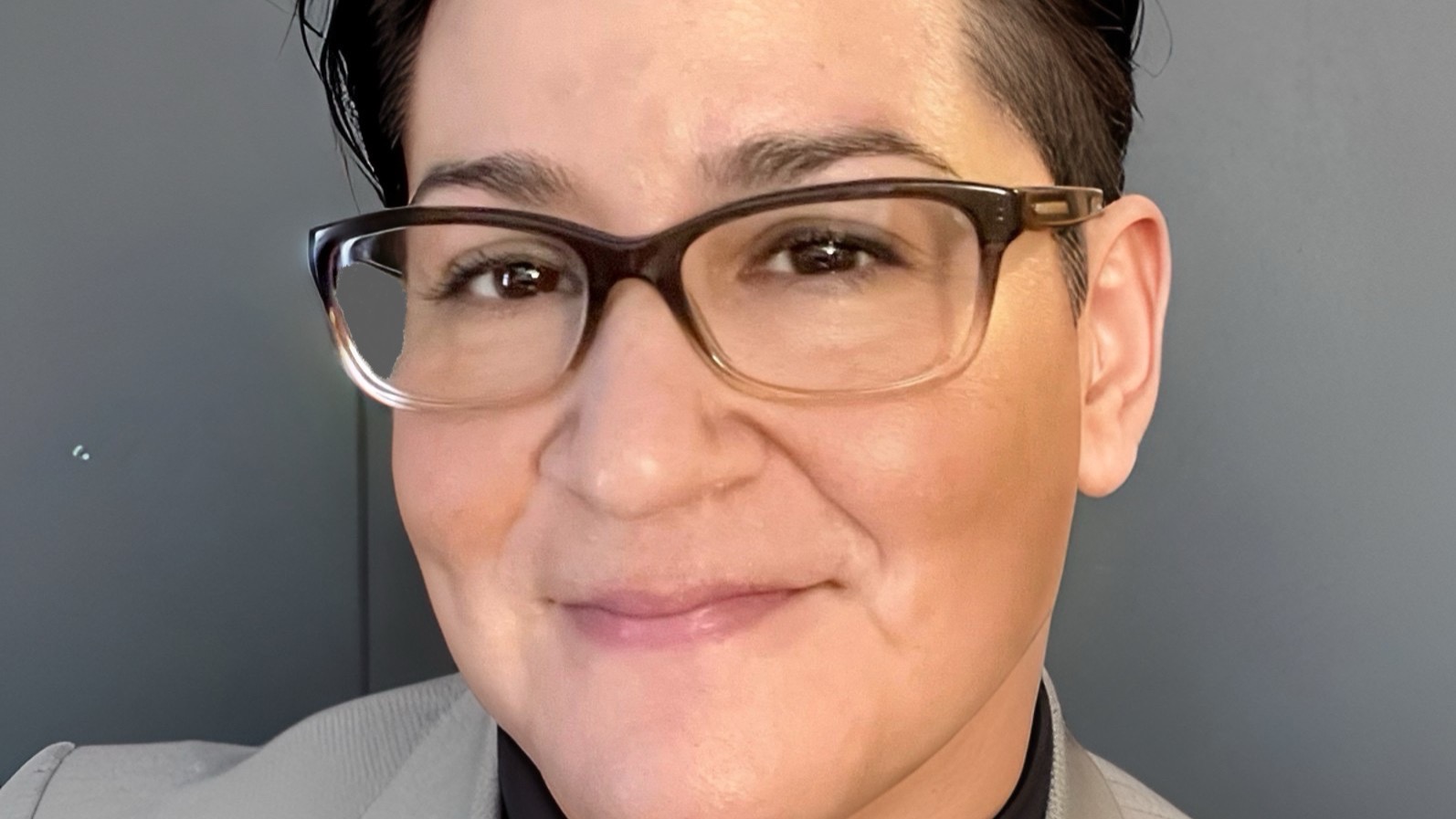
Veronica Arana didn’t begin her career in health care. “Originally I’m from Chicago,” she says. “I moved out here with my family and actually was in food and beverage for a very long time.” Banking followed—along with the promise of big paychecks. “I thought I was gonna be a millionaire… but I found it so unfulfilling. I needed something more, something that really drove my passion.” That “something” turned out to be HIV services, first at a local clinic and now at the Gavin J. Goorjian Community Health Center, where Arana serves as Director of Clinical Operations. “I’m of the community, I’m a lesbian,” she adds. “It was so important for me to be part of my community and serve my community.”
What began as a career shift became a mission grounded in dignity and precision. “I fell in love with folks who are HIV positive,” she says. “Every service we can possibly give to them drives me to do more. Our mission and vision are instilled in me: it’s all about being uniquely yourself.”
What Clinical Operations Looks Like—Human First, Systems Tight
Arana’s job centers on making the entire clinic run smoothly. “Every day when I wake up, I know we’re going to change a life,” she says. “I don’t just talk the talk—I walk the walk.” That shows up in the details patients notice: warm introductions, swift intake, and visible respect for identity. “If someone is going through HRT, we use their pronouns and write them on the bed. If their preferred name is Jason, ‘Jason’ is written there so they feel welcomed.”
Her feedback loop is constant. “I go through surveys to find out how we can better our relationship with patients,” she explains. “Whether something needs to be updated or something new needs to be done, my goal is that people feel safe, seen, and unique when they walk in.”
The Problem Solved on Day One
Asked to describe the new center’s purpose in one sentence, Arana doesn’t hesitate: “We are going to be a one-stop shop for our community.”
Why a Dedicated LGBTQ+ Clinic in 2025
For Arana, the need is urgent and practical. “When folks come into a regular primary care where they don’t have specifics for our community, it’s almost like a specialty,” she says. Misgendering, incorrect pronouns, and a lack of affirmation can erode trust. “When people aren’t acknowledged by who they are, it’s a disservice. Being LGBTQ-friendly—and welcoming everyone—reduces stigma for all.”
The Ideal First Visit: Seamless, Affirming, Complete
Patients can book by phone or through the website. “Paperwork is sent via text—patients click the link, fill it out, and upload their insurance card and ID,” Arana explains. “When they arrive, they’re welcomed, and within five minutes they’re with a medical assistant.” Vitals and a needs-based assessment follow—sexual health, mental health, or both—before the provider spends “20 to 30 minutes” on history, assessment, and plans. “Labs get drawn on site, the pharmacy fills medications the same day, and follow-ups are set in two weeks and again in a month,” she says. The point is to simplify care. “People get lost in the system—referrals fall through. Our hope is they can go downstairs for imaging the same day, and we’ll have results within hours. It’s faster and more efficient.”
What’s Under One Roof
The center’s footprint spans mental health, primary care, and prevention to diagnostics and pharmacy. “Downstairs we’ll have individual and group therapy,” Arana says. “On the first level, a full pharmacy for the community, dental screenings, aesthetics like laser hair removal and cool sculpting, mammogram, DEXA scan, ultrasound, and a large lab so we can do clinical trials—starting with HIV.” Upstairs, primary care covers chronic conditions, reproductive health, and HRT. “It’s a lot of services in one building.”
Language Access That Matches the Valley
Hiring mirrors the community. “We want bilingual staff,” Arana says, but the support doesn’t end there. “We use an iPad with MARTI Translation services—including ASL. I don’t know the exact number of languages, but we haven’t had one person we couldn’t translate for.”
Caring for Caregivers: Boundaries, Breathing, and a Zen Room
Burnout is real, and Arana addresses it head-on. “I’m a workaholic,” she admits, “but we have support.” A wellness coach meets with staff, offering practical tools—“taking a deep breath, walking away from the desk.” There’s also a Zen Room: greenery, a couch, ambient lighting, crystals. “Sometimes we have to deliver difficult diagnoses,” she says. “I don’t want people to take that home. If someone needs a break, they take a break. If they need to go home, I’ll tell them: go. Self-care matters.”
Access, Insurance, and Urgent Needs
“ We take most insurances,” Arana says. Patients can search for primary care with providers experienced in HRT or HIV care. “Insurances will often call us directly to schedule,” she notes. While not an urgent care, the center holds same-day slots for urgent needs. “We’ll never turn anybody away for condition or inability to pay,” she says. “If we can’t handle it, we’ll stabilize, call an ambulance if needed, and get you where you need to go.”
Community Partnerships that Close Gaps
“Our partnerships are strong,” she says. “UMC has a nurse line—we can get people treated quickly for things like COVID or syphilis. We have a great relationship with the Southern Nevada Health District, too. We know who to call.”
The Metric that Matters Most
For Arana, the north star is responsiveness. “Communication with our patients,” she says. “If you message the portal, call, or email, someone gets back to you as soon as possible—within 24 hours, if not sooner. If it comes down to emailing me directly, I’m happy with that.”
An Open Invitation
“Come see us. Give us a try,” Arana says. “When you enter and go up to the second floor, you know this is a different place—welcoming, not clinical. We’re here to help, not judge. We think we’re going to blow your mind.”