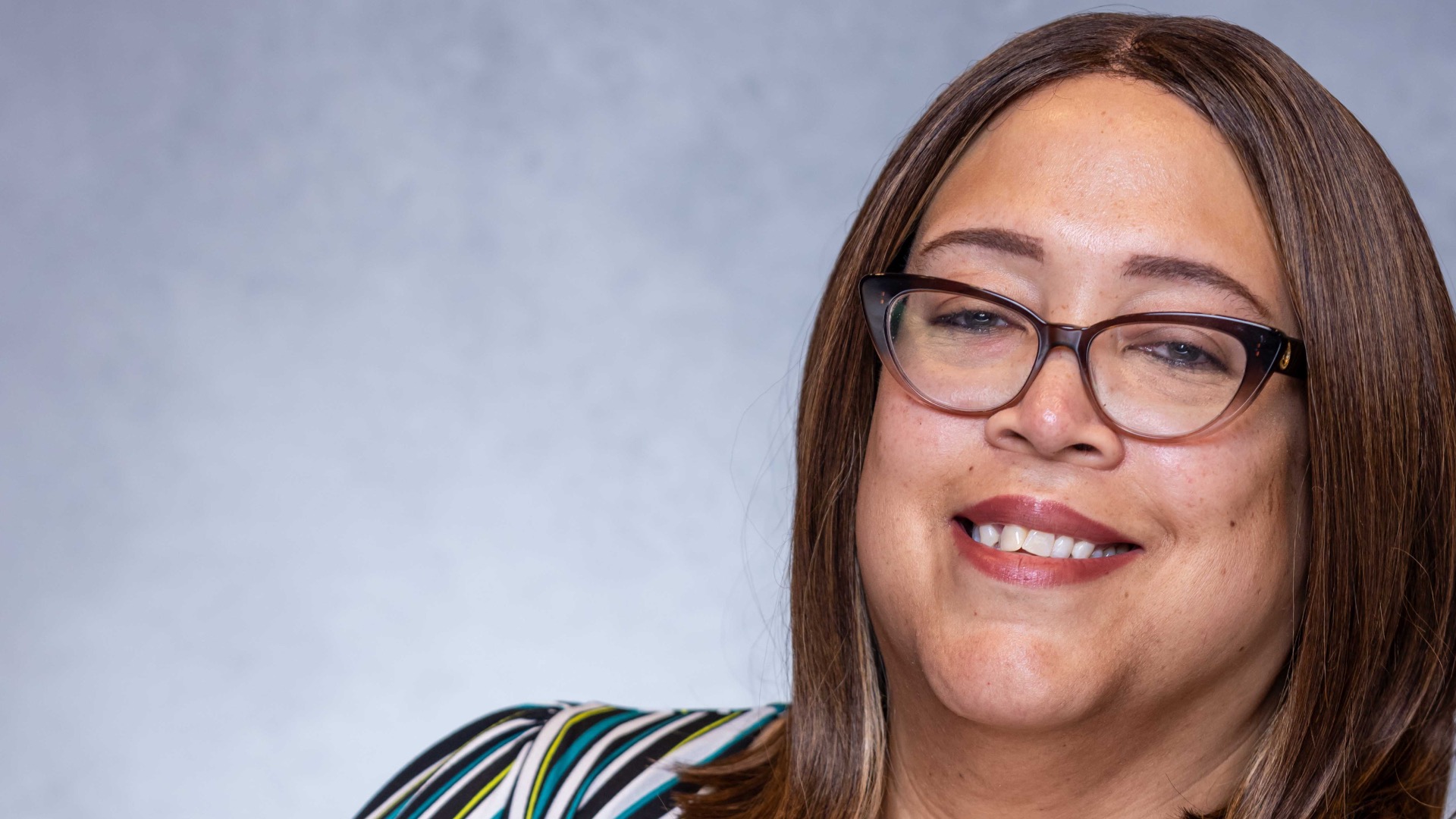
In a city built on spectacle, Soleil McCants is most comfortable behind the scenes—answering a late-night message from a worried parent, stacking boxes at a food distribution, or connecting a neighbor with housing support. That quiet consistency is precisely why she’s being honored with this year’s Lanny D. Love Hero Award at The LGBTQ+ Center of Southern Nevada’s Honorarium.
Soleil learned about the award in June. The excitement didn’t fully land until the countdown began—friends flying in, community groups planning surprises, the calendar closing in. “Now it’s getting real—and really exciting,” she says. What moves her most is the lineage. “To be recognized alongside people like Tory Russell, Carl Nassib, and Julian High—it’s humbling. I don’t do any of this for praise. I’ve always worked in the background. But I’m overjoyed.”
Her path to community leadership began in 2016, when she moved to Las Vegas and started her transition. “I needed connection,” she says. A year into the pandemic, despite not being a clinician—Soleil works in pay-per-click marketing in the casino industry—she was invited to speak on an LGBTQ+ health panel. Someone in the audience asked if she would consider joining the board of Bright Star Foundation, which provides housing for LGBTQ+ people. “I met the board, said yes, and that opened my eyes.”
Living in Northeast Las Vegas, Soleil attended a panel on food insecurity. A speaker noted that if you don’t have a grocery store within 15 minutes, you’re in a food desert. “I had a car and delivery apps. Grocery runs weren’t a burden for me. But that comment reframed the map,” she says. “Neighbors without a car were riding the bus for basics.” She began volunteering with Three Square and The Just One Project, and pitching in with The Center’s food distribution program. “Once you see the need, you can’t unsee it.”
Her focus expanded to LGBTQ+ youth after meeting a trans adolescent and their parents navigating school policies around names, pronouns, and safe social transition. “I don’t have children, but that tugged at my heart,” she says. “If one student is struggling, you know many are.” She joined Pride Tree, an affirming summer camp for LGBTQ+ youth, helping it grow from roughly 30 campers to 50 in its first two years. “Whether it’s lending my connections, serving on a board, donating, or showing up—if I can help, I’m in.”
While her community presence grew, coming out at work was the final—and scariest—step. “I’d built a corporate career and feared what transition would look like at the office—acceptance, respect, all of it,” she says. For a time, she presented as male at work even as the tells—long manicured nails, the occasional bit of makeup—signaled a change. With the support of her (gay) senior vice president, she planned for National Coming Out Day 2019. The day before, she told leadership, “I’m coming in as me.” The next morning she made the drive from the northeast valley, “This Is Real” on repeat. “My coworkers were celebratory. That Pride Parade hit differently. I was finally, fully myself.”
Visibility has brought tender moments she didn’t anticipate. “Strangers will say something I said helped them feel more free,” she shares. After speaking at Trans Day of Visibility this March, someone approached weeks later: “‘I was in the back. Your words moved me.’ Those are unforgettable moments.” Parents have thanked her for connecting them with The Center’s resources. “That’s the reward. That’s the point.”
The word “hero,” though, is one she wrestles with. “I grew up religious, with humility as a core value. It’s easy to frame what I do as ‘just what you’re supposed to do’ and move on,” she says. “I can praise others breaking barriers as heroic and struggle to apply that word to myself.” Then she smiles. “Last year I wrote a poem about being my own hero—because to transition, live authentically, and keep going takes courage. If others see me as a hero and that brings attention or resources to the work—supporting trans youth, getting people out to vote, feeding neighbors—then I’ll accept it as an honor from the community and try to live up to it.”
This year’s climate has demanded both resolve and rest. Soleil’s next growth edge is cultivating peace. “Peace in my personal life. Peace in my relationships,” she says. “I’m at peace being a trans woman—there’s no denying that. Now it’s about holding onto peace in a chaotic world and helping my community do the same.” That means being strategic and loud when it matters. “We need unity and focus—especially for our most vulnerable: youth, elders, people without resources. Now isn’t the time to lose our voice.”
Professionally, Soleil is aiming higher—either a director role leading a marketing program or a pivot into consulting. “I love the work. Scaling my impact is part of my growth too,” she says, acknowledging the tradeoffs. “A bigger role could mean stepping back from some commitments. I’ll be thoughtful about it.”
Born and raised in Detroit, Soleil attended Oakland University, switching from health sciences to psychology. Ask what people might be surprised to learn, and she lights up: music. “My playlists are all over—’50s, ’60s, ’70s, the Beatles, hardcore rap, and especially ’90s R&B. That’s my era.” Her favorite thing about Las Vegas is easy: “The weather,” she laughs. “After Detroit winters where one patch of snow didn’t melt until May, I will always choose heat over cold.”
Soleil’s closing message is simple and urgent: “To allies and to our LGBTQ+ family: we need each other. Support one another. Get louder and more strategic. Protect our youth, our elders, and those with fewer options. Show up.”
Awards don’t create heroes; they reveal them. Soleil McCants has been doing the work—housing, food security, youth support, everyday advocacy—long before a spotlight found her. This honor simply puts a name to what the community already knows: being seen and being of service can be the same act. And in this moment, both matter more than ever.