
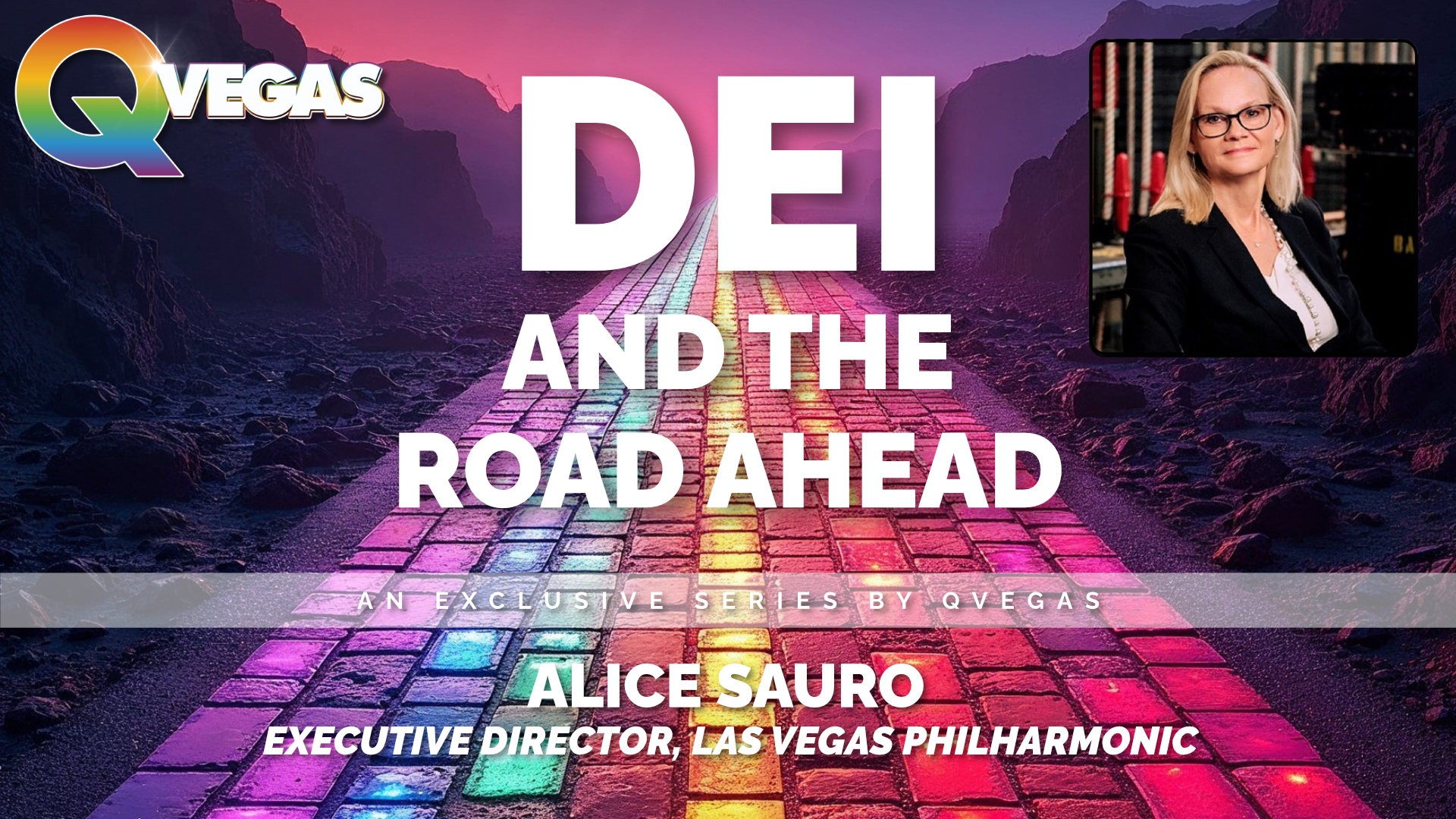
In a city known for its dazzling performances and ever-evolving culture, the Las Vegas Philharmonic has found its own rhythm—one that weaves diversity, equity, and inclusion (DEI) naturally into the fabric of its work.
At the center of this commitment is Executive Director Alice Sauro, who joined the Philharmonic just over three years ago and sees this integration as a vital part of the organization's future.
“We’re still a young orchestra—just 26 years old," Sauro says. "Compared to the LA Phil or New York Philharmonic, we’re just teenagers. That youth gives us an opportunity to be intentional about how we grow, and ensuring DEI is embedded in that growth is essential.”
A Young Orchestra Reflecting a Young City
Founded in 1998, the Las Vegas Philharmonic mirrors the city it calls home—dynamic, relatively young, and still expanding its cultural footprint. Its venue, the Smith Center for the Performing Arts, just marked its 12th anniversary, adding to the organization's sense of shared evolution with the community.
"Las Vegas is still building its cultural identity," Sauro explains. "That means the Philharmonic can evolve right alongside the city, making sure that diversity and accessibility are not afterthoughts, but essential elements of who we are."
Rather than framing DEI as a separate initiative, the Philharmonic treats it as a natural, integrated part of its identity, from programming choices to educational outreach.
Diversity You Can See—and Hear
Audiences who attend a Philharmonic performance today will find a visible diversity among its musicians and guest performers—something Sauro says is critical for creating a sense of belonging among patrons.
“When audiences see themselves reflected on stage, it helps make the experience feel personal," Sauro notes. "We want everyone to feel that this orchestra belongs to them."
This season alone has showcased a wide variety of guest artists: singer Storm Large, transgender pianist Sara Davis Buechner, Israeli-Polish conductor Yaniv Segal, and upcoming Japanese-American conductor Rei Hotoda.
Guest selection is a collaborative process, involving Sauro, Artistic Consultant Leonard Slatkin, and the Philharmonic’s artistic advisory committee, ensuring that every season offers a range of perspectives and backgrounds.
“It’s not about checking boxes," Sauro emphasizes. "It’s about offering a tapestry of voices and experiences that enrich our music and our community.”
Investing in Young Talent
Building a more inclusive future requires starting early. The Philharmonic prioritizes youth engagement, hosting thousands of students each year for special concerts at the Smith Center—many from Title I schools.
"Last fall, we had about 6,000 kids attend," Sauro says. "It's often their first experience with live orchestral music, and we want it to be welcoming and inspiring."
In addition, the Philharmonic’s partnership with UNLV brings students into the administrative side of the arts world through internships. These students, many from underrepresented backgrounds, learn about artist contracts, donor engagement, collective bargaining, and the day-to-day operations of a major arts organization.
"Over the last five years, our interns have included people from Asian American, Hispanic, South American, Pacific Islander, and Albanian backgrounds," Sauro shares. "Developing future leaders who reflect the diversity of our community is just as important as diversifying our stage."
Strengthening Connections Nationally
The Philharmonic also looks beyond Las Vegas for inspiration and partnerships. Sauro draws from her past experience in Detroit, where she worked closely with the Sphinx Organization—a national group focused on promoting Black and Latinx musicians in classical music.
“We're exploring ways to bring Sphinx artists here," she says, "or even create a shared training program where emerging musicians could work with several orchestras across the Southwest.”
Programs like Sphinx offer critical support to young artists navigating auditions and early career development. By forming these connections, the Philharmonic hopes to contribute to a larger, national effort to make classical music careers more accessible.
“This is long-term work," Sauro acknowledges. "But integrating it into our planning now ensures that the Philharmonic’s growth will be truly inclusive.”
A Community Effort
Local partnerships are another important way the Philharmonic integrates DEI into its mission. For an upcoming concert in May, the organization has partnered with Broadway in the Hood to feature a young Hispanic high school student performing a Shakespearean recitation alongside the orchestra.
"We’re proud to provide these kinds of opportunities," Sauro says. "It’s about creating an environment where young people from every background feel they can be part of the arts community."
Welcoming New Generations
The Philharmonic is also undergoing generational change within its own ranks. After several retirements following the COVID-19 pandemic, five new musicians have joined the orchestra, including one just 20 years old.
"This mixture of seasoned musicians and fresh talent is exciting," Sauro notes. "It helps keep our performances vibrant and relatable."
Young aspiring musicians are encouraged to get involved early—through discounted student tickets, special rehearsal visits, or taking lessons from Philharmonic musicians who teach in local schools.
"When the time comes," Sauro says, "we welcome auditions from young talent. The door is open."
Funding an Inclusive Future
While federal funding has not been a major part of the Philharmonic’s budget thus far, Sauro sees room for growth.
"We haven’t historically received large federal grants," she explains, "partly because applying for programs like those offered by the NEA requires significant staff time and multi-year planning. But it’s a direction we want to pursue as we grow."
Currently, most of the Philharmonic’s funding comes from individual donors and foundation grants, with corporate support lagging somewhat behind.
“There’s a real opportunity for local businesses to invest more in the arts,” Sauro says. “Arts and culture are critical to a thriving community—and to Las Vegas’s identity as a creative destination.”
She also emphasizes the need for broader advocacy efforts: “We all need to talk to our elected officials about the importance of arts funding at every level—local, state, and federal.”
A Natural Part of the Journey
For the Las Vegas Philharmonic, DEI is not a separate project or a one-time initiative—it’s a mindset that is integrated into every aspect of its operation.
“We are still learning and growing," Sauro says. "But we’re committed to making sure that as we evolve, we do so in a way that truly reflects and serves our entire community."
With a growing season of concerts, deeper partnerships with educational and community groups, and an eye toward cultivating the next generation of artists and administrators, the Philharmonic is positioning itself not just as a home for world-class music—but as a welcoming, inclusive institution for all of Las Vegas.
As Sauro puts it, "We are Las Vegas’ Philharmonic. Our diversity, our youth, and our spirit of community are what make us strong."