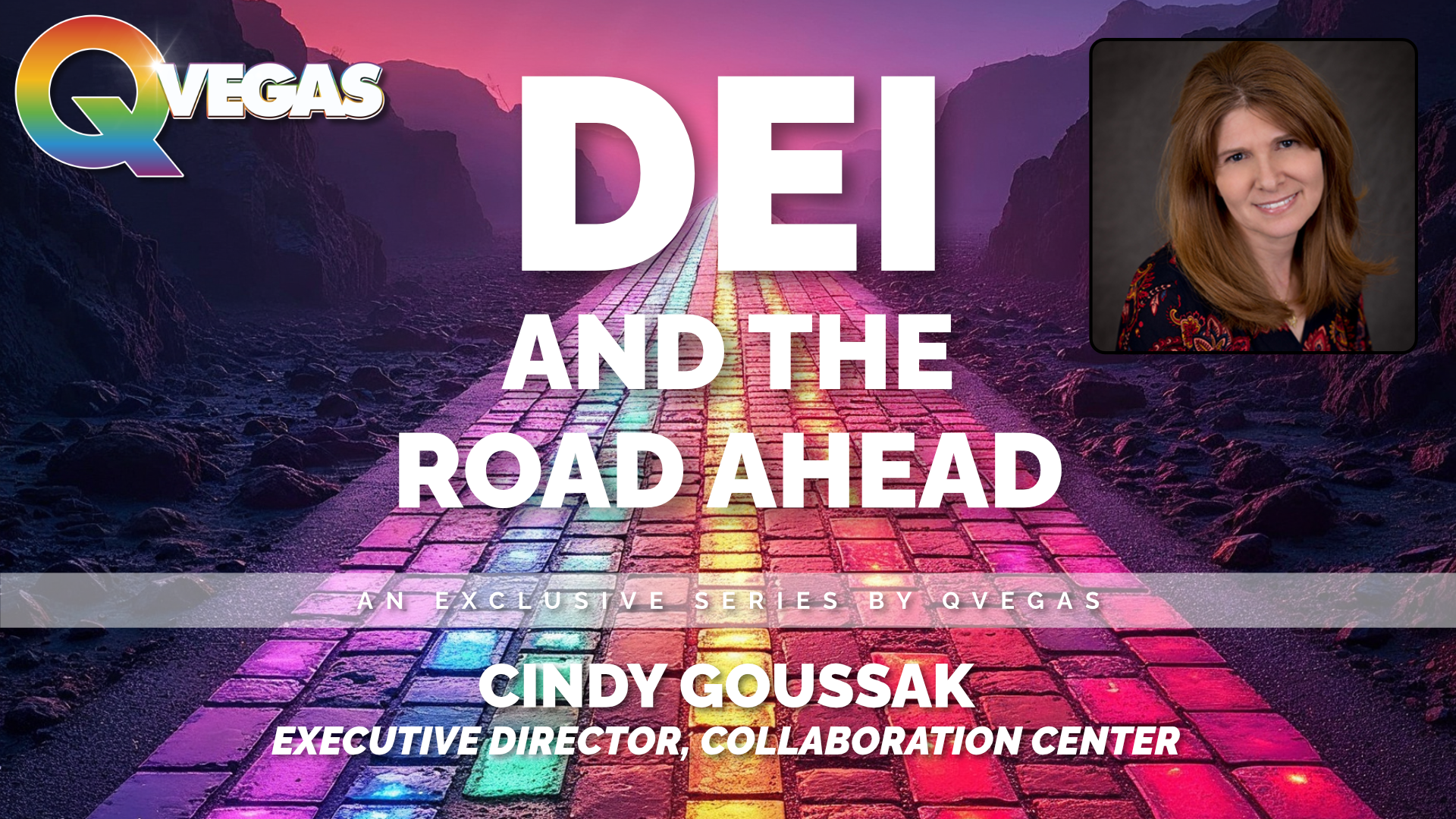
Tucked away on a five-acre campus in southwest Las Vegas, just off Windmill between Buffalo and Durango, a quiet revolution in disability advocacy is taking place. It’s not loud or flashy. It doesn’t make headlines every day. But for over 52,000 families in Southern Nevada, it has changed lives.
This is the home of the Collaboration Center Foundation, a nonprofit disability resource network founded in 2019. Led by Executive Director Cindy Goussak, the organization was born from both timing and necessity—launched just before the world came to a standstill with the COVID-19 pandemic. While the timing was daunting, Cindy calls it “the right place, right time,” because the need for centralized, compassionate, and accessible support services for people with disabilities has never been greater.
What makes the Collaboration Center unique is not just what they do, but how they do it. They don’t just offer services—they become a true partner for families navigating the often-overwhelming world of disability support. And they do it all without charging the families a dime.
A Central Point of Hope
The work of the Collaboration Center begins with connection. When a caregiver reaches out, whether it’s for a child recently diagnosed with autism or a young adult aging out of the school district system, the first step is building a relationship. Families are often caught in a bureaucratic loop—bounced between pediatricians, school counselors, state agencies, and insurance companies, all without a clear path forward.
That’s where the Collaboration Center steps in. They assess the situation, connect the family to appropriate diagnostic services, assist with therapy referrals (speech, physical, occupational, feeding, ABA), and help determine what’s covered under insurance or Medicaid. If that sounds simple, it’s not—it’s a process that many families have neither the time, energy, nor expertise to navigate alone.
Cindy explains it best: “We are the one phone call families make when they’re told their child might have a developmental delay, and they have no idea where to go. We stay with them—not just for that moment, but through every stage of their journey.”
Equity Beyond Access
The theme of equity comes up often in conversations with Cindy. And it’s no surprise—this is an organization that doesn’t just acknowledge disparities but actively works to dismantle them.
“Inclusion and equity aren’t just words on our grant applications. They’re the foundation of everything we do,” Cindy says.
One of the largest and most persistent gaps in equity she sees is in services for young adults with disabilities. While early childhood intervention often garners attention, resources, and public empathy, that support frequently dries up when a child turns 18. At that point, they “age out” of services provided by the school district and often face a daunting “now what?” moment.
This is where the Collaboration Center is stepping in to fill the void. Their on-campus café offers vocational training and real-world job experience for young adults with disabilities. The café serves customers from the surrounding community, and more importantly, it helps participants gain confidence, build social skills, and learn the rhythms of a work environment.
Still, Cindy is honest about the limitations. “We can only serve so many at a time. We’re a small nonprofit. The need is massive.”
She also speaks candidly about the challenges of preparing businesses to truly include individuals with disabilities in the workforce. “HR departments need education. A neurotypical employee and a neurodiverse employee require different approaches when it comes to communication, expectations, and redirection. We have to reframe how businesses view workplace inclusion—it’s not a charity, it’s a strength.”
A Broader Definition of Disability
One of the most compelling aspects of the Collaboration Center’s work is its commitment to serving the full range of disabilities—developmental, physical, intellectual, neurodivergent—and across all ages.
Autism, in particular, is a rising concern. Today, 1 in 32 children are diagnosed with autism in the United States. That means almost everyone knows someone who is affected, either directly or through family or friends. Yet, services remain fragmented and difficult to access.
Cindy points to a typical scenario. A kindergarten teacher expresses concern about a student’s developmental progress. The parents are told to “get it checked out,” but they have no roadmap. Pediatricians are overworked and focused on insurance-driven visits. The process stalls. That’s when the Collaboration Center becomes a lifeline—connecting the family to evaluation services, therapy providers, and often helping them understand that autism is rarely a standalone diagnosis. Comorbidities like ADHD, learning disabilities, or anxiety disorders often accompany it.
The Collaboration Center also supports individuals with more visible physical disabilities. Cindy shares how, through the center, families can find physical therapy providers who specialize in their child’s specific diagnosis and understand the complex needs of their care. And if insurance changes—as it so often does—the family doesn’t have to start from scratch. They come back to the Collaboration Center, and a new path forward is mapped out.
“We stay with families for the long haul,” Cindy says. “Disability doesn’t go away. Neither do we.”
DEI Under Pressure
Given the current political climate, conversations around Diversity, Equity, and Inclusion (DEI) are becoming increasingly difficult. What was once a rallying cry for equality has, in some corners, been weaponized and politicized. Cindy admits that the shift has affected how the Collaboration Center talks about its work.
“Inclusion is the very essence of what we do. We’re building an inclusive environment for people with disabilities. But now, we have to be cautious about how we phrase it—especially when we’re applying for grants.”
She notes that many private donors and corporate sponsors are now wary of the term “DEI.” As a result, her team has started using terms like “inclusivity” in place of “inclusion.” It’s a subtle change, but one they hope will avoid triggering political red flags while staying true to their mission.
“It makes me mad,” Cindy says frankly. “That I have to dance around language that describes something so fundamentally human. But I won’t risk funding for the organization either. We have to survive to keep helping people.”
A Safe Space for All
While the Collaboration Center does not currently have programming specifically tailored for LGBTQ+ individuals with disabilities, it is very much a safe space for everyone. The adult social groups held monthly are open to all abilities, backgrounds, and identities. Cindy emphasizes that judgment has no place on their campus. “We’re the best-kept secret in town,” she laughs. “But we’re here, and we want the LGBTQ+ community to know that this is a space for them too.”
Built on Community
The campus model of the Collaboration Center is one of its greatest strengths. The foundation carefully curates on-site partners that align with its mission, such as the Children’s Heart Foundation, Boys Town, and Let’s Talk Therapy Center, which recently opened the area’s first developmental preschool focused on children with disabilities.
Each partnership brings specialized resources to the families who visit the campus. Whether it’s autism evaluations from Boys Town or feeding therapy from Let’s Talk, families benefit from having coordinated services in one location.
This model reduces friction. It simplifies access. And most importantly, it restores dignity to a process that can otherwise feel dehumanizing and overwhelming.
The Road Ahead
Cindy Goussak never expected to be doing this work. Her career began in bank marketing, and after taking time off to raise her children, she found herself struggling to re-enter the workforce. She turned to nonprofit work, fueled by a passion for community service and lived experiences through friends whose children had disabilities. What started as volunteerism turned into a mission. Now, she leads an organization that is transforming the disability support landscape in Las Vegas.
When asked what’s next, Cindy doesn’t hesitate. “We want to expand our reach. Serve more people. Create more vocational opportunities. And continue advocating for inclusion—even if we have to call it something else.”
But no matter how the language shifts, the heart of the Collaboration Center remains the same: a community built on connection, compassion, and the unshakable belief that everyone deserves the chance to belong.
For more information about the Collaboration Center Foundation, or to support their work, visit collablv.org. The on-campus café is open weekdays from 10 am. to 2 pm. and welcomes visitors from the community.