

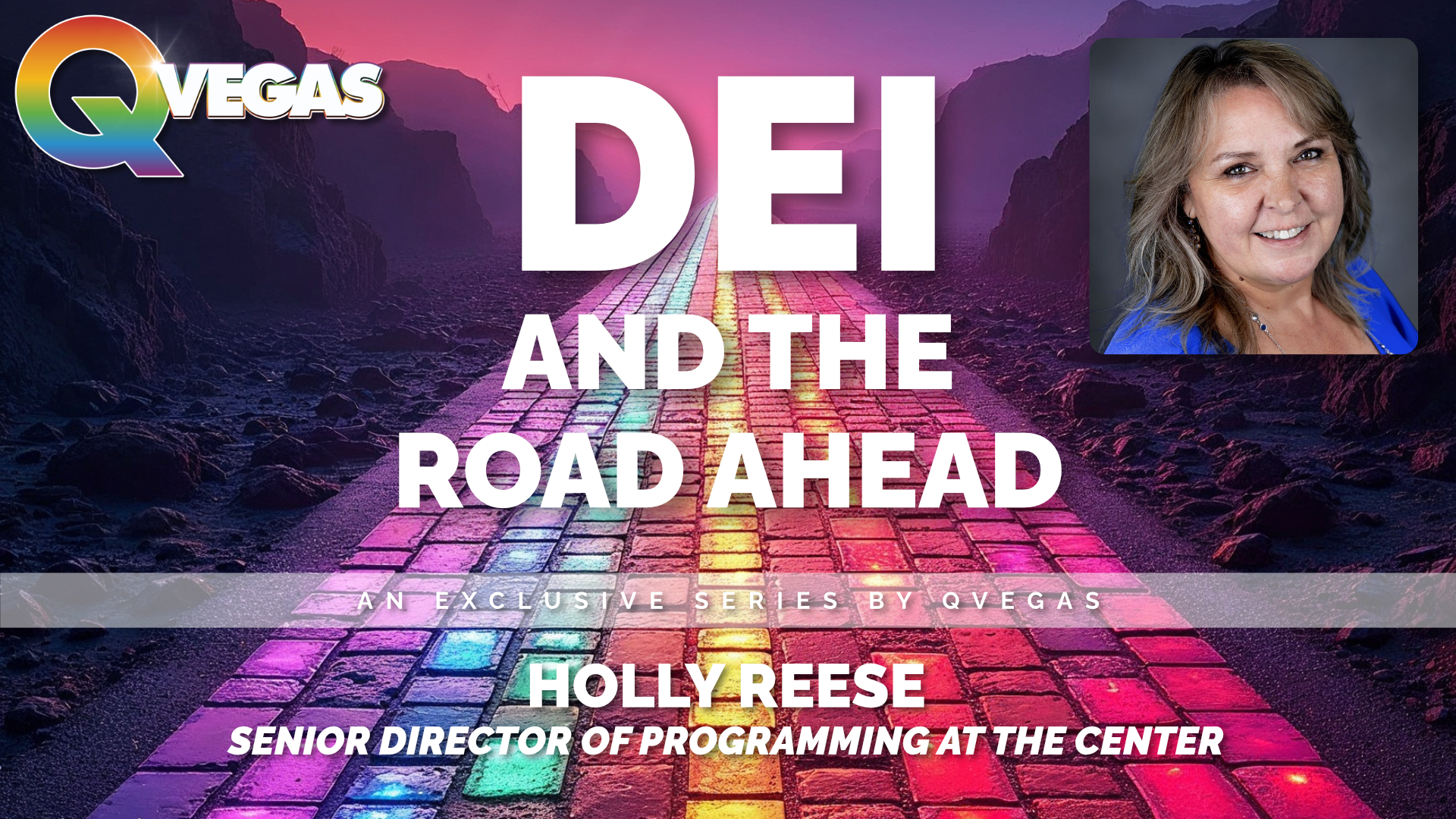
In recent years, conversations around diversity, equity, and inclusion (DEI) have become a focal point in corporate, nonprofit, and community spaces. However, in today’s political and social climate, DEI efforts are facing increasing scrutiny, with funding restrictions, policy changes, and public discourse challenging the very foundation of these initiatives. To gain deeper insight into the challenges and the future of DEI, we sat down with Holly Reese, Senior Director of Programming at The Center, to discuss the importance of inclusion, the misconceptions surrounding DEI, and what organizations can do to sustain meaningful progress in this space.
The Journey to Advocacy
A Personal Mission to Help Others
Holly Reese's path to advocacy and leadership in DEI was shaped by deeply personal experiences. "My journey started long before I had a title for it," Reese reflects. "I’m a survivor of sexual assault and domestic violence, and I’ve navigated many challenges in life, starting from my youth." These experiences, rather than breaking her, fueled a passion for creating systemic change and ensuring that marginalized voices are heard and protected.
Beyond her personal survival, her role as a mother to a child with Rett syndrome deeply influenced her understanding of advocacy, accessibility, and inclusion. "My daughter needed full-time care, and our home often resembled an ICU unit," she shares. "Through her, I learned what it meant to fight for resources, support, and recognition. She taught me how to be an advocate."
That experience became the foundation of her work at The Center LV, where she initially focused on advocacy for individuals in crisis. "When I started here, I saw a huge gap in services for victims of crime—particularly for LGBTQ+ individuals, trans people, and male survivors of sexual violence. The shelters were built on an outdated model where women were assumed to be the only victims and men the only perpetrators. There was nowhere for a trans person to go, no support groups for men who had experienced sexual assault, and no real options for LGBTQ+ survivors of domestic violence."
Through her efforts, she worked to bridge these gaps, build relationships, and push organizations to acknowledge the necessity of true inclusivity. "At the time, DEI wasn’t even the term we used. It was just the fundamental idea that we can’t claim to serve a community if we’re leaving people out."
The Current Challenges Facing DEI
The Political and Social Backlash
"DEI is at a critical turning point," Reese notes. "We’ve seen organizations work tirelessly to integrate equity, inclusion, and belonging into their structures. But now, we’re facing a wave of pushback. Funding is being cut, policies are shifting, and organizations are struggling to adapt."
Part of this backlash comes from misconceptions about what DEI actually is. "There’s this idea being pushed that DEI is about exclusion rather than inclusion, or that it forces organizations to prioritize identity over merit. But that’s a misrepresentation. At its core, DEI is simply about creating environments where everyone—regardless of race, gender identity, sexual orientation, or ability—has a fair opportunity to succeed."
Reese emphasizes that many organizations are now at a crossroads. "The challenge now is, how do we continue our work when ‘DEI’ has become a weaponized term? How do we ensure organizations can stay true to their mission without being derailed by political rhetoric?"
She adds that many organizations that once proudly embraced DEI are now reassessing their commitment due to political pressure and shifting financial incentives. "The reality is, some businesses are pulling back not because they don’t believe in DEI, but because they fear the backlash. We need to create a framework that allows companies and organizations to remain committed without becoming a target."
Redefining DEI for the Future
Moving Beyond Buzzwords
For DEI to survive and thrive, Reese believes organizations need to reframe the conversation. "A lot of the language we use—terms like ‘woke’ and even ‘DEI’ itself—has been co-opted and turned into political talking points. But the principles behind DEI remain vital. We have to shift the focus from compliance-driven DEI to values-driven leadership."
What does that mean in practice? "It means embedding fairness, dignity, and inclusion into every aspect of organizational culture. Instead of viewing DEI as an external requirement, we need to make it the foundation of how we operate. That means integrating it into policies, leadership training, hiring processes, and community engagement strategies."
She argues that we should focus on storytelling and human connection rather than relying solely on data. "Numbers are important, but people connect with stories. If we want DEI to resonate, we need to show real-world examples of how inclusion benefits everyone."
The Role of Allies and Corporate Partners
As corporations become targets of anti-DEI movements, many are questioning their role in continuing this work. "Corporate partners have a huge role to play, but they need to move beyond performative gestures," Reese says. "It’s no longer about checking a box during Pride Month or holding a one-off DEI training. It’s about embedding these values into how they do business."
For allies, the role is just as critical. "We need allies to speak up in spaces where we may not be heard. If you’re in a boardroom and someone makes a dismissive remark about pronouns or diversity hiring, challenge it. The responsibility of dismantling discrimination shouldn’t fall solely on marginalized groups. True allyship means calling out injustice even when it’s uncomfortable."
She also highlights the power of economic pressure. "Consumers have power. If companies are dropping DEI because of backlash, then support the businesses that are standing firm in their values. Money talks."
Looking Ahead: The Future of DEI
From Trend to Standard Practice
"For DEI to truly be effective, we need to shift it from an ‘initiative’ to a standard of care," Reese explains. "That means moving away from reactionary compliance and instead embedding inclusion into the DNA of an organization. It’s about fostering workplaces and communities that are equitable by design, not as an afterthought."
She sees the current backlash as an opportunity to reimagine DEI. "If we strip away the buzzwords and focus on the essence—creating fair, ethical, and inclusive environments—we can bypass the politics and focus on making real change."
A Call to Action
Reese leaves us with a clear takeaway: "Organizations, businesses, and individuals must commit to the work, not just the language. Inclusion isn’t a trend—it’s a necessary foundation for a just society. We don’t move forward by abandoning these principles. We move forward by refining them, adapting, and ensuring that inclusion, fairness, and dignity remain at the core of everything we do."
In a time where DEI is being challenged more than ever, it’s not about fighting to keep the acronym alive—it’s about keeping its spirit alive in every action we take.