

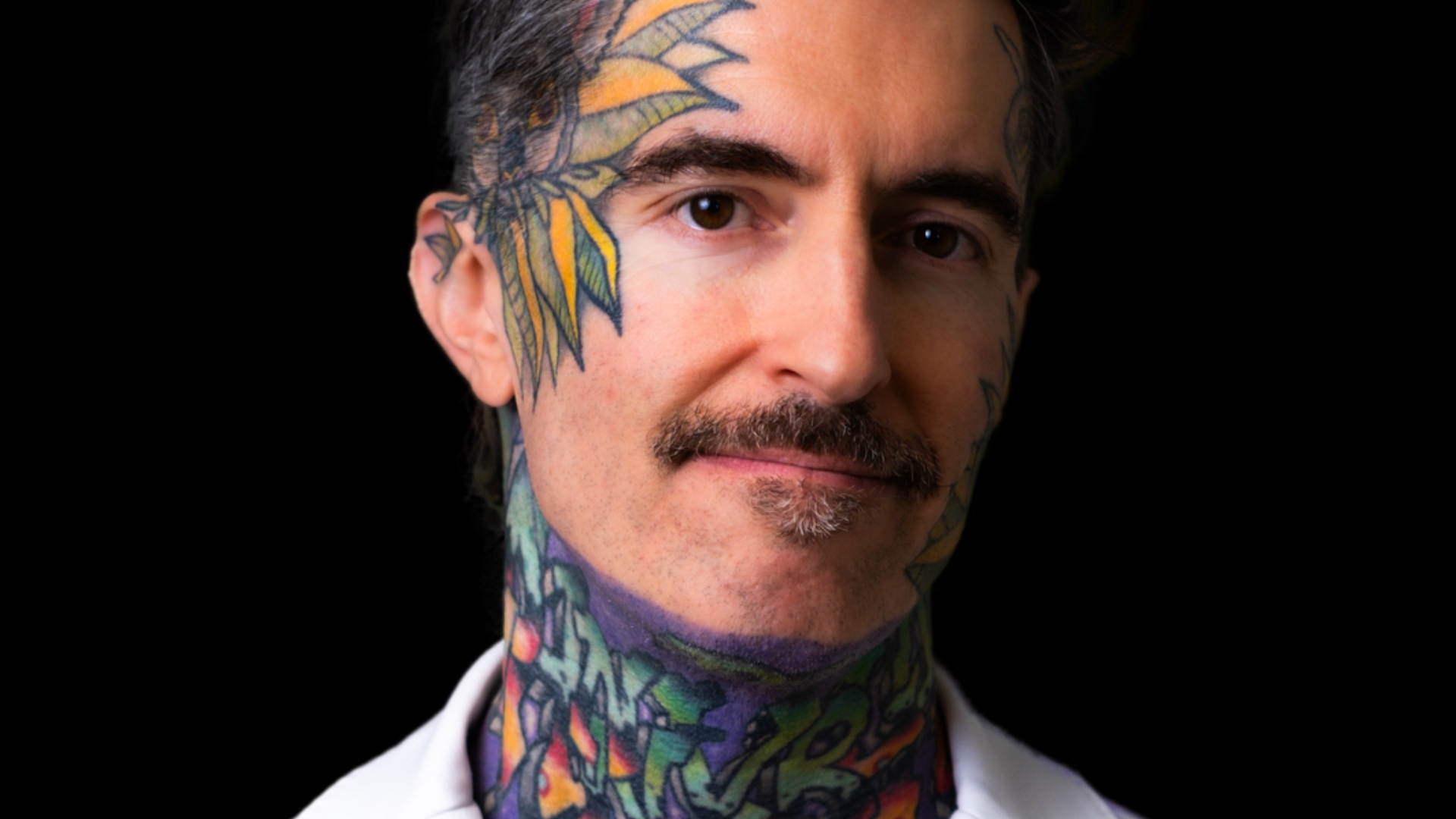
As Transgender Day of Remembrance approaches, Dr. John Brosious, the surgeon who brought gender-affirming genital surgery to Nevada, reflects on the patients he has helped, the one he lost, and what care can and can't change.
About once a month, a patient wraps their arms around Dr. John Brosious and tells him he saved their life.
It still catches him off guard. "I never thought as a plastic surgeon I'd be saving lives," he says. "I thought I'd be saving breasts, saving limbs, fingers, helping with quality of life. The kind of doctor who goes to bed at night and thinks that they saved a life, I never thought that I would have that. And it's on a regular basis."
Every November 20, transgender communities around the world mark Transgender Day of Remembrance by reading the names of people killed by anti-trans violence. The list is never short. Behind it sits a wider set of losses that rarely gets read aloud: people lost to suicide, to isolation, to years of waiting for care, and to a political climate that treats their existence as a debate.
Few people in Southern Nevada see both sides of that ledger as closely as Brosious. A board-certified plastic and reconstructive surgeon, he began offering gender-affirming top surgery in Las Vegas in 2016 and, in 2020, performed the first gender-affirming genital surgery in the state. He built the gender surgery program at UNLV and took it with him to Vegas Plastic Surgery Institute, the practice he opened with Dr. Joshua Goldman. His waitlist for genital surgery now runs several years.
This month, The LGBTQ+ Center of Las Vegas will present him with the Lanny D. Love Hero Award at Honorarium 2026, ten years after he came home to build the program.
A doctor who took her seriously
None of it was in the plan. Gender-affirming care wasn't part of his education at Indiana University's medical school, where, he says, students learned nothing about hormones. In his plastic surgery residency in Las Vegas, which he finished in 2013, top and bottom surgery "wasn't even a thing." He knew a handful of surgeons around the country did the work, but insurance by and large didn't cover it.
What drew him to plastic surgery was its range. At his first job, at the University of Pittsburgh, word got around that he liked unusual cases, and transgender patients began calling to ask whether he'd help. He told them honestly that he had no experience. But they were asking for breast augmentation and mastectomies, and he already performed breast reductions, reconstructions and male breast surgery. "It really is just kind of an extension of what I already knew how to do," he says.
His first patient was a trans woman, about 12 years ago. At the end of the consultation, she began to cry. Brosious was certain he'd misgendered her and apologized.
"She said, no, these are tears of joy," he recalls. "You're the first doctor that took me seriously and treated me like a human being."
That moment reset his career. "There's this whole population of people that have been left behind by healthcare," he says, "and as one surgeon, I could have a big impact on them."
What the evidence says
Brosious is blunt about why insurers cover the surgeries that the World Professional Association for Transgender Health considers medically necessary. Studies show gains in quality of life, depression scores, relationships and integration into society, he says, and that evidence is what moved the payers.
"It's not because the insurance companies are so woke that they wanna pay for this stuff," he says. "They don't wanna pay for anything. But the data is conclusive that this helps people."
The hugs, he says, are what keep him going "in this very hostile political environment and social environment that we're in." He suspects most opponents of gender-affirming care have never had a real conversation with a trans person. "If you did," he says, "you'd realize how important these surgeries are, and how important the hormones and just the overall wraparound care for these patients is."
The most vetted patients in the building
Brosious calls the claim that schoolchildren are being rushed into surgery "just absurd," and his description of how patients actually reach his operating room explains why.
Most of his patients, he estimates, have lived publicly as transgender or nonbinary for at least four to five years before their first appointment; his average patient is closer to eight. Most have been on hormones for years. Trans women generally need at least a year of hormone therapy before breast augmentation or vaginoplasty. Most of these operations, including all those covered by insurance, require sign-off from one or two mental health professionals experienced with the LGBTQ community. Then comes the waitlist, which alone makes a rushed surgery virtually impossible.
He and Goldman often compare those patients to their cosmetic ones. "Cosmetic patients, they can come in and if they have the money and they want a breast augmentation next week, they get a breast augmentation next week," he says. No mental health professional is typically involved. By his estimate, regret rates run 10 to 15 percent for cosmetic surgery and about 1 percent or less for gender-affirming surgery.
"These are the most highly vetted patients you can possibly imagine," he says. "Nobody's mutilating children's genitals. I'm not aware of any surgeon in the United States that has done or does genital surgery on minors."
The surgeries themselves vary widely. Top surgery is outpatient: an hour or two for breast augmentation, two or three for a mastectomy with nipple reconstruction. Most patients are driving and off pain medication within days and take four to six weeks off work.
Vaginoplasty is a different scale. The operation takes six to seven hours, followed by a week in the hospital and roughly two months of recovery. Patients must dilate three times a day for the first two months, sessions that can take an hour or two each while they learn. "You're kind of a prisoner to the dilation process," he says.
The one-year visit
Brosious usually sends patients on their way after recovery and sees them again at the one-year mark. It's his favorite appointment.
Families and friends often come along, and he hears the same story: a person who has come out of their shell, who is outgoing and confident, who is smiling and making friends. "That's the best payment you can receive as a doctor," he says, "for not just the patient to say that you saved my life and hug me, but for their family to recognize it."
The physical changes can be just as striking. Many trans patients, he notes, have leaned on smoking, unhealthy eating and other coping mechanisms for the anguish of dysphoria. A year later, many have taken up fitness, changed how they eat, lost weight or built muscle. "Sometimes I don't even recognize them," he says. Freed of a part of their body they found unbearable, they can walk into a gym without dread. "It's like I kind of give them a little jump start."
What surgery can't change
Not every story ends at that one-year visit.
Brosious isn't aware of losing anyone while they waited for surgery, though he knows the length of the waitlist alone can bring some patients to an emotional breaking point. But he remembers one loss clearly. He had operated on both members of a couple, both of them transgender. When one came in for an annual follow-up without their partner, they told him she had died by suicide.
"You can't imagine how my heart sank," he says.
The loss sharpened a message he and the mental health professionals he works with now press on every patient. Surgery may change a person's appearance and some of how the world sees them, and with genital surgery, no one else sees it at all. It can ease dysphoria and improve relationships and how someone feels in their body. But many patients also carry mental health struggles and conflict with family, work or school, and the society they return to is the same one they left.
"Some patients probably cling to this idea that I'm gonna have my surgery and my surgery is gonna fix all of my problems," he says. "Certainly it's gonna fix potentially a lot of them, otherwise we wouldn't be doing these surgeries. But it doesn't change the world that we're living in, and the way that trans people are being treated by society. It can only change them, not how people view them."
From Thailand to the Southwest
Two decades ago, many trans Americans seeking bottom surgery flew to Thailand, where, Brosious notes, trans people had been accepted for generations and surgeons had pioneered the techniques. Some went to South America; he has seen the results in patients who later came to him for follow-up. In the U.S., a handful of surgeons worked for cash, with waitlists measured in years.
He credits many surgeons abroad with excellent work, but the standards for facilities and credentials vary. And once patients board the plane home, follow-up care essentially ends.
That changed when insurers began covering the surgeries about ten years ago, and academic centers raced to build programs on the West Coast, in the Northeast, in Chicago and in pockets across the country. More surgeons meant shorter waits and care close to home, which matters because complications are common after bottom surgery. Brosious's farthest patients come from California and Arizona. "If they have to, they can get in the car and drive and see me," he says. "And that really makes them feel so much better."
The field has also matured. He has changed his own vaginoplasty technique substantially in six years, and formal fellowships now let surgeons spend an extra year training in facial feminization, top surgery and bottom surgery, training that didn't exist when he started.
"A hiccup in the road"
That progress is now under threat. Brosious says the current administration is trying to shut gender surgery programs down by squeezing the doctors, facilities and hospitals that offer them, including repeated threats to cut government funding. Some programs have closed; others never got off the ground. Where institutions once competed to hire gender surgeons, he now sees universities in a holding pattern, reluctant to build programs and "have the rug pulled out from under them."
For seven or eight years, he says, no one worried about going backward. Like the fall of Roe v. Wade, it was something he thought could never happen. "I never thought in a million years that there would be this type of attack on gender-affirming care," he says. "It's almost like living in this weird dystopia that I never predicted."
He doesn't minimize the damage to access, but he refuses to see it as permanent. "I'm just looking at this as a hiccup in the road," he says. "Sometimes you have to take a step back to go forward." A decade from now, he hopes, 2026 will be remembered as "the wrong side of history."
Gaps at home
Closer to home, Brosious praises what The Center has built. He refers many patients to its health center and receives many referrals in return. In his view, it now covers the first layer of trans care: primary care, gynecology, hormones and mental health.
The gaps, he says, are Southern Nevada's. The region needs endocrinologists for puberty blockers and complex hormone cases, and urologists who offer an affirming environment. No one in Nevada really performs facial feminization. Phalloplasty requires a urologist working alongside the plastic surgeon. Brosious, a microsurgeon, could handle his half, but "without a urologist to help you with the plumbing, it's really a non-starter."
"Nevada has a shortage of basically every type of doctor," he says. "We're not meeting the medical needs of not just the trans patients, but basically everybody."
Earning trust
When Brosious first met with The Center to announce his plans, the reception was skeptical. He is, in his words, "a cis white male, you know, hetero," with no ties to the community, and staff told him they'd heard the same promise from doctors who never followed through. Many trans people, he says, approach any medical professional warily after bad experiences, and a dedicated program "almost sounds too good to be true."
It took a couple of years of surgeries, and a personal transformation, before people decided he was on their side. Brosious now has tattoos on his face, neck and hands. Colleagues warned the look would hurt his practice. Instead, he says, it disarms patients the moment they see him, before they've had time to brace for being misgendered.
He traces his motivation to an unlikely source. He was an altar boy who attended Catholic grade school, Catholic high school and the University of Notre Dame, and friends back home in Pennsylvania still ask how he became a gender surgeon. His answer: "You taught me to serve the marginalized, you taught me to serve discriminated people, and you taught me to serve people who were outcasts."
Not a hero
That's partly why he bristles at the word on his award. He acknowledges the cost: lost friends, colleagues who won't speak to him, and a career that would be easier and likely more lucrative doing only tummy tucks and Botox. But he doesn't think caring for trans patients should require courage.
"The bar has been set so low for the transgender community from the healthcare perspective that all you have to do is be respectful and provide decent care, and all of a sudden, you're a hero," he says. "It's sad that that's the case."
Still, he has watched others accept awards at Honorarium for years, hoping that if he kept at it, his turn might come. Arriving in the program's tenth year, he says, makes 2026 "the perfect year."
"If everybody was a good person," he says, "then this wouldn't be heroic work. This would just be another guy offering a service to a population."