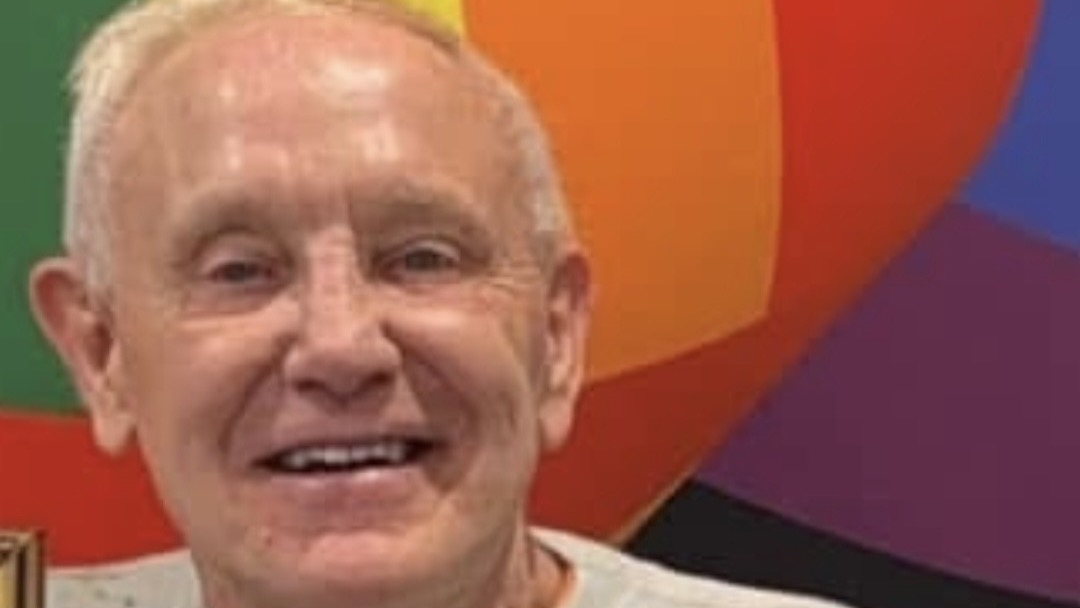
Jerry Cade laughs when he calls himself “the chief healthcare informatics officer, but nobody knows what that is.” Titles aside, he is the medical director at the Gavin J. Goorjian Community Health Center, and for more than four decades he has been one of Southern Nevada’s most steadfast clinicians and advocates. His Las Vegas story began almost by accident—an obligation that turned into a calling.
“I owed the Public Health Service two years for medical school,” he remembers. “They paid for the last two years, and the quid pro quo was you’ll go to an underserved area. In my mind, that was going to be some middle-of-nowhere place.” Instead, in 1981, he flew to Nevada for the first time and signed a contract to work in North Las Vegas at a clinic serving primarily Latino patients. “They needed a bilingual physician by October 1, 1981, or the clinic would close,” he says. “I speak Spanish. So I came in September to sign the contract.”
The urgency was real. “Just to put it in perspective,” he adds, “the new president, Ronald Reagan, cut the Public Health Service budget in half.” Cade finished his two-year commitment, completed another internship at UMC, opened a private practice in 1984, and fully expected to return to Los Angeles—a city he loved. But history intervened.
The HIV Awakening
“In 1984, we started seeing the smoldering of HIV cases,” Cade says. “August 29, 1985 is when we began the HIV program at UMC. We hit the 40-year mark this past August.” That milestone—forty years—frames much of his perspective. “Nobody was doing it,” he says of HIV care at the time. “And to the credit of Southern Nevada, our community did a better job than almost anywhere I looked at taking care of people with HIV.”
He credits local media and civic leadership with helping Las Vegas respond with compassion rather than panic. “Gary Waddell and Paula Francis did this little thing on the news, and we looked at it intellectually instead of from this big emotional place,” he recalls. “The county commissioners supported the HIV program. We did not go through that horrible thing that a lot of other places did.”
Was Las Vegas’ response shaped by its entertainment workforce? “Perhaps,” he allows. “My first three patients with HIV were all people from the Strip. That may be why there was increased sensitivity or commitment to making sure our community was well taken care of.”
Mentors, Memory, and the Making of a Physician-Advocate
When asked about early mentors, Cade pauses over the name of a friend whose life and death still guide him. “Jack Rutledge, an MD-JD from Duke, brilliant guy, president of the medical student association,” Cade says. “He died of AIDS in 1987. We only knew each other ten years, but I learned more from him than from anyone else. I still think about him every day.”
It’s not nostalgia; it’s compass. That decade of shared activism helped shape Cade’s insistence on turning outrage into outcomes, systems into solutions, and policies into the kind of practical care that meets people where they are.
What the AIDS Era Still Teaches
“The early days of HIV taught me that if you’re doing the right thing and taking care of the healthcare needs of human beings, eventually most people are really nice,” Cade says. He’s quick to note that the noise of extremes—“senators like Jesse Helms or the Reverend Jerry Falwell saying HIV was God’s curse,” on one side, and the righteous fury of ACT UP on the other—drew headlines. “But most people fall way in the middle,” he insists.
That conviction informs how he talks to and about today’s transgender community. “Having lived through the AIDS crisis, I tell my wonderful transgender friends and patients: this too will pass,” he says. “It’s just a matter of time and generations before everybody realizes it’s silly to try to make somebody be something they don’t want to be, or keep somebody from being who they are. That’s the point of this country—freedom means you can make choices, even if others think they’re bad. It’s still your choice.”
In characteristic Cade fashion, he drops a history nugget with a grin. “We’re coming up on the sesquicentennial of the Declaration of Independence—250 years next July,” he says, savoring the word. “I like that word. Sesquicentennial.”
Why This Health Center, Why Now
The Gavin J. Goorjian Community Health Center exists because access to respectful, affirming, comprehensive care remains uneven, especially for LGBTQIA+ people and low-income Nevadans. “We solved several problems,” Cade says, “but the overarching one is access. We see people regardless of ability to pay. You walk in our front door, we figure out a way to see you.”
He’s blunt about the broader truth. “Despite your cultural beliefs or who you are, the big deal is being poor. The overarching prejudice is being poor,” he says. “We have insurance specialists who work to get you on Medicaid. We have grant funding to help get you on HIV therapy. We don’t turn anyone away.”
Care here is also culturally competent and unflinchingly practical. Cade notes, with a mix of humor and exasperation, how often patients’ lived realities went unaddressed elsewhere. “I can’t tell you the number of gay men with rectal problems whose doctor never wanted to address it,” he says. “We saw that with HIV, too. Here, we talk about what needs talking about.”
And his delight in working with transgender patients is unmistakable. “Not to offend my other patients, but my transgender patients have become some of my favorites,” he says, laughing. “They’re very entertaining. They keep me laughing all day long, and that helps me.”
What’s on Site—and How to Choose a Clinic
The Las Vegas Boulevard clinic is a full-service, primary care hub. “This is internal-medicine-oriented primary care,” Cade explains. “One of our nurse practitioners specializes in women’s health, so we have a reproductive health clinic. We all do that work, but she’s incredibly good. And of course, we offer HIV services. We work with Ryan White to ensure you get your medications.”
The Center’s Marilyn Parkway site remains the sexual health specialist. “We still have the clinic on Marilyn Parkway—Arlene Cooper—and that focus is where it’s always been: STIs and sexual health,” he says. “You can meet your sexual health needs at Las Vegas Boulevard as well, but the Marilyn Parkway clinic is designed for that specialty care.”
So which clinic should you choose? “Las Vegas Boulevard is all-inclusive,” Cade says. “Marilyn Parkway is intentionally focused on sexual health. But you’ll be taken care of in either place.”
Care That Comes to You: The Mobile Clinic
One of the Center’s most exciting expansions is on wheels. “We bought a van,” Cade says, delighted. “We now have a mobile clinic. Our goal is to reduce any barrier to healthcare. There are people who are never going to come to our clinic—rural Nevadans, the unhoused population, people living in the tunnels. So we will go to them.”
This isn’t a pop-up table under a tent. “It’s a nice van,” he says. “You can draw blood. It’s got an exam room. You’ve got privacy—pull a curtain, it’s you and the provider. Then you get your blood drawn. We’re getting a dispensing license, so you can get medications. It’s a one-stop shop, basically, except for X-rays.”
What’s Next: Expanding Services
The October 3 ribbon cutting marks a public celebration of a clinic that’s already humming. “We had a soft opening July 3 of last year,” Cade says. “We have four nurse practitioners and me, and we’re seeing 700 patients a month. We haven’t even begun to advertise.”
Some expansions are already underway. “We started our behavioral health and addiction program a few months ago; that’s growing,” he says. “The Chris Ingle Set has bought a mammogram unit. We’re adding a DEXA scan. We’ll eventually have basic dental care. For our unhoused patients, we have lockers so belongings don’t get stolen, and showers. A lot of these are almost there—but not quite.”
He’s candid about one challenge: parking. “The one downside here is the parking,” he admits. “So rather than a huge grand opening, we’re doing a ribbon cutting with RSVP, showing you the clinic, making sure everyone can actually park.”
Telehealth, Hours, and the Real Life of Access
Telehealth is already woven into the clinic’s fabric. “We have scheduled telehealth visits—mostly done by our nurse practitioners,” Cade says. After-hours access is a near-term frontier. “It’s still on the back boiler,” he acknowledges. “We’re open a bunch of hours now—Marilyn Parkway is 8 to 6 Monday through Friday, and 8 to 4 on Saturday. The intention is to expand those hours so ‘after hours’ isn’t much of a thing.”
In other words, the plan is simple: make it easy to be seen.
The Patient Experience: “The Happiest Clinic I’ve Ever Been In”
Cade’s favorite review came from a friend who dreads doctors’ visits. “He came in, and then told all our friends: ‘That’s the happiest clinic I’ve ever been in,’” Cade says, smiling. “Tell that to a nervous first-timer. Most people feel pretty comfortable because all of us like to talk. We are genuinely happy that you come in. It’s still exciting for us to have people walk through the door.”
When asked how this clinic is different for people who’ve had bad experiences elsewhere, Cade doesn’t hesitate. “More times than not, bad experiences happen because people didn’t get listened to,” he says. “If you listen carefully, you can pick up what somebody really needs. We will not ignore you.”
Health Equity, Defined by the Doorway
“What does health equity mean to me? It’s what we do,” Cade says. “If you walk in the door, you get seen.” He knows the list of communities historically shortchanged by healthcare is long—women included. He also knows the Center’s patient mix reflects the city as it is. “We have a lot of white men too,” he says with a chuckle. “Whoever you are, you walk in, you get seen.”
He points to social determinants of health as both a current focus and an old lesson. “I want to write a book about how HIV predicted the social determinants of health,” he says. “We didn’t talk about it in the early days, but we lived it. Gay men and injection drug users lost their families. Healthcare often depends on that support system, so we had to recreate family. One of the early drugs had to be refrigerated—if you’re unhoused, that’s a problem. All those issues people now pay attention to? We had no choice but to address them then.”
Nevada’s Gaps—and Why the Clinic Is Busy
Cade is pragmatic about policy. “There’s a lack of funding in Nevada,” he says. “I just saw a ranking that put Nevada at 45 out of 51 (including D.C.) in quality of healthcare. We’ve done Medicaid expansion, but we’re still 45. That tells you there are a lot of gaps—especially rural healthcare.”
That reality helps explain why the clinic is bustling even before advertising. “I think we’re awesome and people love to see us,” he says, “but I also think there’s just not enough healthcare. If you live 70 miles from Las Vegas, transportation alone is a barrier. That’s why the mobile clinic matters.”
He’s mindful that public funding—particularly federal grants—can be volatile. “Federal grants are under attack,” he says. “That would hurt us, but it wouldn’t destroy us, because we have other funding, including private grants and clinic revenue. Diversifying support is part of our resilience.”
Busting Myths About LGBTQ Healthcare
“The myth to retire? That LGBTQ healthcare is somehow exotic,” Cade says. “It’s healthcare. You just have to be willing to explore a few more options and ask the questions that need asking. That’s it.”
It’s the same ethos that shaped the early HIV response: curiosity over judgment, listening over assumptions, and an insistence on seeing the person in front of you.
The Staff, the Spark, and the Long Game
Cade is plainly proud of his team. “We have an enthusiastic, inspired staff,” he says. “My question is how do we make sure they stay inspired? All of us can get inspired about something new, like a new partner in the first year. Then it becomes routine. We need to figure out how to get beyond that.”
Even in that challenge, he sounds content in the best possible way. “What’s the moment I’ll know we did this right?” he repeats. “I’m already pretty happy. Not that we’re going to stop working harder, but we’re seeing 700 patients a month on a soft opening. That’s pretty good.”
A Doctor of the Community
“I love seeing patients. Patients keep me going. They’re entertaining. I hear cool stories all day, and it never gets old to walk in, sit down, and ask, ‘What’s going on?’”
As the Center prepares for its ribbon cutting on October 3, 2025, Cade’s invitation is clear and personal. “Please come join us,” he says. “If we’re not doing what you expect, let us know. We want your feedback. And I like the line my friend said—I want it to be the happiest clinic you’ve ever been at.”
The Promise Behind the Ribbon
The Goorjian Community Health Center represents the intersection of memory and momentum: the lessons of the AIDS era, the realities of today’s Nevada, and a future built around simple, radical commitments. “If you walk in the door, you get seen,” Cade says. The rest—telehealth, mobile care, expanded services, hours that meet people’s lives—flows from there.
It’s the kind of promise you can feel when you step into a space where clinicians love to talk, patients feel welcome, and a doctor who meant to be here for two years is still showing up, forty years later, with a grin, a story, and a seat pulled out for you.