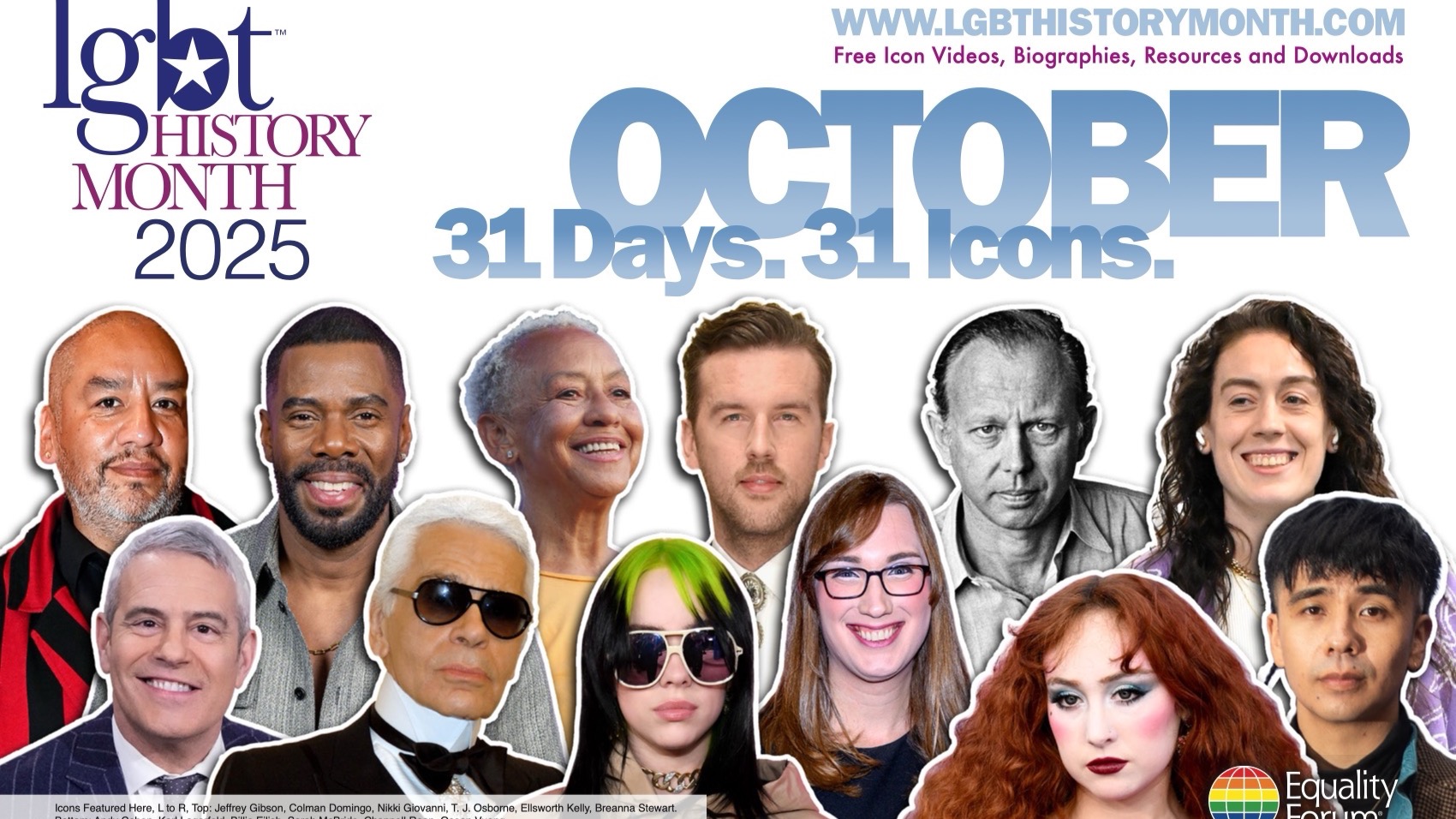
The year’s culture-makers are headlined by artists whose work moved global audiences and redefined genres. Billie Eilish, a record-shattering singer-songwriter and two-time Oscar winner, publicly embraced her queer identity as her latest album deepened those themes—an evolution as noteworthy as her stack of Grammys and Guinness records. Chappell Roan’s ascent from YouTube discovery to Grammy-winning, openly lesbian pop star brought drag-informed camp, gender-playful fashion, and a fan-forward touring ethos into the mainstream—proof that queer sensibility is a cultural engine, not a niche. Country music, long perceived as inhospitable to out performers, is represented by T.J. Osborne, the lead vocalist of Brothers Osborne, who came out in 2021 and went on to win a Grammy for “Younger Me.” His visibility—and the duo’s awards haul—signals durable change inside a traditionally conservative lane. Television’s boundary-crossers are here, too: Andy Cohen, the Emmy- and Peabody-recognized producer and late-night host whose decades of television and radio have shaped pop culture’s conversation, from “Watch What Happens Live” to “Real Housewives” reunions.
Visual art and design are richly represented. Ellsworth Kelly’s hard-edged abstraction helped define Color Field and Minimalist painting; his career stretched from postwar Paris through New York’s Coenties Slip to international acclaim and institutional honors. His life with partner Jack Shear underscores how queer lives animated 20th-century art history. Jeffrey Gibson—of Cherokee and Choctaw descent—fuses Indigenous craft and queer iconography into beaded punching bags, rawhide paintings, and text-laden sculptures, reframing American art through an intersectional lens. Fashion’s global stage appears via Karl Lagerfeld, whose visionary tenures at Fendi and Chanel, along with prolific photography and headline-making runway spectacles, made him one of modern fashion’s most famous auteurs.
The performing arts also celebrate satire and subversion. Choreographer Peter Anastos co-founded Les Ballets Trockadero de Monte Carlo, importing camp wit into classical ballet with virtuosic parody that still tours globally 50 years on. The drag tradition’s long frontline is represented by Sir Lady Java, a pioneering transgender entertainer whose 1960s fight against Los Angeles’s “Rule 9” helped topple cross-dressing bans and prefigured later trans rights battles.
History and music reach back a century to honor composers whose lives and loves shaped the canon. Samuel Barber—twice a Pulitzer winner and longtime partner of composer Gian Carlo Menotti—authored the elegiac “Adagio for Strings,” a piece woven into the nation’s collective memory from FDR’s death to film scores. Walter Arlen, a Holocaust survivor and critic-composer, saw his music finally performed and honored in the 21st century—an act of cultural restitution and remembrance.
Politics and public service are front and center. Sarah McBride broke a barrier as the first transgender member of Congress, a rights advocate whose very presence rewrites the possibilities of representation in American government. Becca Balint, the first woman and first openly LGBTQ+ person to represent Vermont in Congress, pairs a teacher’s biography with a progressive record on voting rights, gun safety, and LGBTQ+ equality. Diplomacy gets its due through Ted Osius, among the first openly gay U.S. ambassadors; his tenure in Vietnam advanced defense, trade, and educational ties and earned the nation’s Order of Friendship—an exemplar of how queer visibility strengthens statecraft.
Institutions and ideas matter, and several honorees built them. Ann Philbin transformed the Hammer Museum from a mid-size Los Angeles gallery into an internationally noted center for contemporary art, quadrupling its budget, dramatically expanding its footprint, and elevating the city’s cultural standing. Historian John D’Emilio’s scholarship—especially “Intimate Matters,” cited by the U.S. Supreme Court in Lawrence v. Texas—helped build LGBTQ history as a field and gave legal culture the vocabulary to dismantle sodomy laws.
Journalism and media advocacy also thread through this year’s cohort. Troy Masters, a pioneering publisher behind Gay City News and the Los Angeles Blade, spent decades documenting the community and, during the 2022 mpox outbreak, leveraged his platform to aid equitable vaccine access. Cohen’s memoirs and nightly dialogues with pop culture, likewise, model an out voice at the center of mass media—an everyday normalization that quietly shifts the frame for millions.
Philanthropy and movement leadership power the infrastructure that makes all this possible. Mel Heifetz’s seven decades of giving—endowing funds, paying off community-center mortgages, and bankrolling national campaigns—illustrate how strategic generosity sustains institutions and creates housing for LGBTQ youth. The movement’s backbone is also visible in ABilly S. Jones-Hennin, a founder of the first national Black LGBTQ+ advocacy organization and a longtime HIV/AIDS educator who connected racial justice, health equity, and queer liberation across five decades.
Community health, survival, and dignity appear in the lives of activists who fought the hardest fights. Cecilia Gentili’s journey—from abuse and incarceration to leadership roles at community health organizations, policy work at GMHC, a memoir, and an Off-Broadway play—made her one of the clearest voices for trans women, sex workers, undocumented immigrants, and people in recovery. Her 2024 death was felt across the movement she helped build.
Finally, there’s a powerful through-line of Indigenous presence and perspective. Lily Gladstone’s historic awards run for “Killers of the Flower Moon,” her “she/they” pronouns, and her articulation of gender beyond English binaries place Indigenous knowledge at the center of Hollywood’s evolving narrative. Jeffrey Gibson’s practice makes the case in objects: beadwork, drum-making, rawhide painting, and text that reweave American art from a queer, Native vantage.
Taken together, this roster breaks down into a few big themes. Visibility is not just symbolic—it’s operational. From McBride’s seat in Congress to Osius’s embassy in Hanoi, representation expands what government can look like and who it serves. Cultural leadership isn’t confined to galleries or airwaves; it lives in the logistics of a museum expansion, the cadence of a country hit, the punchline of a ballet parody, or the editorial choices of a local paper that puts vaccines where they’re most needed. And the archive keeps expanding: from Barber’s canonical scores to Eilish’s generational pop, from Sir Lady Java’s picket line to Gentili’s stage, the story of LGBTQ life is cumulative—each icon handing tools, language, and courage to the next.
In this way, 2025’s icons do more than mark history—they show how it’s made: by insisting on complexity, building institutions that last, and reinvesting hard-won cultural space back into community. That living legacy is exactly what LGBTQ+ History Month exists to surface and celebrate.