If you want the blunt, local read: CEI 2026 isn’t just a workplace-policy report anymore—it’s a credibility report. In a year when Fortune 500 participation reportedly collapsed by roughly 65%, the real story isn’t only who still has the policies on paper; it’s who is willing to be measured, verified, and publicly accountable for them.
And that’s exactly why several Las Vegas-headquartered brands look worse in 2026 than they “feel” if you only judge them by glossy Pride-season marketing. Las Vegas sells itself as welcoming, celebratory, and queer-friendly. The Strip monetizes our weddings, our bachelorette parties, our conventions, our nightlife, our headline acts, and our community philanthropy. So when the companies that power that ecosystem start treating basic transparency around LGBTQ+ workplace equality like an optional add-on—something they can quietly stop doing without explaining why—it reads like what it is: risk management masquerading as values.
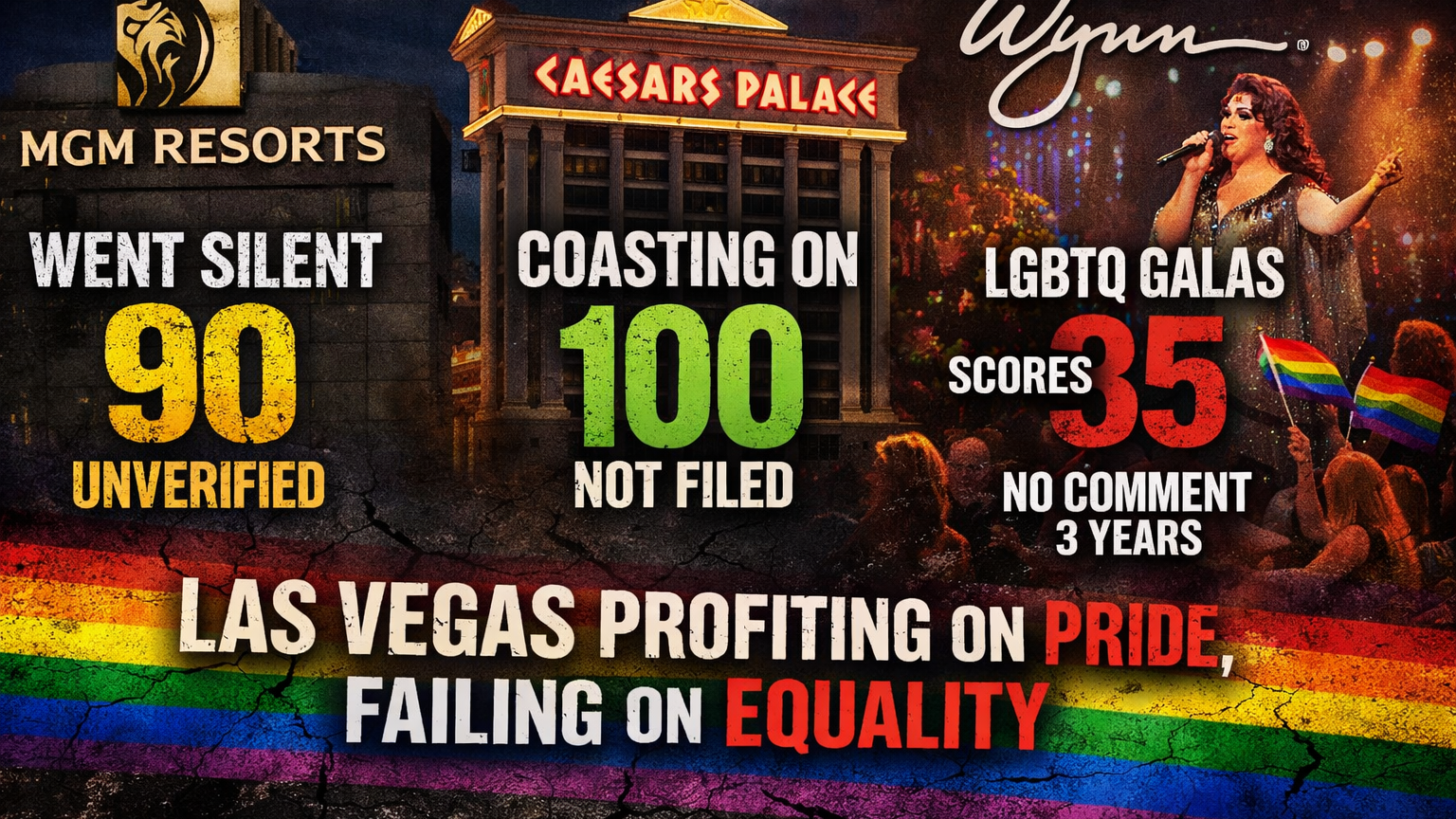
Take MGM Resorts. HRC’s CEI methodology for 2026 makes a big distinction between verified and unverified scores—unverified meaning the company did not submit the 2026 CEI survey and the score is assembled from prior submissions and public information. MGM’s own HRC corporate listing reflects a 2026 score of 90 marked “Unverified,” explicitly tied to not submitting the 2026 survey. That is not a rounding error; it’s a public signal of retreat from accountability, and the “90” itself implies there were gaps significant enough to cost points even before you get into the bigger issue of refusing to file. If your brand is built on “Everyone’s welcome,” the least you can do is show your work—especially when the national climate is pressuring companies to go quiet.
Now Caesars. The company has repeatedly promoted its perfect CEI scores in prior years, including a public investor-facing release celebrating a perfect score and “Best Places to Work for LGBTQ+ Equality” recognition. If Caesars is indeed “maintaining 100” while not filing for 2026—as you’re stating—then that’s the very definition of coasting on old glory while hoping nobody notices the difference between a verified score and a score that exists because of past participation and public-facing scraps. CEI 2026 is built around that distinction for a reason. In plain English: it’s easy to keep bragging rights in a press kit; it’s harder to keep putting receipts on the table when the room gets hostile. Las Vegas doesn’t need more rainbow-wrapped slogans from a corporation that won’t stand behind them in the one place where the paperwork actually matters.
And then there’s Wynn, which is where the hypocrisy starts to feel almost theatrical. If a company is hosting LGBTQ galas, taking the photo ops, and basking in the goodwill of queer philanthropy, you’d expect the workplace equality scorecard to be part of that story, not a missing chapter. For the third year in a row, Wynn scores a paltry 35—also unverified because they did not submit a survey. The number is so stark that the burden shifts to Wynn to clarify the record publicly, not to the community to keep guessing. If you’re going to host the gala, take the applause, and position yourself as a community ally, you don’t get to go silent year after year when the topic turns from ballroom lighting to benefits, protections, and accountability.
This is what makes the Las Vegas angle on CEI 2026 feel sharper than in past years. In earlier editions, the narrative in hospitality-heavy cities could lean on the comfort of momentum: more companies participating, more “100s,” more standardized proof that policies were improving. CEI 2026 lands in a different era—one where the substance may still exist in pockets, but the willingness to be publicly measured is collapsing. When Strip giants step back from filing, they are not just dodging HRC; they are telling LGBTQ employees and customers, “We’d rather not be on the record right now.”
If Las Vegas businesses want to keep profiting from queer tourism and queer culture—and they do—then they should be held to a simple standard: stop treating LGBTQ inclusion like a seasonal marketing campaign and start treating transparency like part of the job. If your CEI posture is strong, file and verify it. If your posture slipped, say what changed and what you’re fixing. If you’re throwing galas while your score is in the basement, explain how you square that circle. CEI 2026 is—more than anything—a test of whether corporate allyship survives when it stops being easy.
Read the full report online at reports.hrc.org/corporate-equality-index-2026