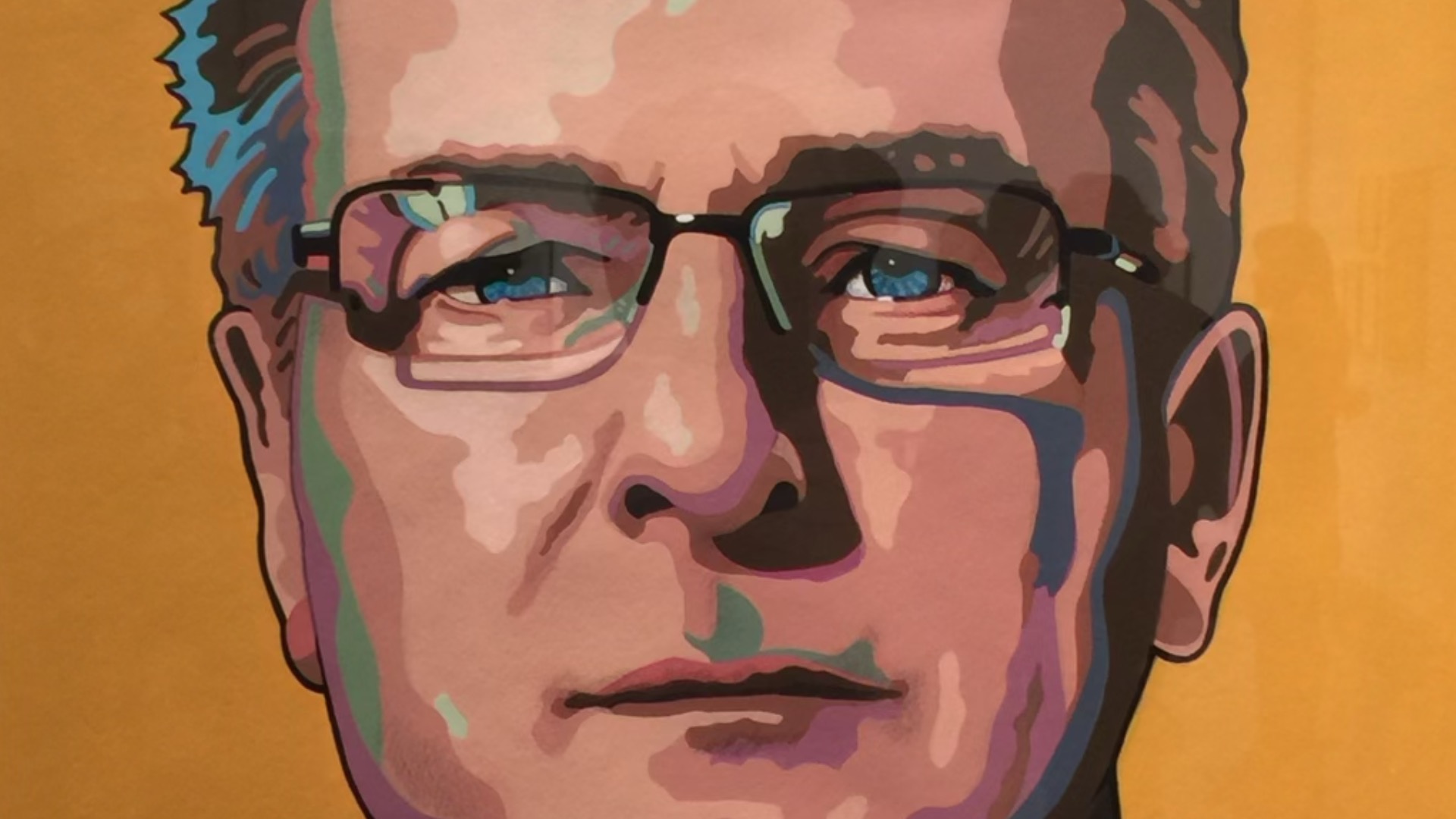
In a world where LGBTQ+ rights are still being contested, it’s easy to forget that not too long ago, those same rights were almost nonexistent. Former Nevada State Senator David Parks, the first openly gay legislator in the state, stands as a living testament to the progress made and the battles still ahead. Parks recently shared his inspiring journey and legislative achievements with the Lambda Business Association in a poignant and engaging presentation.
With a deep sense of purpose and humility, Parks began by recounting his path to public office and his dedication to serving the community. “I’ve been in town for 56 years,” he stated, reflecting on his long history in Nevada, beginning when he arrived with the Air Force. After completing his service, Parks remained in Las Vegas to pursue a master's degree, which marked the start of his career in public service. Over the next 27 years, he worked in various capacities, including as the budget director for the City of Las Vegas and Assistant Director of the Regional Transportation Commission, where he played a pivotal role in starting the transit system for Southern Nevada.
Parks’ dedication extended beyond government work into the nonprofit sector. He spent 25 years on the board of trustees for various organizations, 15 of which he served as president. He joked lightly about his unexpected entrance into politics, sharing how he became Nevada’s first openly gay legislator in 1996, a groundbreaking moment in state history. “Back in 1996, there were no openly gay elected officials anywhere in the state,” he explained. “I guess I became the guinea pig to be the first.” Despite the challenges, Parks rose to the occasion, driven by a commitment to justice and equality.
Reflecting on his first term in the Nevada Assembly, Parks spoke candidly about his initial hesitation and the support he received from key political figures, including Congresswoman Dina Titus and Governor Bob Miller. “I was approached to run, but it wasn’t on my radar,” he recalled. “There was a lot of effort to put it on my radar, though.”
In 1997, as a freshman legislator, Parks began the hard work of pushing forward legislation aimed at protecting and advancing the rights of LGBTQ+ Nevadans. Over the years, he has worked on more than 40 pieces of legislation to protect LGBTQ+ individuals and their rights, a remarkable achievement that led to Nevada being recognized as the best state for LGBTQ+ individuals by USA Today just four years ago.
Parks beamed with pride when discussing Nevada’s progressive stance on LGBTQ+ issues. “In the last decade, we’ve passed roughly 40 laws protecting the rights and safety of LGBTQ+ individuals,” he noted. These laws span a wide range of issues, including non-discrimination protections, parenting rights, and health care access. Parks emphasized the importance of these victories, especially in the face of national opposition to LGBTQ+ rights. “We’ve made great strides, but there are still challenges ahead.”
One of those challenges, Parks warned, is the erosion of corporate and political support for LGBTQ+ issues. He pointed to recent developments where major companies like Lowe’s, Home Depot, Ford, Harley Davidson, and Jack Daniels have withdrawn their support for LGBTQ+ diversity initiatives. Additionally, Parks raised concerns about “Project 2025,” a conservative effort led by the Heritage Foundation aimed at rolling back LGBTQ+ protections. The 922-page document outlines a strategy that could reverse decades of progress if implemented under a potential second Trump administration. “If Donald Trump wins a second term, we could see the erasure of a lot of laws we fought hard for,” Parks cautioned.
Parks was asked about his experiences as Nevada’s first openly gay legislator and how he navigated the political landscape. He shared a story about how some of his fellow legislators, unaware of his sexual orientation, teased one another about who would “come out” first. Though he faced hostility and opposition, Parks remained steadfast in his mission. “I always made an effort to be nice to those who opposed me,” he said, believing that building personal relationships was key to moving the needle on LGBTQ+ rights.
One of Parks’ earliest legislative victories came in 1999 with the passage of Nevada’s Employment Non-Discrimination Act. However, achieving that success was no easy feat. Parks recalled how even members of his own Democratic caucus were hesitant to support the inclusion of transgender individuals in the bill. “They gave me the option of removing the transgender portion to get the bill a hearing,” he explained. “It was a tough decision, but I knew I had to fight for what was achievable at the time.”
Despite the compromise, Parks never abandoned the transgender community. Over the next decade, he continued to introduce legislation that would extend protections to transgender Nevadans. In 2011, his persistence paid off when Senate Bill 331 passed, prohibiting discriminatory employment practices based on gender expression or identity. “It took 10 years, but we finally got there,” he said with a smile, underscoring the importance of patience and perseverance in the legislative process.
Another landmark achievement for Parks was his work on domestic partnerships in Nevada. In 2009, he successfully passed legislation granting legal recognition to domestic partnerships, allowing same-sex couples to enjoy many of the same rights as married couples. This bill laid the foundation for Nevada’s legal standing to challenge the federal Defense of Marriage Act (DOMA), which ultimately led to marriage equality being recognized nationwide.
As Parks looked to the future, he expressed optimism about the next generation of LGBTQ+ legislators and activists. He highlighted the increasing number of openly LGBTQ+ candidates running for office in Nevada and encouraged the community to continue pushing for progress. “We have a very active process in place to pursue legislation in the next session,” he said, noting that while it’s difficult to pass every bill, narrowing down the priorities can lead to meaningful change.
When asked about his his thoughts on the controversial open primaries initiative, Question 3–which will appear on Nevada’s November ballot–Parks explained that while the idea of an open primary sounds appealing, it comes with challenges. “There’s potential for ballots to be disqualified if voters don’t complete the ranking process,” he cautioned. While some support the measure, Parks noted that both Democratic and Republican parties have voiced opposition.
In a time when progress is constantly under threat, David Parks’ story serves as a reminder that real change requires courage, persistence, and an unwavering commitment to justice. His legacy will continue to inspire future generations of LGBTQ+ leaders and advocates in Nevada and beyond.