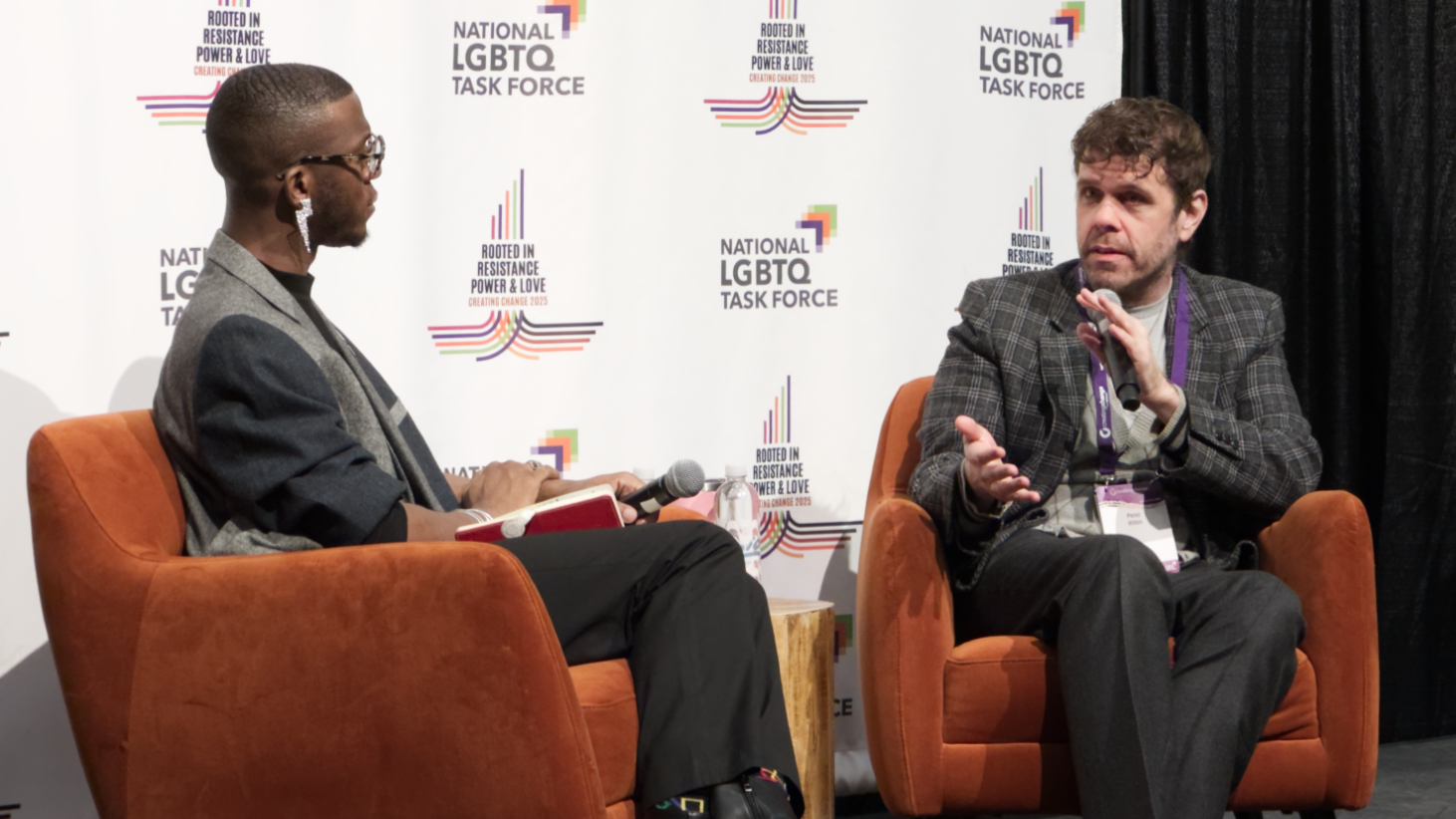
Perez Hilton, the self-proclaimed "original internet gossip," took the stage at the LGBTQ Task Force’s Creating Change Conference in Las Vegas to deliver a candid, heartfelt conversation about personal growth, the complexities of social media, and the evolving dynamics of community and activism. Over the course of an hour-long panel, Hilton shared insights from his 21-year career, weaving in moments of vulnerability, humor, and reflection. Here’s a recap of the highlights.
Opening with Accountability
Hilton began his session by addressing his well-documented past, including his "apology tour" for the controversies he sparked during his early blogging days.
“I’ve made a lot of mistakes in my past, which I’ve apologized for,” he said, leaning into the audience with earnest sincerity. “I’m done with the apology tour, but I’m not done living the change I’ve committed to. For me, it’s about showing that change over a long period of time. That’s how you prove to people you’ve learned. You have to live it.”
Hilton emphasized the importance of grace, especially in a society prone to cancel culture. “We need to give others the space to evolve,” he explained. “We all make mistakes, but the best truth is in how we grow from them. Fighting and labeling people as ‘evil’ because they disagree with us gets us nowhere.”
In a poignant moment, Hilton recalled the infamous video of himself crying on Election Day in 2016 after Donald Trump’s victory. “At the time, I believed everything I said about Trump voters. But my language has evolved. I no longer see people I disagree with as the enemy. That’s not progress. I’m here to understand, not to vilify.”
The Social Media Paradox
Shifting to the conference’s theme of social media and its intersection with activism, Hilton offered a layered critique.
“I hate social media,” he admitted with a laugh, eliciting knowing nods from the audience. “But I also need it for my job. Social media has amplified so much toxicity, but it’s also created communities that didn’t exist before. It’s a double-edged sword.”
Hilton, who began blogging in 2004, reflected on the stark differences between then and now. “When I started, there was no such thing as ‘social media’ or ‘influencers.’ I was called a ‘web celeb,’ which I actually like better than influencer. Celebrity news wasn’t even mainstream yet—it was on the fringes, in tabloids and entertainment shows. Now it’s everywhere.”
He drew a direct line from the commodification of celebrity to the “showbiz-ification” of politics, which he partly attributes to the Trump era. “Politics has become entertainment. It’s about clicks and views. Theatrics over substance. And it’s polarizing us even more.”
Despite his frustrations, Hilton acknowledged social media’s role in amplifying queer voices, albeit with caveats. “It’s a wonderfully complex time to be queer,” he said. “Social media has helped queer people—including conservative queer people—be seen. The idea of a gay monolith doesn’t exist anymore.”
Mindfulness in the Digital Age
Hilton offered advice to activists and creators navigating today’s fraught social media landscape: mindfulness and intention matter.
“Take a moment before you post. Think about how your words will impact others,” he said. “Expressing a critical opinion isn’t bullying. How you express it—the words you use—that’s where mindfulness comes in.”
Recalling a recent controversy involving Megyn Kelly, Hilton used it as a teaching moment. “She viciously attacked Lauren Sanchez for her outfit at an event. Was it inappropriate? Maybe. But the way Kelly ripped into her… it sets a tone. It tells her viewers it’s okay to do the same. That’s what I used to do, and I’m not proud of it.”
Hilton spoke candidly about his own wake-up call in 2010, when the LGBTQ youth suicide crisis shook the nation. “I was part of the problem,” he admitted. “When I made an ‘It Gets Better’ video, people called me a hypocrite and a bully. They were right. That was the turning point for me. I didn’t want to be that person anymore.”
On the Rise of Conservative Youth
In a sobering moment, Hilton shared his concerns about what he sees as a shift among younger generations.
“I’m depressed because I feel like teenagers and young people are shifting to the right,” he said. “It’s scary. Social media’s to blame, along with misinformation and the theatrics of politics. It feels like the focus is on demonizing groups of people rather than finding common ground.”
Hilton urged nonprofits and activists to adapt their messaging. “You have to be smart about it,” he said. “Speak in code if you need to. Play within the system to beat the system. It’s exhausting, but it’s necessary.”
Advice for Creators and Activists
Hilton’s advice for those building platforms or pursuing activism was simple: be authentic, but don’t overthink it.
“Create. However you interpret that—just do it,” he said. “Make mistakes. That’s how you learn. But be mindful of your intentions. Don’t just do something for shock value. Do it because it means something to you.”
He also stressed the importance of consistency and hard work. “You can’t just post and leave. Engage with your audience. Build those relationships. It’s time-consuming, but it’s what separates good content from great content.”
Hilton encouraged attendees to embrace the power of video. “If you’re not creating video content in 2025, you’re already behind,” he said. “People want dynamic, visual storytelling. Lean into it.”
Family, Identity, and the Power of Empathy
As a Cuban American, Hilton shared how his cultural background shaped his worldview. “Family is everything,” he said. “Even when we disagree politically, I don’t cut ties. That’s not who we are. We pick our battles and focus on what unites us.”
This sentiment extended to his view of the LGBTQ community. “We’re not a monolith. We never have been. And that’s okay. The goal is to find ways to bridge those divides, not deepen them.”
Hilton closed with a reminder of why spaces like Creating Change are so vital. “It’s easy to feel alone in your corner of the internet. But when we come together, we remind each other that we’re not alone. That’s the power of community.”
Looking Ahead
Despite his critiques of social media and its effects on society, Hilton remains optimistic about its potential. “The future of digital media is the past,” he said, half-joking. “It’s going to keep changing, just like it always has. The key is adapting. If you’re not willing to pivot, you’re not going to last.”
Hilton’s journey—from gossip blogger to self-reflective advocate—is a testament to the power of growth and the resilience of the LGBTQ community. His words at Creating Change served as both a call to action and a reminder that even in divisive times, understanding and empathy can lead the way forward.