
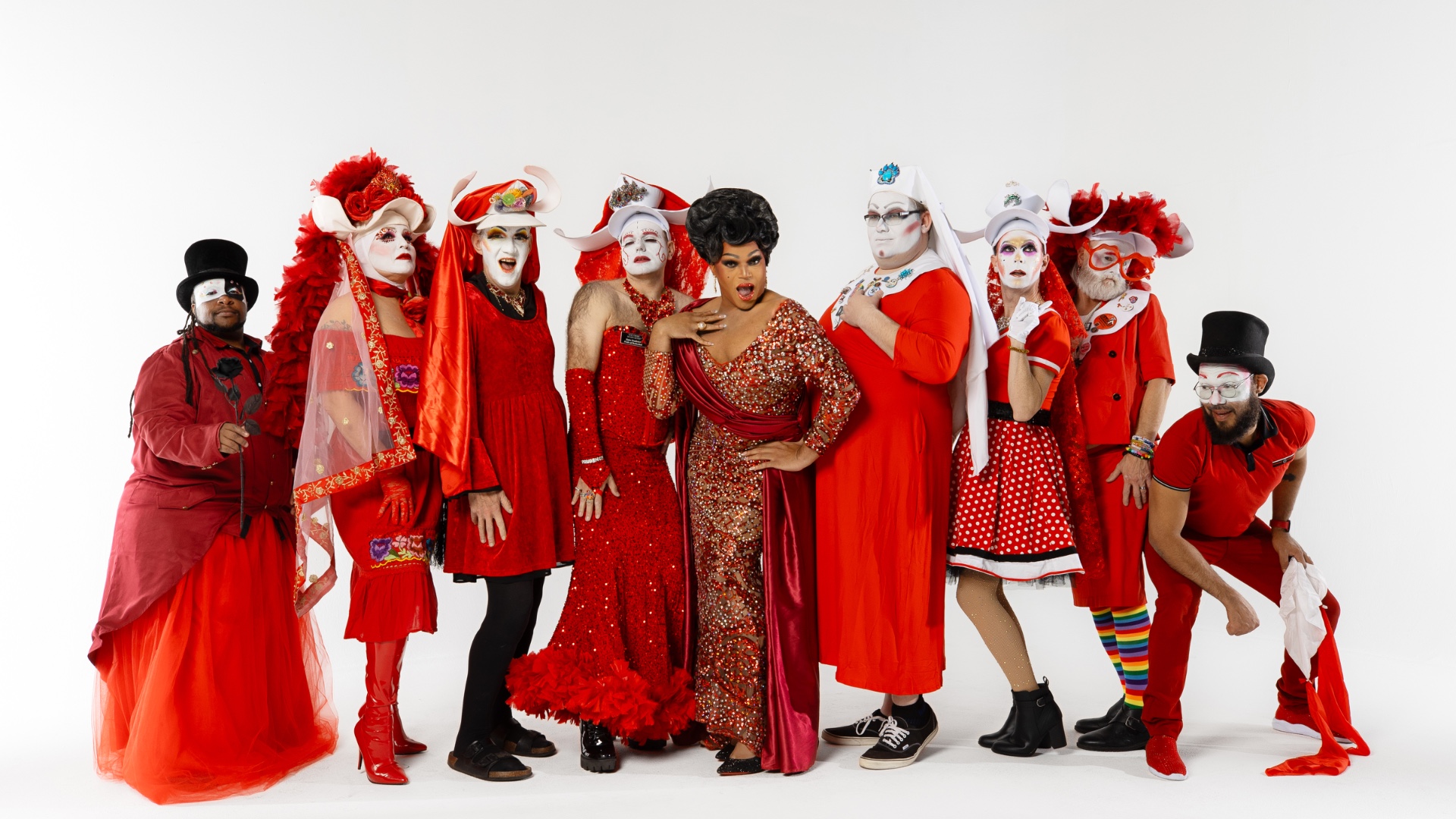
Red Dress 2026: “Abra-RED-Abra” Brings a Little Magic to Downtown Las Vegas—And a Lot of Care to the Community If you’ve spent any meaningful time in Las Vegas LGBTQ+ life over the last two decades, chances are you’ve crossed paths with the Sin Sity Sisters of Perpetual Indulgence—whether it was at a Pride event, a fundraiser, a bar night, a vigil, or simply an evening when you needed to see a familiar face in a not-so-familiar world. This spring, the Sisters’ signature fundraiser returns with a theme that’s equal parts sparkle, spectacle, and intention: Red Dress 2026: Abra-RED-Abra, landing Saturday, March 28, at The Usual Place downtown. Expect a packed room, red looks in every imaginable form, performances that push the definition of “variety show,” and a dance floor that keeps the night moving—because Red Dress has never been just one thing. But behind the fabulousness is a mission that remains as urgent as ever: raising money to help people access HIV prevention and treatment support when other systems don’t. Sister Prudence and the Sisters: 21 Years of Irreverence with a Purpose “I am Sister Prudence,” says Billy Pierro—one of the founding members of the Sin Sity Sisters of Perpetual Indulgence. “There were seven of us when we first founded this organization. We’re in our 21st year, so we’re finally legal and can go drinking.” The joke lands, but the work behind it isn’t a punchline. For 21 years, the Sin Sity Sisters have built a recognizable presence in Las Vegas: white face, bold lips, towering habits, and a style of community engagement that is part theater, part ministry, and part public-health megaphone. Their core mission has been consistent—HIV and AIDS awareness, education, and support, with a growing focus in recent years on prevention tools like PrEP. “About five years ago we started working with PrEP,” Prudence explains. “Because we want to help people—if they’re negative, stay negative; if they’re positive, stay undetectable. And those combinations help create a safer community for us.” The Sisters are known for showing up when it matters, and for reaching audiences that traditional messaging often misses. Their approach is intentionally disarming: joy as a vehicle for truth; humor as an opening for hard conversations; glamour as a spotlight aimed directly at care. Where the Safety Net Ends, SADAP Begins At the center of Red Dress is a program many community members have come to recognize as essential: SADAP—the Sisters’ support initiative that helps fill gaps left by public assistance programs and the realities of insurance. Prudence puts it plainly: “Government levels break off at about 400% above the poverty level, which is around $65,000 a year that somebody needs to make. So we pick up right above that.” That number surprises people—and it should. In a city where housing costs continue to rise and healthcare can be punishingly expensive, making “too much” to qualify for assistance doesn’t mean making enough to absorb a medical crisis. Or even a steady medical expense. “So just to put that in perspective,” Prudence adds, “that means if you make $65,000 or more a year, you get no assistance. And that means that if you don’t have insurance, you are paying for your medicines by yourself—and that’s about $3,000.” That's the kind of number that can rapidly destabilize a person’s entire life: rent, car payment, food, family obligations—none of it pauses because a prescription needs refilling. For the Sisters, that’s where Red Dress becomes more than a party. It becomes a bridge. Red Dress: A Premier Fundraiser With Real Results Now in approximately its 17th year, Red Dress has grown into the Sisters’ biggest annual fundraiser—and a cornerstone of how they fund SADAP. “Red Dress is our premier fundraiser,” Prudence says. “It’s how we raise our money because we don’t get any government access. Everything we do is through raising money this way.” Last year, the event turned a profit of around $40,000, a number Prudence calls a big deal for the organization—both financially and symbolically. “Being able to produce something at the level that we think is good for our community and fun—and also make a decent profit from it—is a really big deal,” he says. “We only do that because we have so much support from our community…from the bars and the clubs and the organizations in town that help raise all this money and sponsor us…we’re really fortunate.” Red Dress has become one of those nights where the entire community seems to converge—performers, nightlife institutions, nonprofit partners, first-timers, longtime supporters, and plenty of people who plan their look weeks in advance. “Abra-RED-Abra”: The Magic Is the Point The 2026 theme—ABR Red ABRA—leans into enchantment, illusion, and transformation. But not just as an aesthetic. The Sisters want the theme to feel like permission. “This year’s theme is Abra-RED-Abra,” Prudence says, “because we wanted to go with something magical. We’re really calling this a magical transformation…we’re hoping to inspire people to transform in any way that they want.” That includes the literal—drag, fashion, character, costume—and the deeply personal. Prudence is explicit about why “transformation” matters right now: “Whether that’s transitioning, in this day and age when that’s not acceptable and that’s not celebrated, we want to celebrate it.” In a cultural moment when many LGBTQ+ people—especially trans people—are facing increasing scrutiny, restriction, and fear, the theme reads as both celebration and statement: you are welcome here, as you are, and as you’re becoming. The Evolution of Red Dress: Beyond “You Must Wear a Dress” Red Dress has always been famous for one iconic expectation: show up in a red dress. But in recent years, the event made a significant shift—one that speaks volumes about listening, inclusion, and what it means for an organization to grow alongside its community. “A few years ago, we stopped requiring a dress,” Prudence says. “We still require a fabulous red outfit.” The change wasn’t random—it was necessary. As the event evolved, so did the understanding that not everyone experiences “dress” as playful. For some trans community members, it was the opposite. There were transgender members of our community that were like, ‘I fought all my life to not be in a dress,’” Prudence’s voice turns more personal here. “I always get emotional when I talk about this because it was a fight that I had to have within the order,” he says. “I’m the president and I’m in charge, but we’re very democratic, and some did not agree with me.” He recalls pushing the conversation year after year—refusing to let the tradition override the community’s lived reality. “I remember telling them…‘I’m gonna be a thorn in your side every single year until I get my way on this one, because we’re not listening to our community.’ And I finally got my way.” Today, Prudence can’t imagine going back. And the proof is visible every year: kilts, suits, high-concept ensembles, drag king brilliance, gender-defiant fashion, and the kind of red looks that make the room feel like it’s glowing from the inside out. “It kind of transformed it,” Prudence says. “It has changed everything about Red Dress in such a positive way.” A Lineup That Feels Like Las Vegas (and Like Us) Red Dress isn’t simply a fundraiser with background music—it’s a full-scale entertainment night, curated with intention and unmistakably local pride. This year’s host is Madame Mystery, bringing magic to match the theme: “She’s gonna be our magician and kind of host extraordinaire,” Prudence says, “and she’s gonna keep the party flowing.” The performance roster reads like a love letter to the breadth of queer nightlife and stage art in Las Vegas: • Andrew S., sword swallower (with America’s Got Talent cred) • Burlesque including Ms. Bronnie Beauty • Drag performers Hanna-Barbera, Josie Cavallari, Kisa Diva, and Derek Daniels • A Drag King showcase • Piranha and Gypsy dancers bringing the club energy directly into the program A key shift in recent years: Red Dress has intentionally leaned into local talent rather than chasing only out-of-town “name” bookings. Prudence notes that the idea of relying on big reality-TV names didn’t fit the event’s purpose—or its budget. “Going local and having the people in our community support us—and the talent that we have in our community highlighted—I think has shown that that’s really where we’re going to find the success,” he says. It’s not just practical. It’s cultural. Red Dress feels like Las Vegas because it is built by Las Vegas. What the Night Looks Like: VIP, Show, Contest, Silent Auction, Dance Party The evening begins with doors at 7 p.m. and a VIP hour from 7–8 p.m. VIP guests get early access, dedicated entertainment, and food—courtesy of a longtime community partner. “PublicUs has partnered with us for years now,” Prudence says. “They put together a really great selection of…light bites.” At 8 p.m., the main show launches, taking the room through performances, crowd moments, and the little traditions that make Red Dress feel like Red Dress—like the virgin corsages given to first-time attendees. There’s also a Red Dress contest, designed around the theme and meant to reward creativity, interpretation, and commitment to the look. And then there’s the silent auction—always a cornerstone of the fundraiser side of the evening. “We have an amazing silent auction,” Prudence says. Expect bids on everything from Strip show tickets to staycations to nightlife experiences—“a night at Gypsy and Piranha…everything in between.” The night ends the way it should: with a dance party. Because even when a room is raising money for something serious, joy is still part of the medicine. Tickets and VIP Options • General Admission: $35 • VIP: $55 VIP tables tend to move quickly. At press time, some configurations were already sold out (including six-seat VIP tables), with limited remaining options in other sizes. Want to Get Involved With the Sisters? Red Dress may be the most visible moment of the year, but the Sisters’ work runs year-round—and they’re always looking for new energy, new volunteers, and future Sisters. The easiest starting point is their website, where you can find volunteer info and pathways to deeper involvement. If you want to see how the organization functions behind the makeup and the mythology, you can also attend a meeting. “We have two meetings a month,” Prudence says: the second Tuesday at 7 p.m. and the third or fourth Sunday at 4 p.m. (a steady monthly rhythm). “People see the glitz and glamour…and don’t realize how much work it really is.” The Hardest Part Isn’t the Makeup You might think 21 years of painting a full face would make the physical part the hardest. Prudence says otherwise. “The hardest is…that I know what I’m going to be representing the community,” he explains. “It means a lot. So I get a lot of personal information from people.” In today’s climate, he says, the emotional weight is heavier than ever—people are scared, people are withdrawing, and sometimes the Sisters become the reason someone feels safe enough to be out at all. “We’re seeing people not want to go out,” Prudence says, “that when they hear that we’re going to be out, that’s the only reason that they want to go out because they feel safe around us.” That’s the true work: being joyfully visible while carrying real stories, real fears, and real needs. It’s also why Red Dress matters. The One Thing Prudence Wants You to Feel When asked what he wants every person who walks into Abra-RED-Abra to experience, Prudence doesn’t hesitate: “Safe—and a sense of community.” On March 28, downtown will be drenched in red. But the real color of the night—the thing that makes Red Dress endure—is care. It’s the reminder that glamour can be a fundraiser, laughter can be advocacy, and magic can be practical: a ticket bought, a bid placed, a donation made, and a person who gets to stay healthy because the community showed up. Photos; Shane O'Neal Photos; Shane O'Neal
Red Dress 2026: Abra-RED-Abra Brings a Little Magic to Downtown Las Vegas
The Sin Sity Sisters of Perpetual Indulgence's signature fundraiser returns March 28 at The Usual Place — and a lot of care to the community.