
Black Leadership Rising: A Defining Moment at Creating Change 2025
The annual Creating Change Conference, hosted by the National LGBTQ Task Force, has long been a beacon for activists, allies, and leaders within the LGBTQ+ community. This year, the conference held in Las Vegas set the stage for one of its most impactful plenary sessions to date: "Black Leadership Rising."
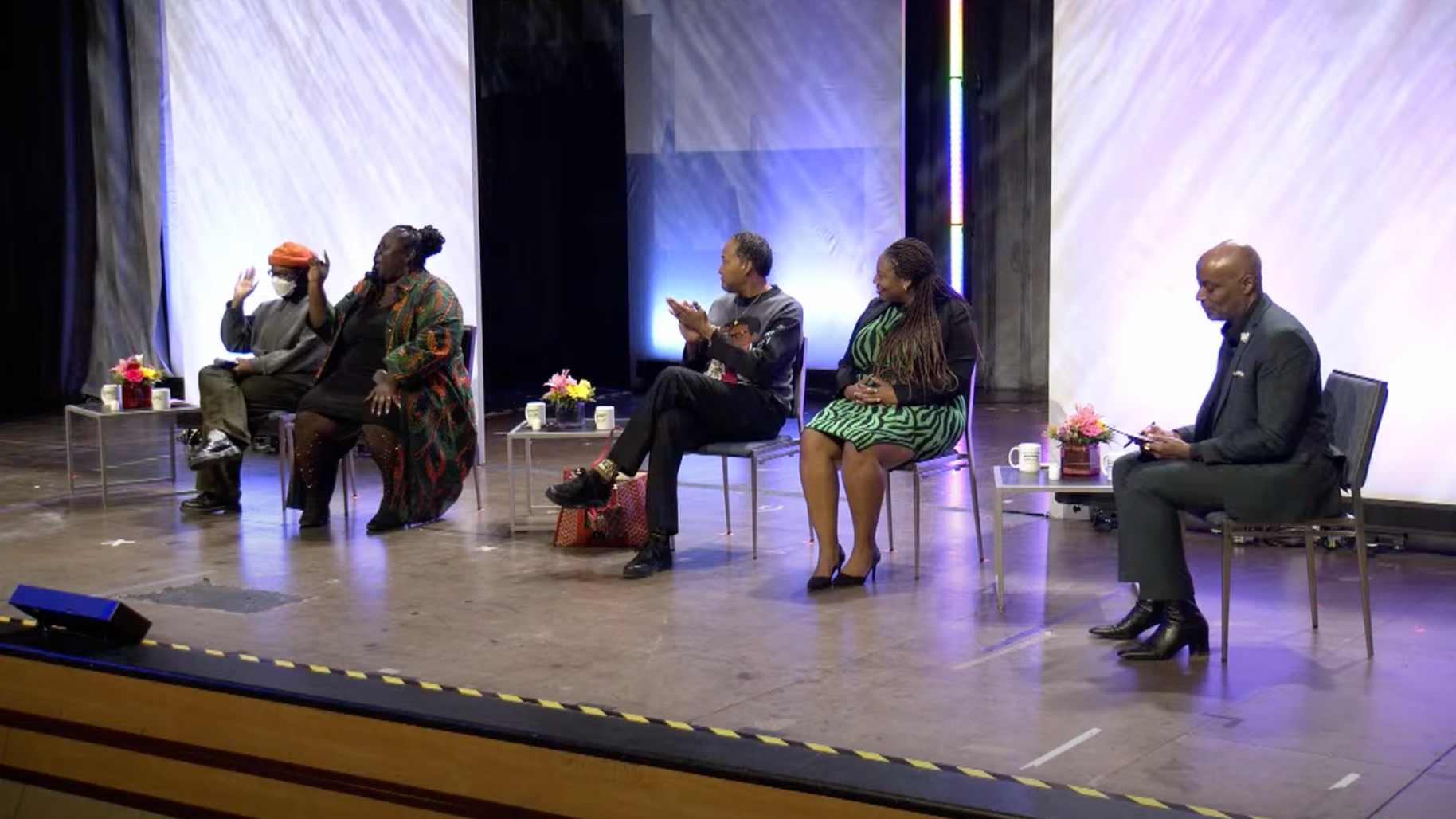
Amid a backdrop of systemic challenges and escalating attacks on marginalized communities, the panel brought together four trailblazing Black leaders to reflect on the state of Black queer leadership and to chart a course for the future. Moderated by Andre Wade, State Director of Silver State Equality, the plenary provided a powerful, candid, and uplifting dialogue that resonated deeply with the audience.
Setting the Stage: The Panelists
The panel featured an extraordinary lineup of leaders who each bring unique perspectives and lived experiences:
- Imani Rupert-Gordon, Executive Director of the National Center for Lesbian Rights (NCLR), whose work champions intersectionality and structural change.
- Dr. David Johns, Executive Director of the National Black Justice Coalition (NBJC), an educator and advocate for systemic equity and intersectional leadership.
- Mandisa Moore-O’Neal, Executive Director of the Center for HIV Law and Policy, whose work centers Black feminism and transformative policy advocacy.
- Representative Mauree Turner, the first openly non-binary and Muslim legislator in U.S. history, representing Oklahoma’s 88th District, who champions intersectional justice and community-led policymaking.
Together, these leaders exemplify the essence of resilience, vision, and transformative power in the face of societal challenges.
A Defining Question: Is Black Leadership Rising?
Andre Wade opened the session with a critical question: Is Black leadership truly rising?
Imani Rupert-Gordon’s response was optimistic yet nuanced. “Black leadership is absolutely rising,” she stated, acknowledging the increasing visibility of Black leaders across various sectors. However, she also noted the simultaneous rise in systemic attacks on diversity, equity, and inclusion initiatives.
Dr. David Johns added a historical lens, reminding the audience that Black leadership has always been rising. “Everything started in Africa,” he declared. “We are the original influencers. Black leadership isn’t new; what’s new is the spotlight and the challenges that come with it.”
Mandisa Moore-O’Neal and Representative Mauree Turner provided further depth, emphasizing the often-overlooked leadership roles held by Black women, queer individuals, and those in the South. “Leadership isn’t always acknowledged,” Moore-O’Neal observed. “For Black folks, especially in the South, leadership has been about survival. It’s ingrained in our communities.”
Barriers to Leadership
While Black leadership is on the rise, the panelists were candid about the barriers they face. Representative Turner reflected on the intersectionality of their identity as a non-binary, Muslim Black legislator in Oklahoma. “I had to fight against being seen as just one thing,” they shared. “People didn’t want to see the full intersection of who I am and how that informs my work.”
Rupert-Gordon highlighted the importance of authenticity in leadership. Drawing from an anecdote about auditioning for roles, she cautioned against leaders conforming to expectations. “Don’t be the second-best Janet Jackson,” she said. “Be the best version of yourself.” Her point underscored the need for leaders to break free from prescribed molds and redefine success on their own terms.
Moore-O’Neal pointed to a lack of institutional and interpersonal support as a major barrier. “We need to acknowledge the cost of leadership,” she said. “When you’re clear and unapologetic about your values, it’s not always welcomed. But clarity is necessary for transformation.”
Building Bridges for the Future
When asked how they are paving the way for future leaders, the panelists emphasized mentorship, structural change, and community.
Dr. Johns shared his work with the NBJC’s “Good Trouble Network,” a program designed to support Black LGBTQ+ elected officials. “We need to create spaces where leaders can not only survive but thrive,” he explained. “It’s about building trampolines, not just safety nets, so that when we fall, we bounce forward.”
Rupert-Gordon echoed this sentiment, emphasizing the importance of structural change. “It’s not just about opening doors; it’s about eliminating them altogether,” she said. She described initiatives at NCLR that prioritize equity in hiring, eliminate salary negotiations to prevent pay disparities, and extend job postings to reach more diverse candidates. “We’re not just recruiting; we’re retaining,” she asserted.
For Moore-O’Neal, Black feminism provides the foundation for her leadership. “Black feminism is not just a theory; it’s a framework for action,” she said. By centering the most marginalized voices, she believes we can craft policies that uplift entire communities.
Representative Turner reflected on their role as a community organizer-turned-lawmaker. “I’m always working to build a pipeline of leaders,” they shared. “Liberation is collective, and we don’t get there by leaving people behind.”
The Call to Action
Dr. Johns concluded the session with a powerful challenge to the audience. “If you’re not Black, ask yourself: What are you doing to support Black leadership?” he urged. “Use your privilege to uplift Black leaders in your community. And if you don’t know any Black leaders, start there.”
His words encapsulated the essence of the plenary: true progress requires collective effort. Black leadership is not just about representation; it’s about creating systems and communities where every voice can thrive.
A Moment of Inspiration
As the session drew to a close, the room was filled with applause, energy, and a renewed sense of purpose. The “Black Leadership Rising” plenary was more than a panel; it was a call to action, a celebration of resilience, and a reminder of the transformative power of community.
Creating Change 2025 has set a bold precedent for how conferences can center marginalized voices and drive meaningful dialogue. As the LGBTQ+ community continues to confront challenges, the leadership and vision of these Black leaders provide a roadmap for a future rooted in equity, authenticity, and love.
To the attendees and beyond: the work continues. As Dr. Johns put it, “We forged ourselves out of this fire. And if we can do that, we can face anything that lies ahead.”