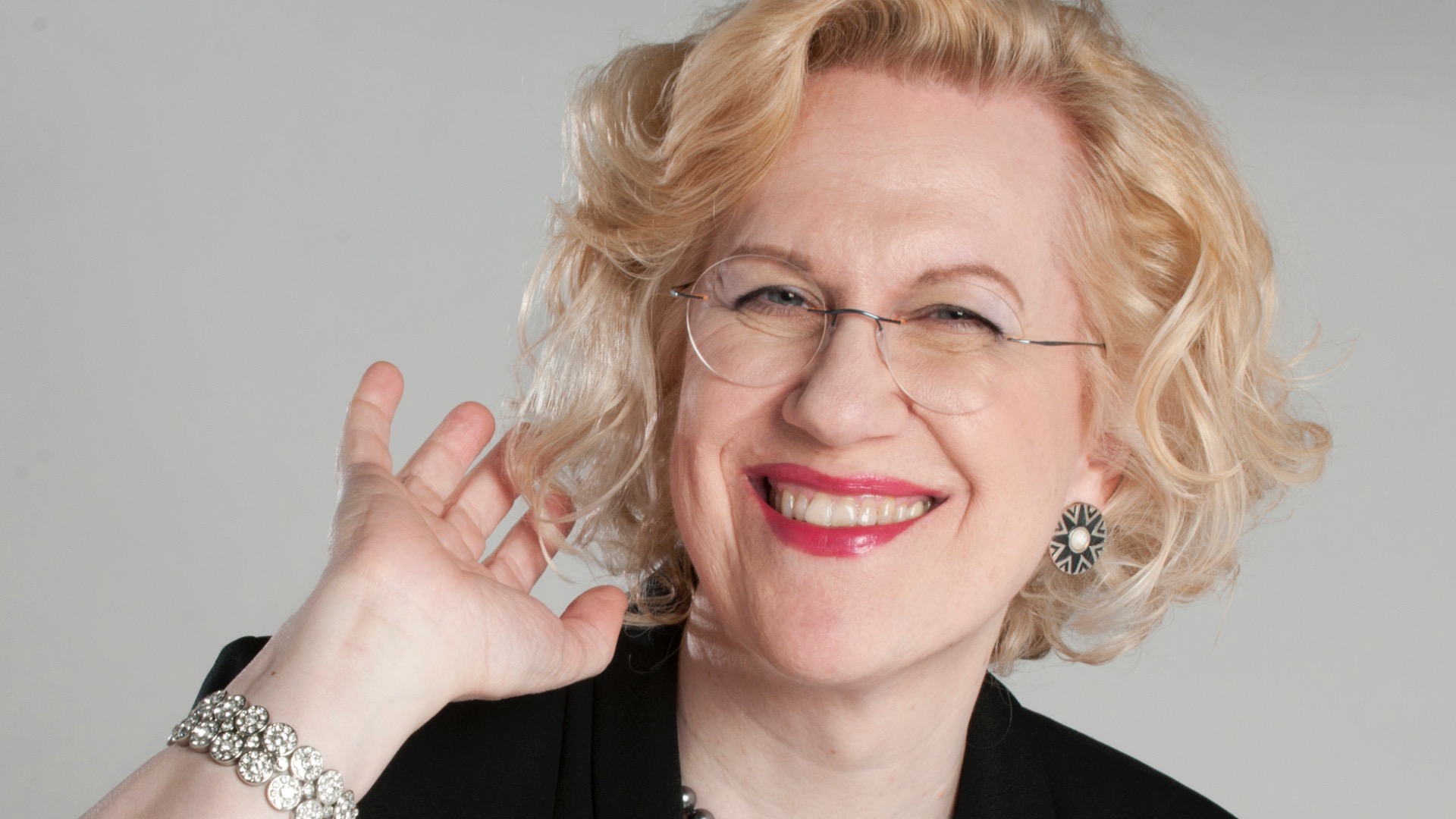
For pianist Sara Davis Buechner, music isn’t just a calling—it’s a life force. And on April 12, Las Vegas will get its first in-person taste of her artistry when she makes her debut with the Las Vegas Philharmonic at the Smith Center’s Reynolds Hall. Her performance of George Gershwin’s iconic Concerto in F promises to be an unforgettable evening of jazz-infused classical brilliance, humor, passion, and profound cultural commentary—all the hallmarks of Sara’s unique presence on and off the stage.
“I think the last time I was in Las Vegas was back in 2003 or 2004 for a chamber music festival,” Sara says with a laugh. “But playing Reynolds Hall will be a first—and what a gorgeous venue. I love knowing it was inspired by the Hoover Dam. That blend of architecture and acoustic perfection? That’s very Gershwin.”
Gershwin's New York, From a Steinway in Vegas
Sara will perform Gershwin’s Piano Concerto in F, a major work written just one year after the composer’s explosive debut of Rhapsody in Blue. Premiered in 1925, this three-movement concerto marked Gershwin’s formal entrance into the realm of “serious” concert music—though Sara is quick to dismantle the idea that American music ever needed approval from Europe.
“Classical music has always been thought of as European,” she says. “But Gershwin flipped the script. He took everything around him—jazz clubs in Harlem, Yiddish melodies from his immigrant parents, the honks and hustle of Manhattan—and made it symphonic. He made it universal.”
For Sara, the piece is deeply personal. It was her choice for the final round of the prestigious Gina Bachauer International Piano Competition in 1984—an unconventional and, at the time, controversial move.
“You didn’t play Gershwin in a classical competition,” she explains. “But I did, and I won. That changed everything.”
The Concerto in F is full of cinematic flair and rhythmic fireworks. “The first movement is razzle-dazzle,” she says. “The second is this dreamy, bluesy reverie—you can almost hear a trumpet wailing from a Manhattan fire escape. And the third? It just barrels forward. Hard as hell to play, but exhilarating.”
For those who want a sneak preview, Sara recommends checking out Oscar Levant’s performance in An American in Paris—a film that helped popularize the concerto in the 1950s. “It’s worth seeing just to hear what Gershwin sounds like on the silver screen,” she adds.
From Juilliard to the World: A Journey of Curiosity and Courage
Sara’s story is one of brilliance forged through persistence, wit, and the belief that music should belong to everyone. She arrived in New York at 16 to study at the Juilliard School and found herself—ironically—blessed with a piano teacher who was often asleep or hungover. Left to her own devices, she dove into the school’s music library.
“There were sixteen huge shelves of piano scores,” she recalls. “I just started with A and went all the way to Z over two years. That experience shaped everything. It made me a great sight-reader, yes—but more importantly, it opened me up to a universe of composers no one else was playing.”
From Icelandic composers to early American women like Dana Suesse, Sara built a repertoire that defies borders and expectations. “That’s the real DEI,” she says with a smile. “Getting to know everything you don’t know.”
A Visible Voice for Transgender Musicians
As one of the most visible transgender classical musicians in the world, Sara’s career has also been a powerful platform for advocacy. Her transition in the late 1990s was not just personal—it was a public act of courage in an era when transgender visibility in the arts was almost nonexistent.
“I remember the moment it hit me,” she says. “I wasn’t just transitioning privately. I’d be walking out on stage. Taking a bow. Giving interviews. It wasn’t just about being me—it was about being seen.”
That visibility came with responsibilities she didn’t ask for—but embraced. “I had the privilege of knowing Larry Kramer and Roger McFarland, who helped found the Gay Men’s Health Crisis. They taught me how to use a platform wisely. And Roger, bless him, would absolutely let me have it if I screwed up. He reminded me that I wasn’t just representing myself—I was representing an entire community.”
Sara believes every trans person in the public eye becomes a de facto spokesperson, even when it’s unfair. “But it’s part of the price of the ticket,” she says. “When a young trans person sees me on stage, they say ‘there's someone who's walked in my shoes and they've done it, that means I can do it’.”
Classical Music Isn’t Just for the Elite
Sara is no stranger to challenging stereotypes—not only about gender, but about classical music itself. “There’s this idea that it’s boring, elitist, for old people,” she says. “But good music is good music. It’s fun. It’s passionate. It’s human.”
She’s performed in schools and underserved communities around the country, introducing Beethoven to students who had never heard a live piano before. “I’d tell them about how Beethoven’s dad used to beat him, and how the music expresses rage and resilience. You should see their eyes when they realize that music can be about them. That’s the key—connection.”
Her critique of the classical music world is blunt but fair: “Too many orchestras still cater to donors and familiarity. They’re afraid of change. But change is where life happens.”
At 65, Sara says she still practices and performs daily. “Playing piano is physical. It keeps me in shape from the waist up at least!” she laughs. “Sure, my New Year’s resolution was to hit the gym more—but thank God for strong wrists.”
Las Vegas Debut: A Moment Years in the Making
April 12 marks a full-circle moment for Sara: her first solo performance in Las Vegas, a city known more for roulette wheels than Rachmaninoff.
But she’s thrilled to bring her brand of intellectual sparkle, deep musicality, and quick wit to the Reynolds Hall stage.
“It’s funny—I’ve played the Vegas casinos, but only at the craps table,” she quips. “This time, I’m playing Gershwin. I think I’ll win bigger.”
Whether you come for the dazzling piano solos, the moving personal journey, or the opportunity to witness a cultural icon in her element, Sara Davis Buechner’s performance with the Las Vegas Philharmonic is not to be missed.
And as she prepares to sit at the Steinway and channel Gershwin’s New York through her own fingertips, Sara offers one final reminder: “Music isn’t a job—it’s a passion.”
And if she can share even a little bit of that with someone else, especially in a city as electric as Las Vegas, well—that’s the jackpot.