

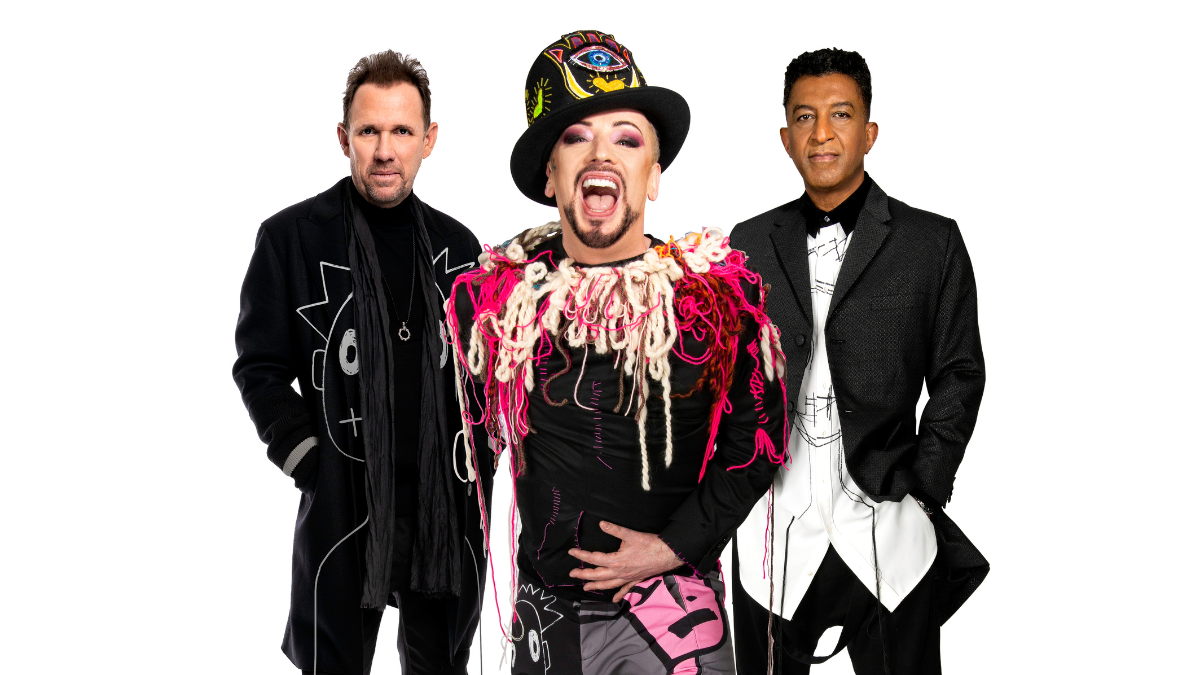
Few artists have influenced pop culture as boldly or as visibly as Boy George. From chart-dominating anthems to decades of creative evolution, his presence has never been subtle — or forgettable. Ahead of the March 18–28 Boy George & Culture Club performances at the Venetian Theatre, the legendary performer spoke with QVegas about identity, reinvention, and what keeps him inspired after 40 years in the spotlight.
“Vegas is always nice to be in a place for a few days,” he says. Touring city-to-city can feel like hitting reset every night, but a multi-night stretch gives him room to “really establish” what the show is. At The Venetian, he’s looking forward to that rare luxury—building momentum from one night to the next, fine-tuning the pacing, and, as he puts it, keeping ongoing conversations alive about what to add, what to resurrect, and how to keep the performance exciting for the crowd and for the band.
Because even for an artist with culture-stamping hits, fan expectations can be a moving target. There’s always someone in the audience who leaves thinking, You didn’t do my favorite song. “And you go, well, I don’t know what your favorite song is,” George says, laughing at the impossible math of nostalgia. His solution is part popmanship and part instinct: deliver the songs people came for, but keep the structure flexible enough to make each night feel lived-in rather than prepackaged.
At The Venetian, that flexibility matters, because George is not a singer who hides behind the mic. He’s a talker—warm, funny, and quick to turn a moment into a story. “I’m very talkative,” he admits. “I’m not a shy front person.” For him, the show isn’t just a run-through of tracks; it’s a relationship with the room. He likes to “engage people” by setting up the emotional intention of a song—what it’s about, what feeling it’s meant to evoke—without over-explaining. That kind of context can make even unfamiliar material feel instantly accessible.
He points to a brand-new track the band recently played, “Skinhead Stomp,” which he describes as “pure eighties ska.” Introduce it the right way, and the audience leans in rather than checking out. It helps that George writes like a classic pop maximalist, pulling from a lifetime of musical obsessions—“everything from rock and roll, Little Richard, to Bowie, to soul music, to reggae, funk…even a bit of soft rock,” he says. The Venetian crowds can expect that kind of genre-hopping energy: big choruses, rhythmic left turns, and songs that connect because they feel familiar even when they’re new.
He’s also thinking about emotional architecture—what he calls a “map of feelings.” Culture Club audiences, he’s noticed, respond to both the big pop moments and the intimate ones. “People love the ballads, they love things stripped down,” he says, “and they like the big poppy stuff.” Part of the Las Vegas appeal is having the runway to explore that full range. One night might lean punchier; another might make more room for something tender. He’s even been pushing the band to revisit deeper cuts and later-era material, including a “stripped down version” of “What Does Sorry Mean” from the Life album—“a beautiful kind of real reggae song,” he says.
What hasn’t changed is his commitment to showing up in the right spirit. George is candid about how he used to carry bad moods onto the stage, mistaking volatility for honesty. Now he sees it differently. “Nobody’s there to put up with what’s happened to you in the morning,” he says. These days, he walks onstage focused on performing—supported by “great other musicians,” a sense of camaraderie, and the kind of onstage friendship that audiences can feel. If something breaks, he’ll fill the space with humor. The show, he promises, is “gossipy” and lively—Vegas-ready without being Vegas-cheesy.
The city itself also suits him. Las Vegas after dark, he says, becomes “a whole another playground,” like Ibiza when the neon takes over. And he likes that he can move through it more easily than people might expect. He used to feel pressure to appear in full regalia—“if I wasn’t in my Batman outfit, I would feel like I was disappointing people.” Now, he’s more relaxed, more approachable, and more convinced that “it’s more important just to be nice to people.” In a town where celebrities often try to disappear, George has gone the other direction: he’s done hiding. Kindness, he’s found, is a kind of superpower.
That openness extends to how he thinks about his audience—especially the mix of ages, identities, and backgrounds that shows up for Culture Club. George has always loved a crowd that looks like real life: gay and straight, older and younger, dressed-to-kill and dressed-for-comfort. He resists the idea that any community can be reduced to a single “type.” Individuality is the point. He lights up talking about creativity as a daily act—whether it’s how someone dresses, what they believe, or the bravery of simply being visible. “As long as you’re not hurting anyone,” he says, he’s for it.
So what should fans expect at The Venetian? A show anchored by those indelible songs—love stories and pop explosions that have aged into something sturdier. George compares certain classics to “reliable furniture…solid, good oak.” With time, he’s come to understand them differently, bringing more soul to songs he first sang as a teenager. And he still loves the jolt of dropping a familiar favorite at just the right moment—the “secret weapons,” the ones that make the whole room remember why they came.
If there’s a thesis to Boy George & Culture Club in Las Vegas, it’s this: don’t mistake a legacy act for a museum piece. The Venetian run isn’t about repeating the past exactly as it was. It’s about keeping the music alive—through surprise, conversation, emotional pacing, and an artist who’s still curious enough to tweak the set list, tell the story, and meet the crowd where they are.
And if you want the simplest takeaway, George offers one final piece of advice—delivered like a punchline, but meant sincerely: “Just be nice to your mother.” At The Venetian, he’ll be doing what he’s always done best—turning pop into communion, with a wink, a heartbeat, and enough room in the chorus for everyone.
For tickets to Boy George & Culture Club, visit ticketmaster.com