

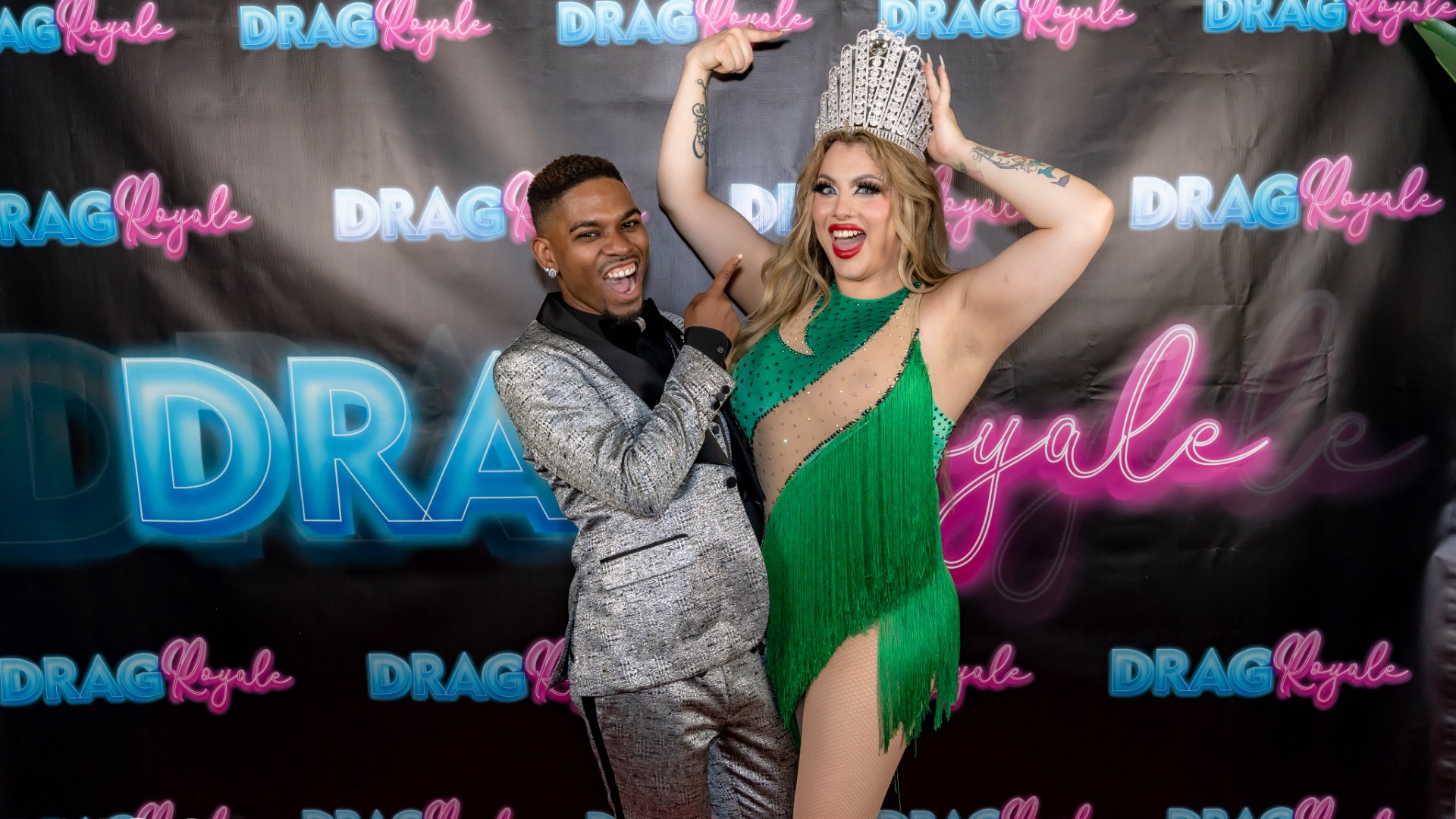
Sophia Kennedy didn’t stumble into a crown—she engineered it. Across ten high-pressure weeks of Drag Royale at Gipsy, she delivered calculated risks, exacting glamour, and performance choices that revealed a queen who knows precisely who she is and what she wants. The headline might be a season finale; the story is a years-long climb powered by pageant polish, competitive fire, and a working artist’s discipline.
“I’m a very competitive person,” she says without flinching. “I come from the pageant world. When I’m there, I’m there to be the best version of myself.” In a season famous for twists, wardrobe whiplash, and judges who don’t hand out compliments lightly, Sophia’s edge was simple: relentless focus. It showed—in the runway, in the challenges, in the way she absorbed feedback on Sunday night and weaponized it by the following week.
Drag Royale may have ended in an unexpected finale, but the arc of the season is crystal clear: Sophia arrived prepared, pushed herself further, and left the stage with Vegas fully awake to what she can do.
Built for the Spotlight
Sophia speaks with the steadiness of someone who’s done this before—because she has. The pageant lineage is there in her lines, her pacing, and the structural integrity of her looks. What reads as “effortless” on stage is the result of process: mood boards, fittings, a team that knows her taste, and a queen who understands proportions, movement, and the camera’s eye.
“I think I’m most proud of showing Vegas who Sophia Kennedy is,” she says. “People knew me from performing around town, but this competition let me build a complete picture. I didn’t do it alone—I had a team—but I represent that.”
That “complete picture” wasn’t just aesthetic. Week after week, she presented different modes of drag—high-fashion evening, pop-diva precision, narrative-driven reveals—without ever losing the signature throughline.
A Lesson in Taking Notes
A lot of queens hear critique; fewer metabolize it. Sophia did both. “I’ve never done a competition like this,” she admits. “I’m hotheaded. But I learned to take feedback and truly apply it the next week. That surprised me.” The result was cumulative momentum. Challenges stopped feeling like isolated events and started reading like chapters in a singular, intentional campaign: tighten the silhouette, heighten the story, honor the reference, and never let the heel wobble.
That discipline revealed itself most clearly near the end of the season—precisely when adrenaline can trick even seasoned performers into overreaching. “Finals night was eat or get eaten alive,” she says. “I gave it my all.” No flailing, no excess; just a queen who had rehearsed the hard parts and trusted the rest.
Two Stages, One Voice
With residencies at both Gipsy and Piranha, Sophia is stepping into a uniquely Vegas role: a queen who must be a headliner and a home base, an attraction and an anchor. She is ready. “These are iconic clubs,” she says. “But I’m not going to stop being me. I got here by being myself. I’ll remain humble and bring the best of me no matter where I work.” The message to the community—especially newer performers—is deliberate: the room is legendary, but the work still happens in the mirror, the rehearsal studio, and the group chat with your team at 1:47 a.m.
Her ethos also insists on accessibility. “There’s always something going on in the world that makes people anxious,” she says. “When I step on stage, my hope is to take someone away from the real world for five minutes—to bring them into the illusion I’m creating and let them enjoy the journey.” It’s escapism with a pulse, glamour with intention.
Signature Moments: Pride and the Teal Finale
Ask fans to pick a “Sophia moment,” and two keep coming up. First: the Pride Challenge, when she walked out in a custom look that rhinestoned her surgical scars—an act of candor rendered in light. “It was about living authentically,” she says. The effect was double-edged: exquisitely beautiful and profoundly human. In a season thick with references, this one was a revelation—Sophia refracted through her own history.
Second: the finale. The gown was textbook elegance; the teal-blue hair turned the page. It sent a message that’s easy to hear and hard to deliver: restraint is not the opposite of drama. The silhouette elongated; the palette vibrated; the overall read was old-Hollywood vantage with new-Vegas voltage. It was the look of a queen who knows the camera and trusts the seam.
The Competitive Mind, at Work
Sophia describes herself as “focused,” but the subtext is operational excellence. She plans seasons the way some performers plan single nights. She balances sisterhood with self-mastery. She can be warm, generous, and genuinely proud of other queens—and still compete like the rent is due.
“I got close with some of the girls,” she says. “But I’m there to do a job.” The “job,” in her vocabulary, isn’t just a booking; it’s the professional ritual of drag itself: assemble the right collaborators, execute cleanly, own the stage, leave them wanting more. That’s not cold—it’s clarity. And Vegas, a city that rewards consistency as much as it prizes spectacle, recognizes the difference.
Community, Not as Slogan but Practice
Sophia’s definition of community is tactile: ticket stubs, wrist stamps, the clatter of ice at the bar before the houselights dim. “It’s connecting with people—no matter who you are or what you represent—and sharing the same experience,” she says. “These are hard times. We need to stick together more than ever. In numbers.”
That philosophy also shapes how she handles public friction. “Remember where you come from. Remain humble. Remain kind. Don’t burn bridges,” she advises younger performers—and peers. “You never know when you’ll need a hand to feed you again.” It’s a reminder perfectly suited to an era when a 30-second clip can eclipse a three-hour rehearsal: the internet is fast; relationships are slow. Protect both.
What’s Next: A Plan, Not a Wish
Sophia does not hide her ambitions. “I’m very ambitious—some might say too ambitious,” she laughs. “But if you’re not ambitious, you’ll never accomplish something.” She has auditioned for RuPaul’s Drag Race “probably twelve times,” each round a checkpoint in an ongoing evolution. She wants TV, too—not as novelty, but as medium. “That’s where I belong,” she says, and she delivers the line like a thesis statement rather than a daydream.
In the meantime, Vegas is the perfect proving ground: a nightly lab for narrative, look development, and crowd intelligence. There are audiences here who will tell you, immediately, what landed and what needs another pass. There are also opportunities to scale: a number that kills at 1:15 a.m. on a Saturday might be ready for camera six months later. Sophia is structuring a career to make those jumps efficiently and with integrity.
What She’d Tell the Baby Queens
Sophia’s advice is deceptively simple because it’s maddeningly difficult: keep going. “To my younger self in those first wobbly heels: keep going, girl. Keep swimming. It gets better.” To newcomers: “Remember where you come from. Stay humble. Stay kind. Don’t burn bridges.” None of that trends on TikTok; all of it builds careers.
She also leaves room for joy—the silly, specific details that remind us why we love drag in the first place. Asked to imagine a Sophia-themed slot machine, she doesn’t hesitate: “A heel, a lipstick, and scissors.” Stranded on a desert island with one item from the drag kit? “Hairspray. Multi-purpose.” Walk-on theme if she had to enter a room full of exes? “Boss Ass Bitch.” One song she’d erase from every drag playlist forever? “Bang Bang.” (DJs, you’ve been warned.).
These aren’t throwaway answers; they’re a mood board. The heel and lipstick signal glamour; the scissors nod to construction; the hairspray is problem-solving in a can. The cocktail is exactly like her performances: sweet, bright, and calibrated to go down easy while packing a memorably fizzy kick.
The Real Achievement
It’s tempting to summarize Sophia’s Drag Royale season with a single image—a teal wave of hair, a rhinestoned scar, a confident pivot mid-number. But the real achievement is infrastructural. She built a performance machine that runs on intention: assemble talent, draft a narrative, sweat the details, deliver the moment, learn from it, and come back sharper next week. That’s not just how you win a title; it’s how you build a platform.
“Winning isn’t the finish line,” she says. “It’s an opportunity.” An opportunity to show up nightly for two of the most storied queer stages in the country. To become the reference point for a new class of Vegas drag kids figuring out how to balance artistry and ambition. To turn a competition arc into a career arc.
Sophia Kennedy didn’t merely have a great season—she proved she belongs in Vegas’s drag canon by doing what the canon demands: craft, consistency, and the courage to be clear about who you are. The lights were bright. The scrutiny was real. The runway was unforgiving. And she made it all look designed for her.
That’s not luck. That’s mastery.