

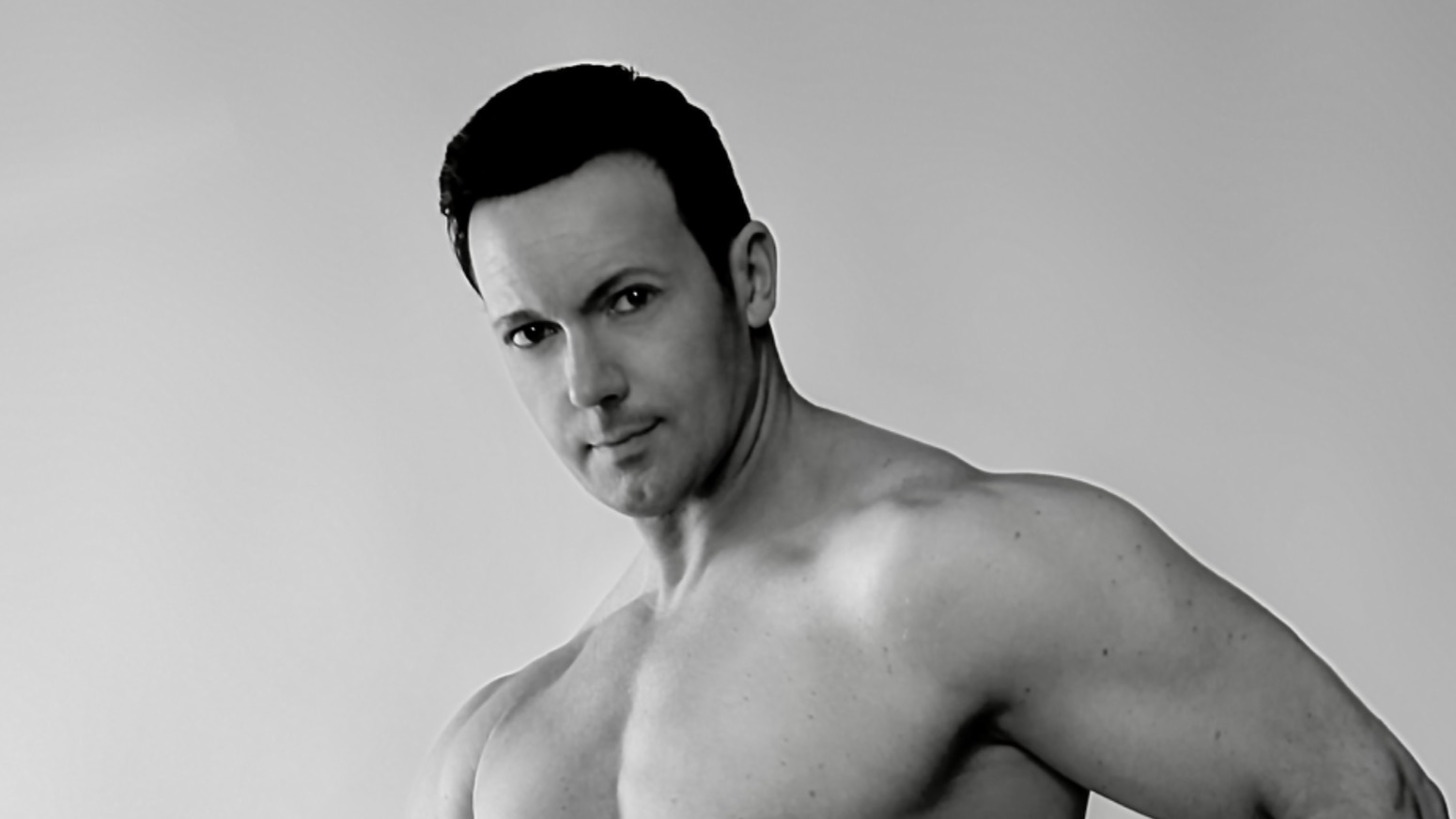
David Goldrake remembers the exact moment his life snapped into focus. He was eight years old, alone with a German children’s magazine that came in the mail once a month. Hidden between comics and games was a little section on magic—nothing fancy, just a simple trick using a thimble: make it vanish, make it reappear. For most kids, it would have been a five-minute curiosity. For David, it was a door.
“That was my very first piece of magic,” he recalls. “I could practice, be in my own world, escape reality. And when I saw the impact it had on people—not just the sleight of hand, but the psychology of how you can fool people—I knew that was going to be it. I’ve never looked back.”
That tiny thimble became the starting point of an unlikely journey from an isolated childhood in Luxembourg to becoming one of Las Vegas’ most compelling illusionists, and now, one of the star attractions at The Magicians Room, a new intimate magic speakeasy at The LINQ Promenade. The venue is the latest chapter—but the story begins with a boy practicing alone in a place where magic barely existed at all.
A magician with no scene
Unlike many Vegas magicians who grew up surrounded by mentors, magic shops, and a visible circuit of performers, David’s early years were defined by absence. “I grew up in Luxembourg,” he says. “The magic scene there? Zero.”
He discovered magic at eight. He didn’t see a real magician live until he was fourteen.
In between, there was the magazine that arrived every month, a magic kit gifted by an aunt, and countless hours experimenting on his own. When he finally did see a performer, it wasn’t a polished illusionist with doves and dancing assistants, but a fakir-style act—needles through the cheek, sideshow stunts, things that looked so real he believed they might be.
“There were a few magicians in Luxembourg, but they were mostly amateurs, doing it as a hobby or a side gig,” he explains. “I never had that real exposure that so many of my colleagues had. When they tell their stories, they talk about growing up around other magicians, meeting this legend or that legend. I knew nobody. I was on a little island, just trying things, trying to be creative, trying to get gigs without knowing the big outside world.”
That isolation could have been a barrier. Instead, it forged a magician who didn’t copy anyone’s blueprint because he never saw one. The art form he fell in love with was something he had to build for himself, piece by piece.
The date that changed everything
Even without mentors, David’s sense of direction was unnervingly clear. At eleven, without ever having seen a live magic show, he told his parents he wanted to be a magician. There was no business plan, no roadmap—just that persistent voice inside.
Then came September 27, 1993.
He can recite the date the way other people recite anniversaries. He and his girlfriend were sitting in a theater in Frankfurt, Germany, watching David Copperfield. The scale, the theatricality, the emotional storytelling—it was like someone had taken the vague dream inside him and projected it in full color onto a stage.
“I looked at her and said, ‘That’s it. I want to do that. I know I can do that,’” he says. “She told me I was crazy. And I said, ‘I know. But I still want to.’”
After the show he met Copperfield in a meet-and-greet, then drove home and dropped the bombshell: he was going to quit school.
“Big drama,” he laughs. “My parents made me finish high school. I even did a year of college. But I knew it wasn’t for me. Magic was it. From that day on, there was no plan B.”
That combination of stubbornness and clarity is still there. You can feel it in the way he speaks about his work: it’s not a career he stumbled into. It’s a choice he keeps making.
Speaking the language of connection
One of the most striking things about David’s performances isn’t just what he does with his hands, but what he does with his voice. He speaks seven languages fluently, and he uses that not as a party trick but as a bridge.
At The Magicians Room, where audiences include visitors from all over the globe, that gift comes into play almost every night.
“We had a lady from Iraq in the audience recently,” he recalls. “I greeted her and thanked her in Arabic. She freaked out. Another night we had a Filipino guest—I switched to Tagalog. People feel seen in a very specific way when you acknowledge their language.”
Over years of touring, he’s picked up how to say “hello,” “thank you,” and a few key phrases in dozens of languages—thirty, forty, maybe fifty by his estimate. For one corporate event in Hawaii for a Japanese company, he insisted on performing in Japanese. He hired a translator, had the entire script written phonetically in Roman letters, and learned it by heart.
“Were there mistakes? Absolutely,” he says. “But you could tell from the reactions—people felt more connected. That’s the power of language. It’s the most powerful instrument we have. It brings people together.”
For all the spectacle of his illusions, those human moments—speaking to someone in their own tongue, looking them in the eye—may be the real magic.
Ask him his favorite place to perform, and the answer comes without hesitation: the Magic Castle in Hollywood.
“The first time I performed there was November 2002,” he says. “To this day, whenever they call, I say yes. The mystique, the decorum, the atmosphere—everything about that place is magic. It feels like home.”
Magic between body and mind
Over the years, David’s work has evolved into a very particular mix of physical daring and emotional depth. If he has to define his style, the word he reaches for is “inspirational.”
“I try to incorporate messages into my magic,” he explains. “I want to move people, provoke them, make them think. There are pieces where I’m playing with pure emotion, others that are more cerebral, and then the very physical pieces like the underwater escape.”
At The Magicians Room, he performs that escape every night, spending two to three minutes underwater in a tank, five nights a week with plans to increase to seven. It’s a routine he once performed on a larger scale at the Tropicana, where his show featured big sets, projection mapping, and pyro.
“All that technology was just there to support the story,” he says. “For me it’s always been about balancing the body and the mind—the physical danger and the poetic moments where you touch people in a different way.”
That balance has become even more important in an age where explanations for everything are a click away.
Keeping mystery alive in the age of spoilers
In 2025, you don’t have to hunt for secrets. They hunt you. Magic trick breakdowns are a cottage industry on YouTube. Exposés trend on TikTok. If you really want to know how something is done, odds are someone has uploaded a step-by-step video for you.
David is realistic about that reality.
“It’s inevitable,” he says. “If you want to find out how something works, you’ll find it. There’s everything online. Years ago, a friend’s seven-year-old was building a bomb in their garage because they’d found instructions on YouTube. That’s the world we live in.”
Rather than waging a losing war against spoilers, he focuses on something more personal: choice.
He even had coins made that say “Keep the mystery alive.” One of the bartenders at The Magicians Room, Yari, has fully embraced that philosophy. “She always tells me, ‘I don’t want to know,’” he says with a smile. “And that’s her choice. She wants to preserve the experience for herself.”
For the determined skeptics, he isn’t offended. “Everyone has to decide for themselves,” he says. “My job is to make the show so meaningful, so magical, that after a few minutes they stop thinking about how it works and just experience it. Like going to the movies—you know there’s CGI, but you don’t pause the film to research which software they used. You accept it as fiction for the sake of the experience. I want magic to be the same.”
Tech, AI, and knowing when to hide the wires
Technology has always moved in parallel with magic. Some of the earliest mentalism feats used secret electronics long before those tools were available to the general public. Today, illusionists have access to everything from high-powered projection mapping to AI-generated visuals.
David is clear-eyed about both the opportunities and the dangers of that toolbox.
“Technology is important,” he says. “In entertainment in general it’s huge. Look at the shows on the Strip—it’s phenomenal what you can see.”
But in magic, there’s a line.
“Tech should support the magic, not replace it,” he insists. “If I do a trick with my cell phone, even if your explanation is wrong, you’ll think, ‘Oh, it’s an app.’ You’ll give yourself an answer and the mystery is gone. It doesn’t matter whether you’re right—what matters is you’ve stopped wondering.”
So he uses technology carefully—sometimes invisibly. And yes, like most creatives in 2025, he’s experimenting with AI.
“I see colleagues using it for scripts, posters, social media, marketing strategies—all of it,” he says. “We’re only at the beginning. But for me, the live connection, the human presence, still has to be at the center.”
A new home at The Magicians Room
That live connection has taken on a new intimacy at The Magicians Room, where David is now headlining on the LINQ Promenade. The venue itself is a playful concept: a modern, crane-only arcade conceals a hidden entrance to a speakeasy-style magic theater. Guests enter via a “human crane” elevator or descend a secret staircase into a compact 220-seat room where the stage is barely twenty feet across.
For a magician used to large theaters, adapting has been both a challenge and a creative spark.
“Performing an illusion show on that stage is… let’s say interesting,” he says, laughing. “At the Tropicana, we had big props, big sets, fire, pyro. On a stage this size, that would feel wrong—not just logistically, aesthetically. After a couple of performances I realized there was one piece I had to tone down because I was still playing ‘big.’ On this stage, it needed to be more intimate.”
Rather than scaling down the magic, he’s reshaping it to fit the room, creating new material and re-staging existing pieces so the proportions feel right. The Magicians Room—by design—puts the audience close enough to study his hands, his eyes, his breath. It’s a test few magicians would willingly take on, but for David, the proximity is a feature, not a flaw.
What hasn’t changed is the audience he wants in the seats.
“I was voted gold Best of Las Vegas for family-friendly show,” he says. “This show is just as family-friendly. I believe magic should be accessible to everyone, all ages.”
The venue itself alternates between family-friendly programming and adults-only late-night shows with other performers, but David’s own production remains firmly in the “bring the kids, bring grandma” category—without ever talking down to them.
Life in the Vegas “trap”
For many performers, headlining on the Strip is the dream. For David, it’s also a complicated kind of homecoming.
When he moved to Las Vegas in 2017, he became close with Siegfried of Siegfried & Roy. Both Siegfried and fellow legend Lance Burton gave him the same warning: “Las Vegas is a trap. A golden cage. Once you’re in, you won’t want to leave.”
“At the time I thought, ‘Come on,’” he says. “And they were right. Once you’re part of the family, part of the industry, part of the scene—it becomes home.”
He’s deeply aware, though, of how fragile that home can be. The Tropicana, where he once starred, is now an empty lot in the middle of the Strip.
“When we got the call that we were the ones they wanted for that room, I thought about the whole history of the Tropicana,” he says. “The Folies Bergère, Siegfried & Roy, Lance Burton—all the shows that had been there. To open a show on that stage felt like stepping into a piece of Vegas history. And now you drive by and it’s gone. Just like the Riviera, and so many others.”
For him, it’s a reminder of how ephemeral everything in Las Vegas can be—buildings, shows, careers. The transience of the city makes the connection with each audience feel even more precious.
Danger, discipline, and the cost of illusion
Some of David’s most memorable effects flirt openly with danger. Unfortunately, he knows better than most how real that danger can be.
On October 15, 2015, a large structure collapsed during a performance, with David and his then-wife on top of it. She broke her neck. He still lives with lingering nerve and muscle damage.
“These things happen more than people think,” he says quietly. “We saw it with Siegfried & Roy. Other performers on the Strip have had accidents. Sometimes it’s the staff who get hurt. You just don’t always hear about it.”
Today, he approaches every high-risk routine—including his nightly water tank escape—with a mixture of respect and pragmatism. When fellow illusionist Criss Angel asked him how he could possibly do such a dangerous stunt every night, David gave a simple answer: the same way Criss does his straitjacket escape—preparation, rehearsal, and relentless contingency planning.
“You anticipate,” he says. “You think about what might go wrong and how to keep it from happening. You have Plan B, C, D, all the way to Z if you can. You never eliminate risk completely, but you do everything in your power to keep people safe.”
Offstage, that commitment to his body shows up in a more mundane way: the gym. After his accident, regular exercise stopped being optional.
“If I don’t go to the gym, I wake up limping,” he says. “The workouts keep me functional. It’s not about vanity—it’s about being able to do my job.”
He balances that physical discipline with quiet, solitary pleasures: reading when he can, the occasional movie, and a social life that’s much smaller than people might expect.
“I’m not very social,” he admits. “Never have been. Crowds, masses of people—they make me uncomfortable. It’s paradoxical, but I know I’m not the only entertainer who feels that way. The stage is different. It’s structured. I know my role, the audience knows theirs. There’s a kind of safety in that.”
The impact he never saw coming
If the technical side of magic has become second nature to David, the emotional impact he has on audiences is something he’s still learning to fully grasp.
When word got out that he was returning to the Strip with a new show, the response surprised him.
“People started reaching out—‘We saw you at the Trop, we saw you at Notoriety, we’ve been waiting for you to come back,’” he says. “It was humbling.”
One night, while attending *Awakening* at Wynn to support a friend, an usher approached him in the aisle.
“She said, ‘I don’t remember your first name, but you’re Goldrake, right?’ She told me she’d seen my show at the Tropicana, and that they were going to come see me again. It was such a small moment, but it made me realize: people remember. You leave a mark.”
Those encounters have changed how he moves through the world.
“As performers, politicians, people in the service industry—anyone who deals with the public—we have an immense impact on people,” he says. “It’s taught me to try to be kind, even when I’m having a bad day. It’s not anyone else’s fault if I’m tired or stressed. They still deserve the best of me.”
That philosophy carries onto the stage as well. David calls his productions “you-focused shows.”
“It’s not about how great I am,” he says. “It’s about what we experience together. The audience is giving me their time, their attention, their energy, their money. I may have told a joke ten thousand times, but I want it to feel like the first time for them. That’s my responsibility.”
Dream flights and new generations
For all he’s already accomplished, there are still dreams David hasn’t realized. One of them is deeply sentimental: he would love, one day, to perform David Copperfield’s legendary “flying” illusion exactly as it was done in the early 1990s—the very routine that inspired him as a young man in Frankfurt.
“Not in front of an audience, just for myself,” he says. “In a warehouse somewhere, doing the whole choreography, the whole piece. It was so perfect, so beautiful. I understood how it worked and still got goosebumps. That, to me, is the highest level of magic.”
When he talks about young magicians who look up to him now, he doesn’t sugarcoat the realities.
“As long as it’s just your passion, your hobby, you do it on your terms,” he says. “The moment it becomes your profession, it also becomes a responsibility. There will be days when you’re sick, exhausted, heartbroken—and you still have to step onstage and deliver. You need to be ready for that.”
His other piece of advice is simpler, but harder to practice: listen.
“I’m very sensitive to audiences’ reactions,” he explains. “I think of it as two heartbeats—mine and theirs. The audience will tell you if a joke works, if a line lands, if a movement feels right. A lot of performers ignore that because they’re too focused on themselves. But the audience is almost always right. Listen to them. They’re your best teacher.”
At The Magicians Room, where he shares backstage space with fellow performers like Farrell Dillon, Douglas Leferovich, Hollie England, and Bizzaro, that philosophy has helped foster a sense of camaraderie rather than competition. They cover for one another, cheer each other on, and build something new together in a tucked-away theater behind a wall of claw machines.
For now, that’s where you’ll find David Goldrake most nights—stepping onto a small stage in a hidden room, inviting a few hundred strangers into his world for an hour of danger, storytelling, and wonder. The buildings around him may change, casinos may rise and fall, marquees may be replaced, but one thing hasn’t changed since the day he learned to vanish a thimble:
He’s still here to keep the mystery alive.