
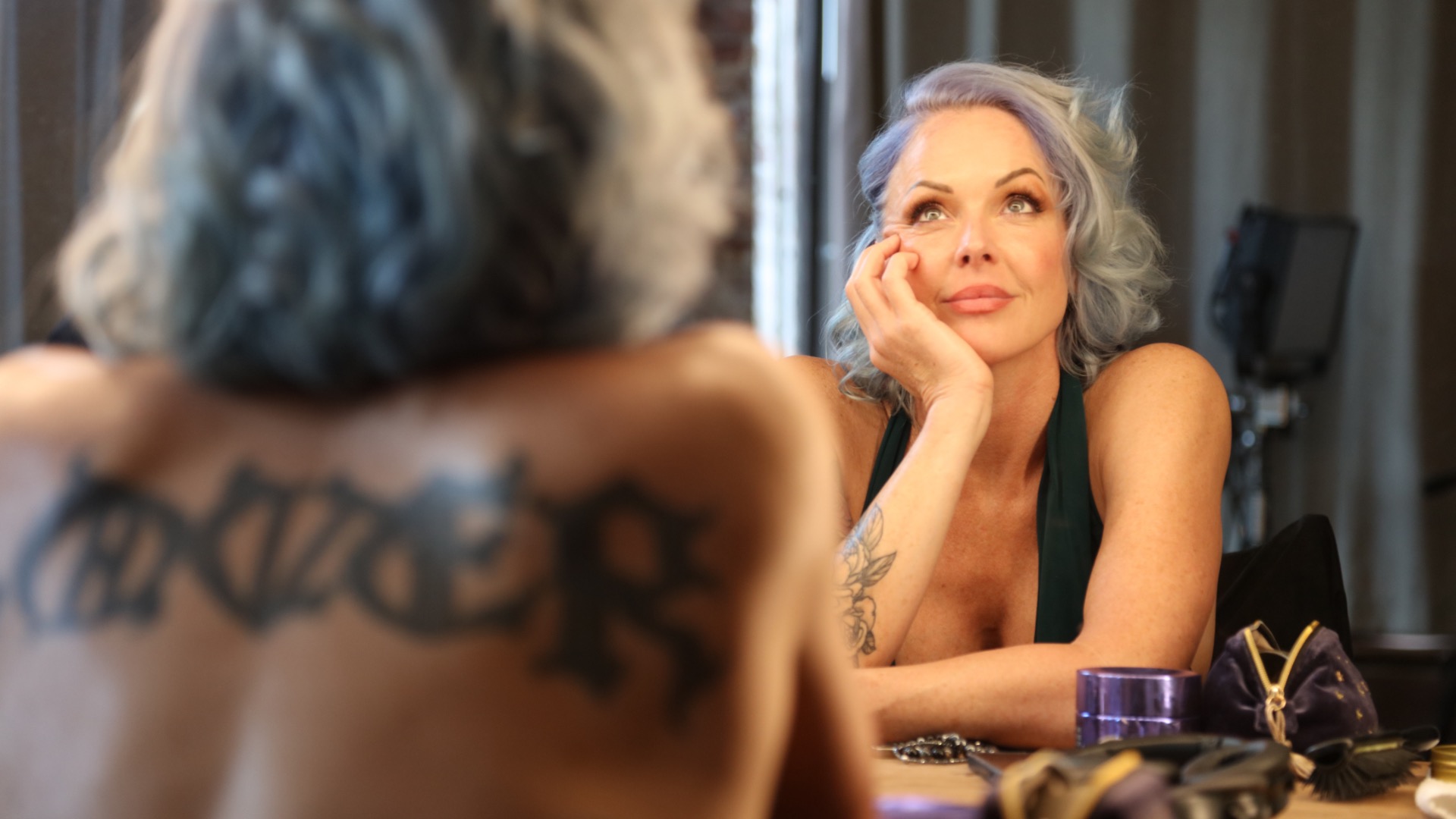
On November 9th, the Las Vegas Philharmonic will take the stage in Reynolds Hall at The Smith Center, but it won’t be a typical classical concert. The spotlight will be shared with none other than Storm Large, the dynamic vocalist known for her audacious style and powerhouse performances. This versatile artist, who has conquered everything from rock to cabaret to classical music, is bringing her one-of-a-kind presence to Vegas for a show that promises to be unforgettable.
Storm Large first shot to national fame in 2006 on the CBS show Rock Star: Supernova, where she captivated audiences with her raw vocal talent and magnetic stage presence. Since then, she has built a career that defies easy categorization, moving seamlessly between musical genres and performing everywhere from rock clubs to symphony halls. As she prepares to take the stage with the Las Vegas Philharmonic, Storm sat down to talk about her career, her artistic philosophy, and what fans can expect from her upcoming performance.
“Scaring Yourself Is How You Grow”
Storm’s musical journey has been anything but conventional. While some artists stick to one genre, Storm has made a career of crossing boundaries and taking risks. When asked about her decision to move between rock, cabaret, and classical music, Storm says it all comes down to one thing: fear.
“I like to do things that scare me,” she explains. “The first time I did the piece I’m doing in Vegas, it was at Carnegie Hall, and my imposter syndrome was screaming at me. ‘You can’t do this. You’re not a real artist.’ But then that little punk rock voice inside me said, ‘F**k you, I can do this.’ And now I’ve been doing it for over a decade.”
For Storm, fear is a catalyst for growth. “I think if you scare yourself, you’re growing,” she says. “Whether it’s in the gym, in relationships, or in art, being uncomfortable is how you get better.”
It’s a philosophy that has driven her to tackle some of the most challenging pieces in music. The piece she’s performing in Vegas, The Seven Deadly Sins by Kurt Weill, is a dark, complex work originally written in the 1930s. It’s not your typical feel-good performance, but that’s exactly why Storm is drawn to it.
“It’s a scary piece,” she says. “It’s dark, it’s weird, but there’s humor in it, too. And I lean into that humor because it makes the darkness easier to digest.”
“A Little Disturbing, A Little Enlightening, and Very Moved”
Storm’s approach to performance is deeply personal. While some artists focus on technical perfection, she’s more interested in connecting with her audience on a visceral level. Whether she’s performing in a dive bar or with a full orchestra, Storm brings the same authenticity and intensity to the stage.
“I show up as authentically and as prepared as I can, and then I feel the room,” she says. “If it’s my own art, I’ll be more raw, more ribald. But with the Philharmonic, I approach it with a lot more reverence. When you’re on stage with 40 to 80 artists, you’re part of something bigger, and you have to respect that.”
Performing with an orchestra requires a different mindset than her usual gigs with her band, The Boners. With her band, there’s a deep, almost psychic connection. “We know each other so well, we’ve got each other’s backs,” she says. “But with an orchestra, it’s different. These musicians don’t know me, and I feel like I have to earn their trust—and the trust of the audience.”
Storm admits that her reputation for being a little wild can sometimes make audiences unsure of what to expect, especially in a more formal setting like a symphony hall. “If people know me from my rock stuff, they might be like, ‘What is she doing?’ But I just tell them, trust me. You’re going to get it. You might not like it at first, but by the end, you’ll understand.”
And what can audiences expect from her performance with the Philharmonic?
“They’ll come away a little disturbed, a little enlightened, and very moved,” she says with a smile.
“It’s Not Fluff—It’s Real Art”
The piece Storm will be performing, The Seven Deadly Sins, is as relevant today as it was when it was written nearly a century ago. Composed by Kurt Weill and written by Bertolt Brecht, it tells the story of two sisters who embark on a journey across America, grappling with each of the seven deadly sins along the way. The work was created during a time of great political and social upheaval, and Storm sees parallels between then and now.
“You can feel the drums of war beating in this piece,” she says. “It was written in the 1930s, as Hitler was rising to power, and you can hear that fear, that nationalism creeping in. It’s not fluff—it’s real art. It’s dark and it’s scary, but there’s also humor in it, and that’s where I come in.”
Storm’s ability to blend darkness with humor is one of the things that makes her such a unique performer. “I’m like George Carlin with boobs and rabies,” she says, laughing. “But nice rabies, like sex rabies. Not the kind where I want to hurt anybody, I just want to hump your leg because I’m so excited.”
It’s this mix of irreverence and depth that has made Storm a beloved figure in the world of cabaret, rock, and beyond. Her performances are never just about the music—they’re about the experience, about taking the audience on a journey that leaves them thinking and feeling long after the final note has been played.
Performing at The Smith Center: A Full-Circle Moment
This upcoming performance at The Smith Center is a significant one for Storm, marking her first solo in Reynolds Hall. Though she has performed there before with Pink Martini, this will be the first time she’s performing on her own, and she’s ready to bring something special to the stage.
“The Smith Center is incredible,” she says. “The acoustics are perfect. I’ve performed there with Pink Martini, but this is the first time it’s just me, and it feels like a full-circle moment. I’m really excited.”
Her first time performing this piece was with Leonard Slatkin conducting at Carnegie Hall–both reunite in Las Vegas for this one-night-only performance.
The Smith Center itself is an architectural marvel, with design elements inspired by the Hoover Dam. The building’s acoustics were carefully crafted to create the perfect environment for live performance, and Storm is eager to take advantage of that.
“Knowing the history and the thought that went into building it makes it even more special,” she says. “It’s going to be a powerful night.”
Advice for Aspiring Artists: “Throw Yourself at It”
As someone who has navigated multiple genres and defied expectations throughout her career, Storm has a piece of advice for young musicians trying to find their own path: don’t be afraid to fail.
“I would tell any artist to throw themselves at things they’re scared of,” she says. “You don’t have to be perfect. You don’t have to stay in your lane. If something interests you, or terrifies you, go for it. You’ll learn, you’ll grow, and you might just find something you’re even better at.”
Storm’s career is proof that taking risks can lead to incredible rewards. From rock clubs to Carnegie Hall, she has pushed the boundaries of what’s possible, and she’s not done yet.
“I’m always looking for the next thing that scares me,” she says. “That’s where the magic happens.”
Catch Storm Large with the Las Vegas Philharmonic at The Smith Center on November 9th. For tickets and more information, visit thesmithcenter.com. You won’t want to miss this electrifying performance from one of the most fearless artists of our time.