This August, Las Vegas plays host to a powerful convergence of history, progress, and pride as the Sports Equality Foundation (SEF) relaunches the LGBTQ+ Sports Hall of Fame and convenes its first-ever Stronger Together LGBTQ+ Sports Forum. For Board Chair Robert Goman and Vice Chair Shigeo Iwamiya, the week-long event is more than a celebration—it's a call to action, born from necessity in a political climate growing increasingly hostile toward LGBTQ+ visibility, particularly in sports.
The event begins with a landmark moment: the long-overdue revival of the LGBTQ+ Sports Hall of Fame, formerly known as the Gay and Lesbian Sports Hall of Fame. Founded in 2013 by Chicago activist Bill Gubrud, the Hall of Fame inducted notable figures for three years before going dormant. Now, a decade later, Goman and Iwamiya are breathing new life into it—with a new name, a broader vision, and a deeper commitment to honoring the full spectrum of queer contributions to sports.
“We’ve been working on this for a while,” says Goman. “The LGBTQ+ community—and especially trans athletes—are under constant, accelerating attack. That makes now the right time. We knew we had to come together, to organize, to speak with one voice. That’s why we called the forum Stronger Together. It’s not just a slogan—it’s the strategy.”
Rebuilding from the Pandemic and Political Whiplash
The Sports Equality Foundation itself began to take shape during the early days of the pandemic—what Goman describes as “picking up the pieces” after the 2016 election. While the organization had roots stretching back over four years, it wasn’t until 2020 that it truly galvanized into its current mission: to foster visibility, equality, and belonging for LGBTQ+ individuals across the entire sports ecosystem.
Goman doesn’t shy away from political reality. “We’re a 501(c)(3), so we can’t get too partisan—but we all know the impacts of policy and rhetoric,” he says. “You look at what’s happening now in state legislatures and in schools. The culture wars are playing out on fields and courts across the country. It’s frightening—but it also means the work we do is more vital than ever.”
A Forum with Purpose
Stronger Together is a two-day forum that brings together athletes, administrators, nonprofit leaders, and industry professionals for conversations that are as urgent as they are varied. From the changing rules around trans participation in youth sports to the pathways for LGBTQ+ professionals in the sports industry, the forum aims to be dynamic, inclusive, and, above all, action-oriented.
“We didn’t want this to be just another panel of talking heads,” Goman explains. “We wanted meaningful conversations led by people with lived experience—people who represent the full LGBTQ+ spectrum.”
To that end, the forum’s topics were crafted with flexibility and intersectionality in mind. One panel, The State of the Climate in LGBTQ+ Sports, will offer real-time discussion on evolving political and cultural challenges. Another, Game Planning Your Career, explores how queer professionals—from athletes to accountants—can build sustainable careers in the sports world while living authentically. A third panel tackles LGBTQ+ sports in education, with a sharp focus on K–12 spaces where policies are shifting rapidly and often harmfully.
“Sports is not just about athletes,” adds Iwamiya. “You can be in accounting, marketing, or hospitality and still be part of this ecosystem. Part of our mission is to help people see that their identities belong in sports spaces—and in doing so, help those spaces become safer and more inclusive.”
A Historic Hall of Fame Reawakens
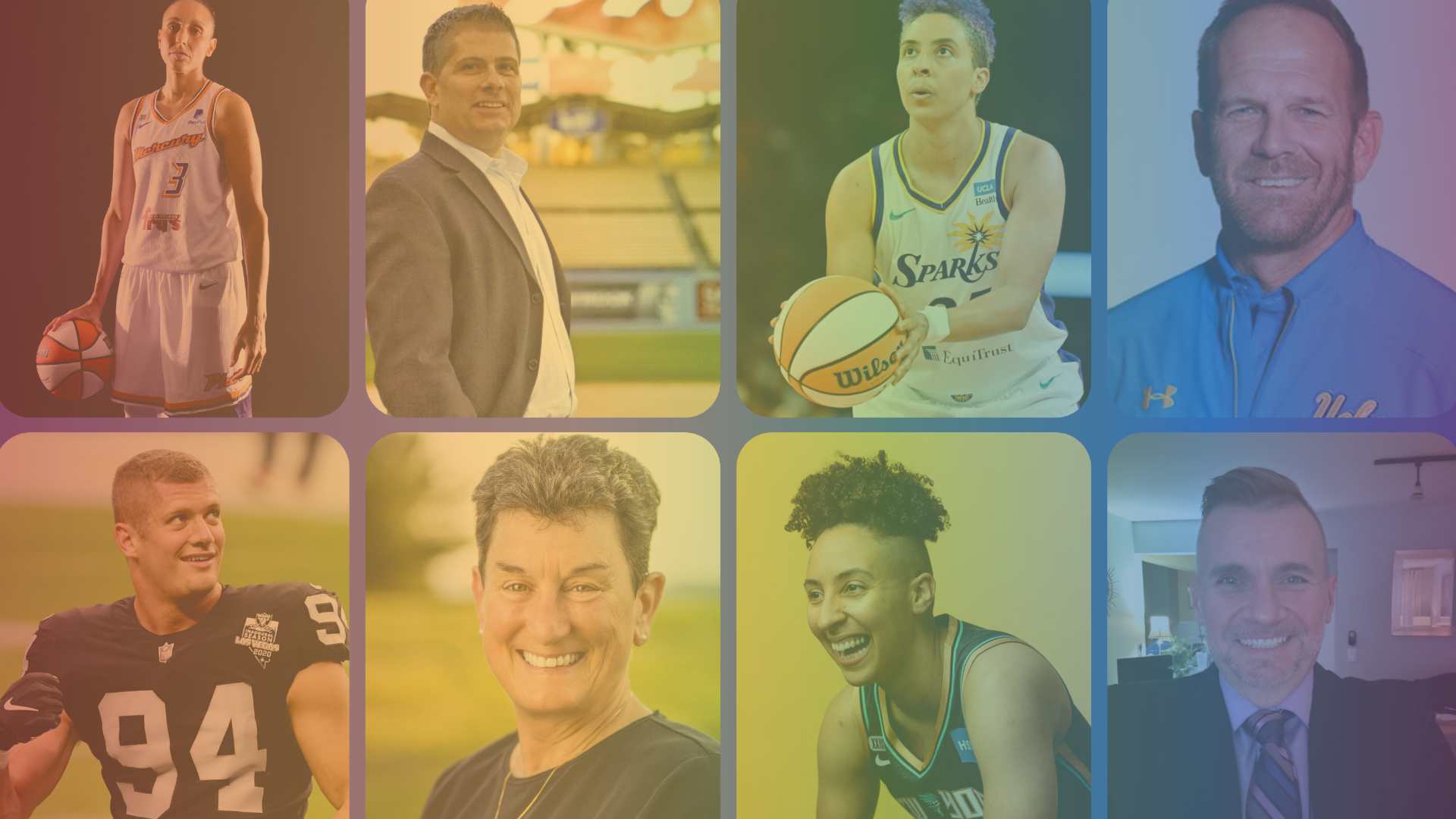
Before the forum kicks off, however, comes the weekend’s centerpiece: the official relaunch of the LGBTQ+ Sports Hall of Fame. The updated Hall will induct 12 individuals, one organization, and honor one extraordinary figure from the broader sports community.
The selection process was, fittingly, communal. “We started collecting names at the Sin City Classic,” says Goman. “We asked people: who would you put in a Hall of Fame? The responses were overwhelming—and surprisingly consistent.”
The inductees come from all levels of sport: retired pros, trailblazing coaches, current administrators, and even superfans who’ve created enduring impact. Some helped carve space for queer athletes decades ago; others are reshaping the sports world right now. The Hall aims to honor that spectrum—past, present, and future.
“There’s some catch-up to do,” admits Goman. “We had a ten-year gap. We’re looking at ways to circle back and highlight people who were overlooked during the hiatus. And we’re not stopping at 2025. We want this to be an ongoing, evolving project.”
Storytelling as Legacy
What elevates the Hall of Fame beyond plaques and press releases is the Foundation’s commitment to deep, human storytelling. Goman shares a powerful example: Glenn Burke, the first Major League Baseball player to come out as gay after retirement, was among the original inductees in 2013. SEF has now been in touch with Burke’s sister, Lutha, who has shared intimate stories about his early life—how he loved baseball as a boy, how his family navigated his identity.
“Those stories matter,” says Goman. “They help a young queer kid today see themselves not just in the achievement, but in the journey. It’s not just, ‘He was a pro ballplayer.’ It’s: ‘He had dreams. He faced challenges. He pushed through. And he made space for you.’”
This narrative approach is central to SEF’s work. Alongside the Hall, they’ll also mark the ten-year anniversary of Fearless, a photo project by Jeff Sheng that documented out college athletes. Many of Sheng’s subjects have since become coaches, trainers, and leaders in the sports world—a full-circle moment SEF plans to highlight.
Representation with Intention
One of SEF’s core values is ensuring that representation is not just visible—but intentional and accurate. For that reason, the forum’s panels are curated to ensure that the voices leading each conversation reflect the communities they’re speaking about.
“As a white, cisgender gay man, I can’t speak for the trans community,” Goman says plainly. “But we have trans folks in the sports world who can—and will. That’s who we want on stage.”
It’s a vital distinction. LGBTQ+ isn’t a monolith, and SEF is committed to ensuring that all the letters of the rainbow alphabet are respected, represented, and given the mic.
A Network of Allies
The event is already drawing powerful support. The NBA, WNBA, and Major League Baseball’s Los Angeles Dodgers and San Francisco Giants have all signed on as sponsors or partners. SEF is in conversations with the Las Vegas Aces and other local teams as well.
“Women’s sports, in particular, are having a moment,” notes Goman. “The WNBA is crushing it. Women’s soccer is huge. We’re excited to have those leagues at the table—and they’ve been incredibly receptive.”
These partnerships go beyond branding. They offer access, visibility, and potential career pathways for queer professionals across the spectrum. From league offices to locker rooms, the presence of LGBTQ+ leadership is both a symbol and a strategy for long-term culture change.
Meanwhile, SEF is also deeply engaged with amateur and recreational sports organizations like the Gay Softball World Series and the Gay Bowl, helping ensure that the grassroots level is just as empowered as the professional tier.
What Comes Next?
For all the events and accolades, Stronger Together is ultimately about sustainability. SEF doesn’t want attendees to walk away with swag—they want them to leave with a plan, a network, and a renewed sense of purpose.
“The biggest tool we can give people is each other,” says Goman. “When that next awful headline hits—when another trans ban is passed, or a school yanks funding—we want people to know who to call, how to respond, and that they’re not alone.”
Iwamiya agrees, emphasizing the forum’s focus on recalibration and renewal. “It’s a chance to remind people why they do this work. To hear different perspectives. To get inspired again.”
It’s also a chance to build relationships that transcend zip codes. “We don’t want people to feel like they’re on an island,” Goman says. “We’ve got folks from Portland, LA, New York, Atlanta, Chicago, everywhere. This is about building bridges. A queer Rolodex, if you will.”
A Hall of Honor and a Call to Action
In the end, the week in Las Vegas is both a celebration and a challenge. The relaunch of the LGBTQ+ Sports Hall of Fame honors the giants on whose shoulders we stand. The Stronger Together forum challenges the current generation to use that foundation as a launching pad—not just to talk, but to act.
“Every community has its drama,” Goman laughs. “But what we all share is this: we want to make sports better, safer, and more inclusive. We want to make sure every queer kid knows there’s a place for them on the field, in the stands, and in the boardroom.”
With cranes rising at the future stadium for the relocated Oakland A’s and major league teams already planting rainbow flags, Las Vegas is becoming not just a sports town—but a queer sports capital.
Whether you're a pro athlete, a high school coach, or a fan who never misses a Pride Night, Stronger Together is your invitation to be part of the next chapter. It's a reminder that the work is ongoing—but so is the progress.
And, if Goman gets his way, it’s also a reminder to stop by Piranha and Gipsy while you're in town. “Believe it or not,” he laughs, “I’ve never been. But that’s about to change.”
Stronger Together LGBTQ+ Sports Forum & Hall of Fame
August 10–12, 2025 | Las Vegas, NV
sportsequalityfoundation.org