

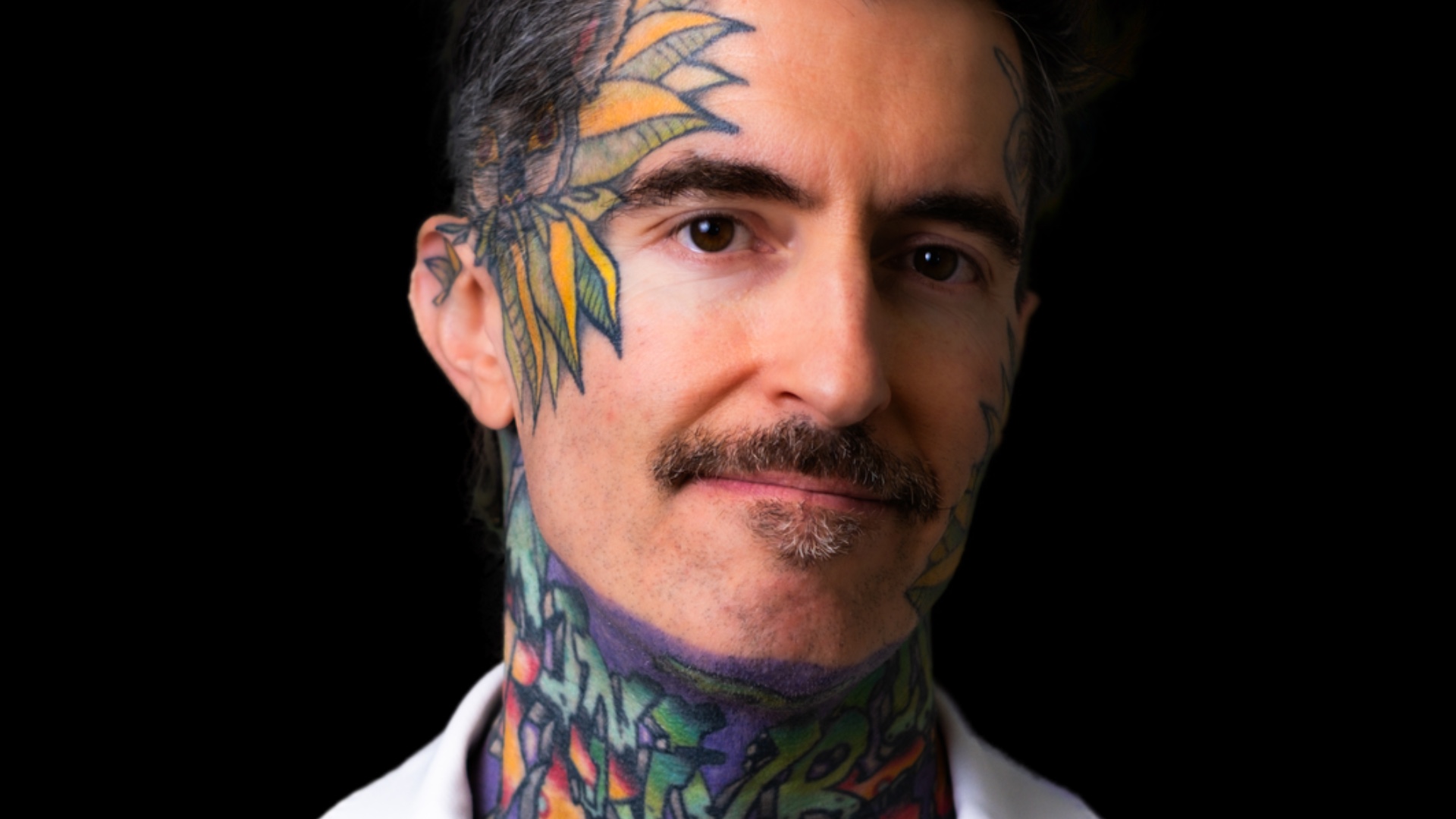
Dr. John Brosious receives the Lanny D. Love Hero Award for a decade of building gender-affirming surgery in Nevada — and he'd rather you didn't call him a hero.
Dr. John Brosious first walked into The LGBTQ+ Center of Las Vegas about ten years ago and announced he wanted to build a gender surgery program. The room was polite, and unconvinced.
"They kind of looked at me like, you're not even affiliated in any way, shape or form with the LGBTQ community," Brosious recalls. "And they also told me, hey, we've heard this before." Other doctors had come to town promising hormones and surgeries. Those programs never materialized.
His did. A decade later, Brosious has performed Nevada's first gender-affirming genital surgeries and built a program that began at UNLV and now lives in his private practice. Patients regularly tell him he saved their lives. On Friday, November 6, The Center will present him with the Lanny D. Love Hero Award at Honorarium 2026, "Roaring Forward: A 1920s Gala for Unity & Pride," in the Lafite Ballroom at Wynn Las Vegas.
An accidental specialty
Gender-affirming care was never part of his training. In medical school at Indiana University, he says, there was no instruction on hormones. In his plastic surgery residency here in Las Vegas, which he finished in 2013, top and bottom surgery "wasn't even a thing."
What he did have was an appetite for variety. "We get to work head to toe on every body part, every type of tissue," he says. "There's a lot of creativity involved." At his first job, at the University of Pittsburgh, word spread that he liked unusual cases, and transgender patients started calling.
His first was a trans woman seeking breast augmentation, about 12 years ago. At the end of the consultation, she began to cry. Brosious was sure he'd misgendered her and apologized. "She said, no, these are tears of joy. You're the first doctor that took me seriously and treated me like a human being."
"That's when this light bulb went off in my head," he says, "that there's this whole population of people that have been left behind by healthcare, and as one surgeon, I could have a big impact on them."
Coming home
He moved back to Las Vegas in 2016, just as major insurers, including Medicaid, began covering gender-affirming surgery here. As an assistant professor at UNLV, he started giving talks to trans groups at The Center, moving them online when COVID hit. His caseload went from one surgery every couple of months to multiple patients a week. In 2020, he performed the first gender-affirming genital surgery in Nevada.
About five years ago, he and Dr. Joshua Goldman left UNLV to open Vegas Plastic Surgery Institute, taking the gender program with them. They remain affiliated with the university so residents can still learn the work.
The relationship with The Center runs both ways. "I refer a lot of patients there, and I get a lot of referrals from them," he says. He credits its health center with covering the first layer of care: primary care, gynecology, hormones and mental health. The gaps he sees, in endocrinology, affirming urology, facial feminization and phalloplasty, are Nevada's, not The Center's. "Specialized care is really hard to come by here in Nevada," he says, "not just for trans patients, but basically everybody."
Earning the community's trust took time, and an unlikely asset. Brosious has tattoos on his face, neck and hands, and people warned him they would hurt his practice. Instead, they disarm patients who arrive braced for judgment. "They saw me as a non-conformist, and they very much are non-conformists as well," he says. "We have this mutual understanding: we're not gonna judge each other."
Watching patients live openly, day after day, changed him too. "I decided that, you know what, I wanna live my authentic life and not really care about people judging me."
From altar boy to gender surgeon
Friends and family back home in Pennsylvania still ask how a Catholic schoolboy ended up here. He was an altar boy who went to Catholic grade school, Catholic high school and the University of Notre Dame. His answer to them is simple.
"You taught me to serve the marginalized, you taught me to serve discriminated people, and you taught me to serve people who were outcasts," he says. "I couldn't find a better population to work with as a doctor."
A milestone year
Brosious has attended Honorarium for years, watching others accept awards and thinking that if he kept at it, one day it might be him. This year also marks ten years since he came home to start the gender program. "It makes 2026 a really special year for me," he says. "The perfect year for me to get this award."
Still, he resists the title. "The bar has been set so low for the transgender community from the healthcare perspective that all you have to do is be respectful and provide decent care, and all of a sudden, you're a hero," he says. "It's sad that that's the case."
He doesn't pretend it has been free. He has lost friends, and some colleagues won't speak to him. He could likely earn more doing only cosmetic work. "It would be a lot easier for me to just do tummy tucks and Botox," he says. "But people wouldn't be hugging me, telling me that I saved their lives."
The practice is growing: two new surgeons join Brosious and Goldman in the spring. The mission hasn't changed.
"If everybody was a good person, this wouldn't be heroic work," he says. "This would just be another guy offering a service to a population."