

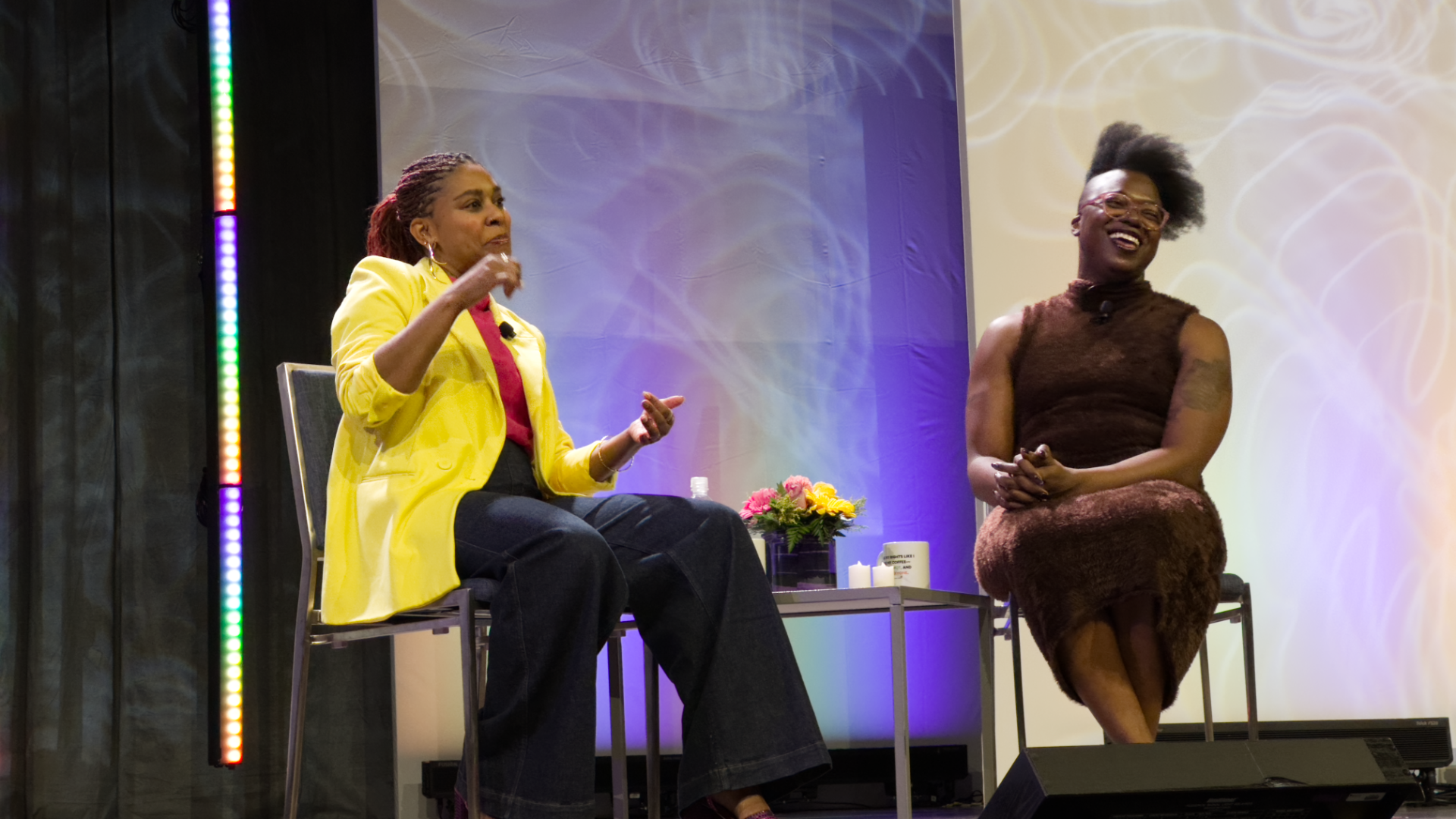
At the recent Creating Change Conference, two powerhouses of the LGBTQ+ movement, Kierra Johnson, President of the National LGBTQ Task Force, and Tre’Vell Anderson, journalist and cultural force, came together for an insightful and dynamic conversation on the current state of the LGBTQ+ movement. Their dialogue, filled with humor, vulnerability, and wisdom, shed light on the challenges, successes, and the path forward for the community. Here are the highlights of their engaging exchange, showcasing how the movement is evolving and where we need to go.
Grading the Movement: A Self-Assessment
When asked to grade the current LGBTQ+ movement, Johnson candidly gave it an “A-minus.” While acknowledging the progress made, she didn’t shy away from critiquing areas that require improvement, particularly in scaling successful local and state-level strategies to a national level. She noted, “We have winning strategies happening across the country, but they aren’t being scaled, spotlighted, or funded the way they should be. That scalability is where we’re falling short.”
Johnson’s reflection underscores the tension between localized victories and the broader systemic change needed to combat growing threats, such as rising anti-LGBTQ+ legislation and attacks on bodily autonomy. She emphasized that the roots of these threats run deep, planted by decades of organized efforts from opposition forces. “We have to focus on pulling up the roots of fascism,” she stated. “This isn’t just about what we’re doing wrong; it’s about the long-term strategies of our opposition and how we counteract them.”
Urgency vs. Long-Term Strategy
One of the central themes of the conversation was balancing the “urgency of now” with the necessity of long-term planning. Anderson asked Johnson what this balance looks like, especially in an era of relentless attacks on LGBTQ+ rights. Johnson explained, “We’re often in crisis mode, reacting to the latest attack, but we need to pause and think about what feeds our community for the long haul. Every decision we make in the short term should set us up for bigger wins down the line.”
She pointed to gender-affirming care as an example. While it’s often framed narrowly as a trans-specific issue, Johnson highlighted its broader relevance. “Gender-affirming care isn’t just for trans people. Think about hormone replacement therapies for menopausal women or testosterone treatments for men with erectile dysfunction. By framing it as an issue that impacts a wider swath of the population, we can build broader coalitions and create more sustainable strategies.”
Coalition Building and Centering Vulnerable Communities
A recurring theme in their dialogue was the need for coalition-building—bringing together communities across identities and issues. However, both Johnson and Anderson stressed that this must not come at the expense of centering the most marginalized.
“When we build coalitions,” Johnson said, “we need to ask, who are the queer migrants at the border? Who are the Black trans women being denied access to healthcare? These are the people who need us most, and we can’t put them on the back burner because we need numbers.”
Anderson echoed this sentiment, cautioning against the temptation to dilute focus in pursuit of broader appeal. “Building a big tent doesn’t mean we compromise on centering those who are most impacted,” they said. “We need to be strategic but also unwavering in our commitment to justice for all members of our community.”
The Power of Vulnerability
One of the most moving parts of their conversation was their shared emphasis on vulnerability—both as individuals and as a movement. Johnson shared a personal story about her own growth, admitting that early in her career, she held Black staff to a higher standard than others, expecting them to “do more to get equal.” Recognizing this bias was a pivotal moment for her.
“Being vulnerable about our mistakes is hard,” she said. “But it’s necessary if we want to grow and build trust within our community. None of us are perfect, and we need to give each other grace as we learn and evolve.”
Anderson built on this idea, emphasizing the importance of creating spaces where people can learn without fear of being cast out. “We’ve all made mistakes. What matters is how we hold ourselves accountable and how we support each other in doing better.”
Lessons from Elders and Ancestors
Throughout the discussion, Johnson and Anderson honored the wisdom of LGBTQ+ elders and ancestors. “We’re not the first to face these challenges,” Johnson reminded the audience. “Our ancestors navigated a world that didn’t recognize their identities but still found ways to thrive and resist. There’s so much to learn from their resilience.”
Anderson highlighted the importance of intergenerational dialogue, urging younger activists to seek out elders for guidance. “They have a wealth of knowledge that can ground us and remind us that we’re part of a larger continuum of struggle and triumph.”
Reclaiming Joy and Rest
Another key takeaway was the importance of joy and rest as acts of resistance. Johnson referenced a memorable moment from the previous year’s conference, where legendary activist Miss Major Griffin-Gracy advised attendees to “take a nap and come back.”
“Rest is revolutionary,” Johnson affirmed. “We’re no good to the movement if we’re burnt out. Taking care of ourselves is not just self-preservation; it’s community preservation.”
Anderson added, “Joy is an essential part of our survival. We need to celebrate our wins, big and small, and create spaces where we can simply be ourselves without fear or judgment.”
Moving from Defensive to Proactive
As the conversation wound down, both Johnson and Anderson emphasized the need for the LGBTQ+ movement to shift from a defensive posture to a proactive one. “We’re really good at crisis management,” Johnson said. “But we need to spend more time envisioning the future we want and taking deliberate steps to build it.”
This includes fostering networks of mutual support, scaling successful strategies, and framing issues in ways that build broad-based coalitions. “The future is ours to shape,” Anderson concluded. “But it requires all of us to show up—not just in moments of crisis but consistently, with our full, authentic selves.”
A Call to Action
The conversation between Kierra Johnson and Tre’Vell Anderson was a powerful reminder of the work that lies ahead and the strength that comes from unity. Their insights challenge all of us to think critically about our roles in the movement and how we can contribute to a more inclusive and just future.
As we move forward, let us honor the lessons of our elders, embrace vulnerability, and prioritize joy and rest. Let us build coalitions that center the most marginalized while envisioning a future where everyone in our community can thrive. And above all, let us remember that the fight for liberation is a long journey, one that requires persistence, courage, and collective care.
The state of the LGBTQ+ movement is strong, but there is always room to grow. Together, we can turn that A-minus into an A-plus. The future depends on it.