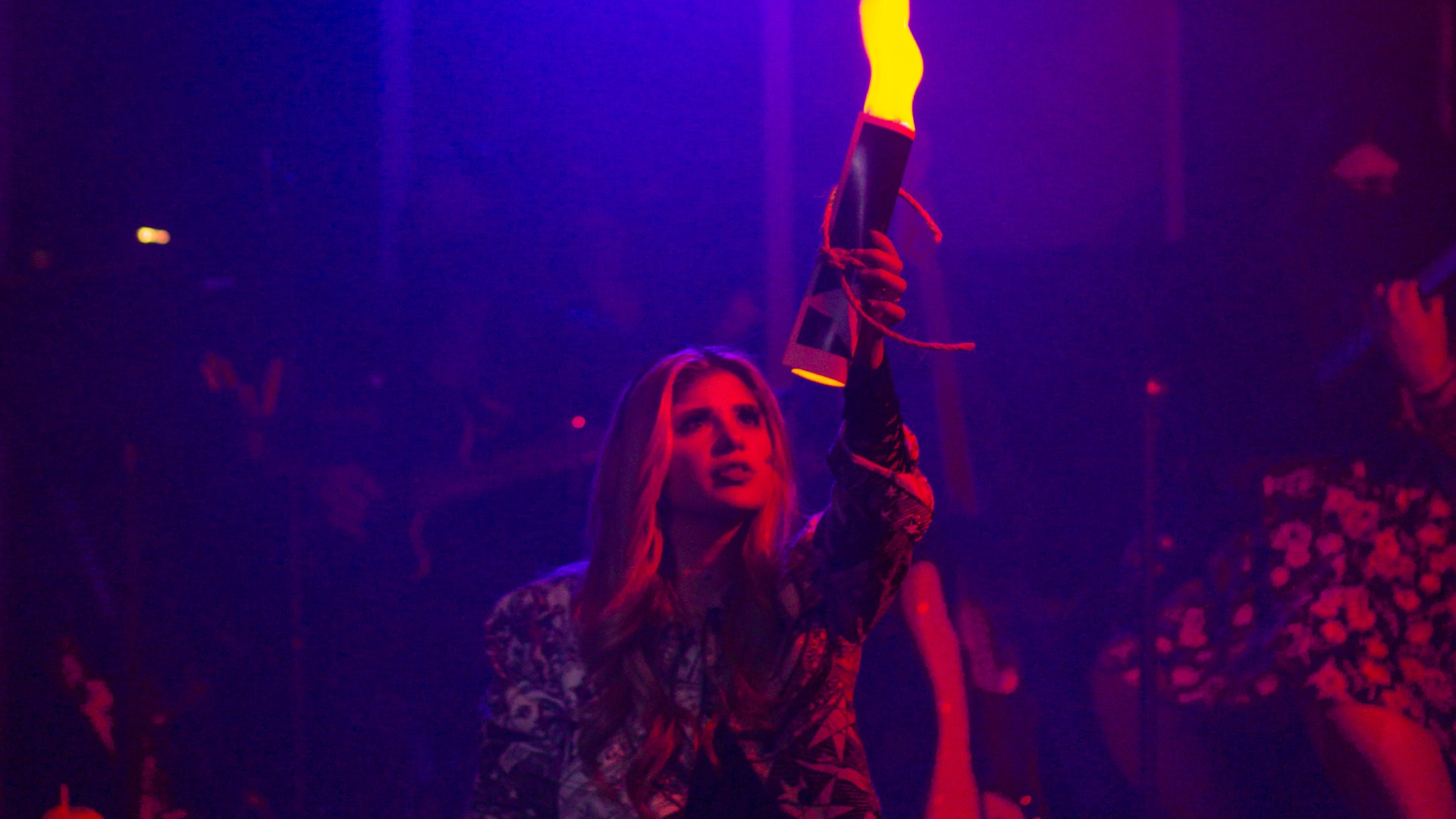
On a late‑summer night in the Arts District, a low thrum from a live rock band crawls across the room. A whisper becomes a chant, bodies lean in, and a familiar hook rises—not from Broadway, but from the darker corners of your ‘90s mixtape. The air changes. You don’t need a broom to know you’ve left the ordinary behind—Majestic Repertory Theater is summoning something. In this house, the spell is spelled music: The Cult’s midnight swagger, the icy ache of The Cure, a little New Order pulse, a Nine Inch Nails growl. And then the coven speaks your language. You’re home.
Welcome back to The Craft'd, director‑producer Troy Heard’s musical parody of the 1996 teen‑witch classic, returning sharper, louder, and more immersive after its extended 2022 bow. It’s not just a send‑up. It’s the comeback of a Vegas ritual—one part jukebox fever dream, one part cabaret séance, and all parts outsider pride.
The Spark: From Haunted Houses to a Vegas Coven
Heard will tell you he didn’t grow up wanting to be a theatre director. He wanted to build haunted houses. The Georgia native, raised by an Australian mother with a taste for dark comedy and classic horror, learned early that monsters and laughter share a wall. “Haunted houses have scripts, actors, costumes, light cues—it’s the same toolbox,” he says. Theatre became the doorway that didn’t ask him to choose.
By the mid‑2010s, after moving to Las Vegas in 2009, Heard discovered Rockwell Table & Stage in Los Angeles, where “unauthorized” musical parodies riffed on beloved films with jukebox scoring and shameless camp. The format felt tailor‑made for Vegas, which already runs on spectacle and inside jokes. The question became: Which movie, and which music? For Heard—a self‑professed ‘90s weirdo—the answer came easy: The Craft, set to the moody sonics that shaped an era. The Cure. The Smiths. Siouxsie and the Banshees. A little NIN grit under the fingernails.
He wrote a script, sketched the song map, and then found the collaborator who would translate instinct into orchestration. During the pandemic, arranger‑music director Brandon Scott Grayson joined the coven. In a matter of weeks, Grayson spun those rock tracks into full production numbers—lush harmonies, muscular arrangements—without sanding off their garage edges. That balance is the show’s witchcraft: the band is tight, the vocals are thrilling, but the setlist remains gloriously un‑Broadwayed. It rocks.
First Hex, Then a Howl: The 2022 Run and What Scream'd Taught Them
Majestic first mounted The Craft'd in 2022—and for the company, which prides itself on risk, the risk paid off. The show extended. Houses grew. And as anyone who’s followed Majestic knows, momentum is never wasted there. Heard’s next pop‑horror spin, Scream'd, became a phenomenon unto itself: a near beat‑for‑beat love letter to Scream that taught the team exactly how and why these parodies keep people coming back. Some fans returned two or three times; others hit repeat like a favorite track—five, six, seven nights in.
The lesson? Build the laughs on top of dramaturgy. Treat characters like people, not punchlines. Hit the iconic beats, but earn them. Heard calls it a brand now—“apostrophe‑D”—a winking signal that you’re getting the Majestic version: irreverent, referential, and crafted with care.
So this remount of The Craft'd isn’t a reheat; it’s a rewrite of muscle memory. “The cast is tighter. The script’s funnier. The song list is the same, but the wallop is bigger,” Heard says. The confidence shows. Where the earlier run proved a hunch, this one plants a flag.
The Majestic Way: Immersive, Cabaret, and Deliciously Close
If you’ve never been to Majestic, erase the mental picture of a proscenium arch and polite distance. Heard calls the company’s house style “cabaret staging”: the bandstand up close, the action spilling around you, and choreography that adapts to the realities of live humans—yes, they will play around your knees if you drape them out from the table. The room becomes an instrument. Scenes bleed into aisles, glances ricochet off cocktail glasses, and the man across from you might suddenly be a movie villain or a witch mid‑hex.
Is it interactive? Not in the raise‑your‑hand sense. No one’s getting dragged onstage or good‑naturedly roasted. But this is a shout‑along show at heart, a ritual more than a recital. When a chant bubbles up or a line drops—“Light as a feather, stiff as a board. We are the weirdos, mister.”—no usher will shush you. That makes The Craft'd a rarity: a send‑up that still respects the cult it’s courting. It knows where to place the mic.
Sound of a Spell: The Songs That Conjure the Room
Because Majestic’s parodies are jukebox at heart, the setlist does a lot of dramaturgical lifting. Heard and Grayson build sequences like spells, letting lyrics and texture deepen character beats rather than just reference them. The Craft'd draws a pentagram from goth, post‑punk, and alt: New Order’s “Blue Monday,” The Church’s “Under the Milky Way,” the aching cool of The Cure and The Smiths, a NIN snarl when the story needs bite. The spiritual banner, though, is “Cry Little Sister” from The Lost Boys—a vampire anthem repurposed as the coven’s conjuring theme. It’s a canny choice. That song holds the same moody, yearning electricity that The Craft bottled in 1996—the feeling of being too much, too strange, and too awake to fit in daylight.
And then there’s the band. Vegas is lousy with singers; Majestic cultivates rock vocalists who can also act. The effect is less “Broadway does alt‑rock” and more “alt‑rock finally gets the ensemble treatment it deserves.” On any given night, you’ll hear harmonies that make your ribcage buzz and a drummer who pushes scenes like a heartbeat.
Parody With a Spine
Heard jokes that he learned a fun piece of showbiz legalese after Scream'd went viral: parody is a defense, not a right. Translation: if you’re going to borrow a beloved story world, you’d better transform it—lovingly. And transformation demands spine. You can recognize the Mel Brooks blueprint here. Young Frankenstein endures not because it lampoons a genre, but because the people inside it feel real.
So The Craft'd plays fair with its girls. Sarah isn’t just a Final Girl in training; she’s a teen shouldering grief and dislocation. Rochelle’s arc faces racism without wrapping it in a tidy bow. Bonnie’s body image struggle arrives via scars and shame. And Nancy? Yes, she’s the diva bitch that every drag queen wants to lip‑sync—but the show retains her hardest truth: a kid crushed by poverty and abuse, seduced by power because the world gave her so little else. The comedy lands because the stakes do. The hexes pop because something human aches underneath.
That human ache is part of why now, too. We live in a season that rarely rewards empathy. “Gathering to laugh together is a revolutionary act,” Heard says. To sit in a room, share breath, and let someone else’s story rearrange yours for a couple of hours—it fights the flattening. The Craft'd remembers that the weirdos didn’t just survive the ‘90s by being cool; they survived by finding each other.
The People Behind the Potion
Majestic’s secret ingredient is less secret and more stubborn: people who love doing this. Heard is the company’s only full‑time employee, the chief cook and bottle washer who writes, directs, builds, markets, and coaxes miracles from a budget that would make a Broadway general manager cry. Around him orbits a community of designers, musicians, and performers who get the assignment and bring their own cults with them. Audiences follow favorites—Katie Marie Jones, Ray Winters, Joey Derby—not just from show to show, but to conventions and festivals.
Case in point: this summer’s Midsummer Scream, where a Scream'd segment played to a packed room that didn’t quite know what it was, only that it had to be there. The Majestic effect travels because the vibe travels. Heard’s spaces, whether in the black box on Main or some improbable ranch outside city limits (yes, he once staged an immersive Jonestown—because of course he did) turn into liminal rooms where Vegas drops its armor and does what it’s best at: playing.
Heard’s own origin story helps explain the stubbornness. He came up in a military household, in a town where weirdness required some courage. His mother snuck him into museums and old movies and handed him a library card like it was a passport. When “make monsters” wasn’t an acceptable life plan, he made haunted houses. When haunted houses needed scripts, he wrote them. When writing demanded a rehearsal room, he learned to run one. Vegas, with its Wild West appetites and indie infrastructure, was the perfect collaborator. Here, if you can find a space and a handful of conspirators, the city will meet you halfway.
Gateway Theatre, No Gatekeeping
Heard has a wicked nickname for what Majestic does best: “gateway theatre—the cheap‑street crack of Vegas theatre.” Translation: you don’t need to speak Sondheim or know the difference between a light board and a ledger to have a good time. And once you’ve had it, you’ll want more. The house energy is engineered for belonging. “Everyone who steps in is the coolest person there,” he says. That’s not just hospitality; it’s strategy. When you treat your audience like insiders, they return like family.
That family now spans generations. Gen Xers hear their youth remixed and resurrected. Gen Z and Gen Alpha meet ‘90s culture the way ‘70s kids met the ‘50s—through a gloss that makes it mythic and fresh. If you ever closed out a goth night and hit Denny’s before sunrise, The Craft'd will feel like a reunion. If you didn’t, it will feel like an initiation.
What’s Different This Time
The 2022 production had the thrill of discovery: Could this tone work in a Vegas black box? Would a rock‑band musical parody of a cult film attract more than nostalgia? The answers arrived in sold‑out houses and an extension. Then Scream'd clarified the recipe—calibrate the number of songs and scenes, map the jokes to character needs, and never confuse reference with story.
This return rides that clarity. The staging is more confident in the room; the band and cast lock like a machine. Heard emphasizes that the setlist you loved remains, but nearly every beat surrounding it has been tightened. The effect is what you hope for when a company revisits its own hit: freshness without betrayal, surprise without the loss of muscle memory.
Why This Story Works in 2025
Beyond the mixtape pleasures and the witchy aesthetics, The Craft'd hits because it treats its subject with both affection and altitude. The ‘90s gave us sloppy conversations about trauma, gender, and power. The film gestured at those currents; the parody has the benefit of hindsight. Heard and company use comedy to open the door and empathy to invite you in. Parody, in other words, isn’t just a legal framework or a delivery system for references. It’s a way of thinking—a lens that lets us hold two truths at once: the ridiculousness of a thing and the reason it mattered.
That lens is especially valuable in a city like Las Vegas, where irony is currency and sincerity is often the tip jar. Majestic keeps the jar out, but it never empties it. You’ll laugh at the era’s hair and wince at its mistakes. You’ll cheer for Nancy even when you shouldn’t. You’ll watch four young women grasp for power in a world that taught them to be small, and you’ll recognize the contemporary echo. The show doesn’t preach it; it feels it.
The Grind Behind the Glamour
Majestic is entering its tenth season—no small feat for a boutique company that kept producing even during lockdown, pivoting to drive‑in and drive‑up experiences when gathering indoors was a no‑go. The troupe that looks impossibly cool from the outside is still, proudly, a small shop on the inside. Heard remains the one full‑time staffer. The rest are artists who return because the work is lively, because the audiences are loyal, and because the room lets them be both rock gods and theatre animals.
That smallness is a feature, not a bug. It’s why interns line up, some of them kids who grew up seeing Majestic shows and now want to learn how the sausage is made (and, yes, sometimes wish they hadn’t). It’s why a running gag like Heard’s tech‑week banana pudding becomes lore—complete with gluten‑free and dairy‑free altars—because little rituals build big culture. And it’s why a line like “we need more philanthropists in this city” lands with a laugh that isn’t a joke. If you want a place like this to exist, you don’t wait for closing weekend to show up. You claim a seat early and often. You bring a friend. You bring a coven.
The Cast, the Fans, the Feedback Loop
One of Majestic’s most Vegas virtues is the feedback loop between stage and audience. Performers here don’t just play for the room; they play with it. You can see it in the way a harmony hangs longer when the crowd leans in, or how a joke grows a new tag because someone in the corner can’t hold a cackle. You can also see it in the fandom—repeat viewers who track performers across titles, who show up at conventions, who make fan art and in‑jokes, who bring first‑timers like they’re smuggling them into the best bar in town.
Heard has no interest in gatekeeping that culture. If you’re new, The Craft'd gives you a map. If you’re a veteran, it rewards your memory. A casual patron can enjoy the spectacle and songcraft. A diehard will spot the Easter eggs, from a tossed‑off line reading to a musical cue that winks at a deep cut. The goal is the same either way: two hours where the room feels like a safe place to be loud about the things you love.
So…Why The Craft?
Because its DNA is Vegas: glamour in eyeliner, power claimed by misfits, big feelings riding in the passenger seat with big jokes. Because its most quoted line—“We are the weirdos, mister”—might as well be the welcome mat for a city built by people who didn’t fit in somewhere else. And because the soundtrack refuses to die. The music that scored basement parties and bedroom heartbreaks still moves a room. You can call that nostalgia. Or you can call it proof that some spells are strong enough to survive the daylight.
Kicker: Bring Your Coven
Majestic has a reputation now; the word has gotten out. But reputations don’t keep the lights on—people do. This is a city that loves to decide late; here’s your permission to be early. There’s a seat with your name on it and a lyric you forgot you knew waiting in the dark. Whether you were a Denny’s‑after‑midnight kid or you just like your eyeliner with a side of harmony, this is your invitation. Come chant. Come laugh. Come be a weirdo among weirdos. That’s the real magic trick: not the levitation or the lightning cue, but the way a room full of strangers becomes a coven for a night—and then again the next.
Practical Magic:
What to Know Before You Go
Run & schedule. The Craft'd opens September 11 and plays through mid‑November, ramping up near Halloween (some two‑show days). Schedules vary—this is Vegas, after all—so check MajesticRepertory.com for the latest.
Runtime. About 1 hour 45 minutes, plus an intermission. Consider it two perfect playlist sides.
Tickets. Also at MajesticRepertory.com. If you’ve lived here long enough to know we’re a last‑minute town, do the radical thing and buy early. You’ll spare a producer a panic attack and help the show build momentum.
Content advisory. If you’ve seen the movie, you’re fine. It’s witchy, campy, heartfelt, and may drop a single F‑bomb. Parents brought six‑year‑olds to Scream’d; your mileage, judgment, and coven rules may vary.
Participation. No onstage audience participation. Shouting “We are the weirdos, mister” under your breath? Encouraged. Chanting during a levitation bit? We won’t stop you.