

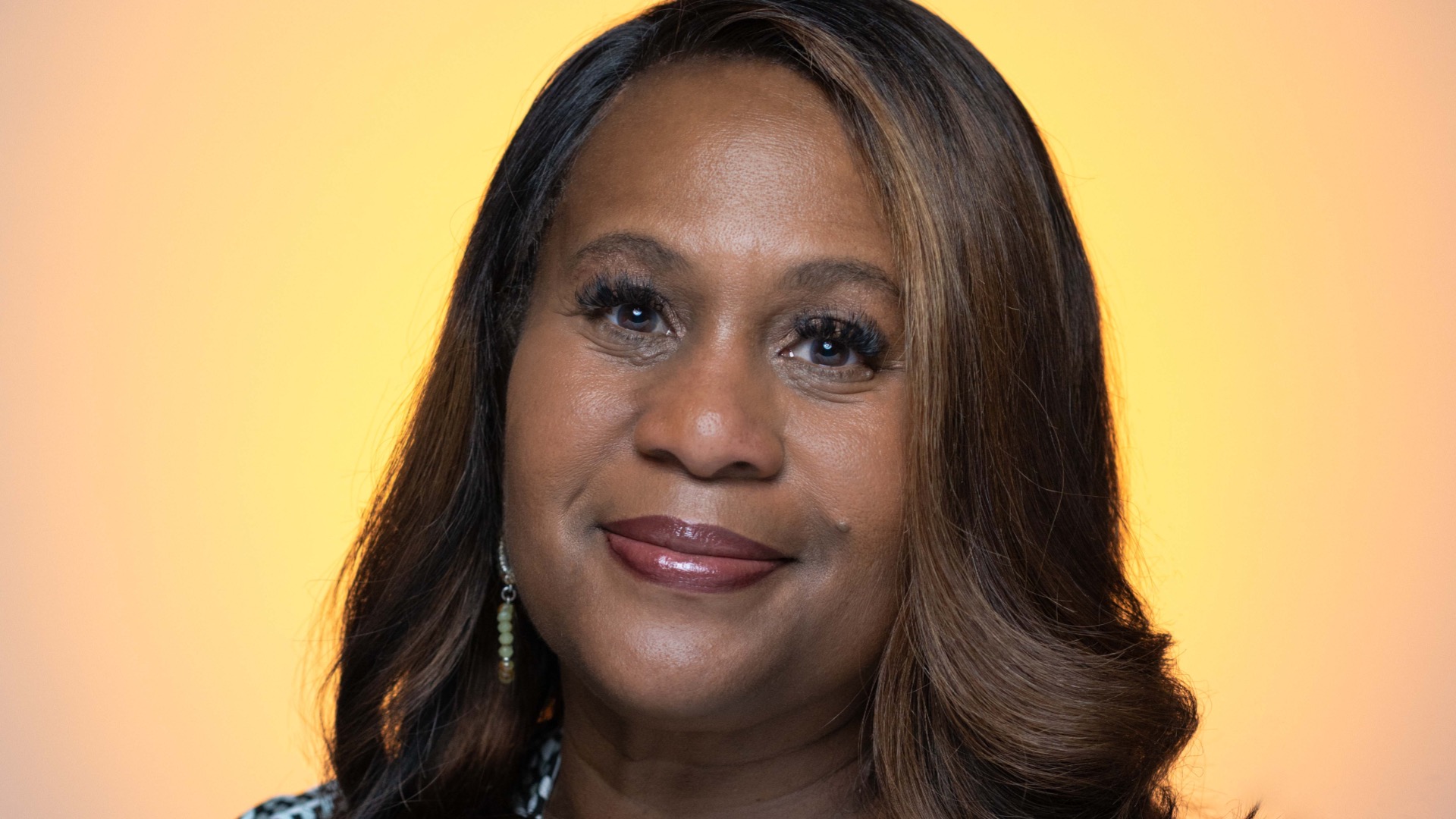
When Denise McCurry learned she would receive The LGBTQ+ Center of Southern Nevada’s Center Legacy Award, she didn’t try to play it cool. The call came about three weeks before our interview.. “I was super honored,” she says. “My initial inclination was, ‘I probably don’t deserve it,’ but I’m glad they’re giving me the award. I’ve served The Center for a long time, and I never did it for awards—it’s just been a joy.”
That mix of humility and purpose is classic McCurry. A Las Vegas attorney and long-time community leader, she’s spent years showing up—on boards, at fundraisers, and in the day-to-day service work that turns values into care. She frames her motivation simply: inclusion that people can feel, equity that changes outcomes, and volunteerism that meets people where they are.
“Legacy,” she says, “means leaving something behind that others can aspire to. I hope mine is a legacy of volunteerism—of giving to people who may not have as many tools or opportunities and helping provide those.”
From the early days to a citywide lifeline
McCurry’s relationship with The Center stretches back to her earliest days in Las Vegas. “When I first came to Vegas, I used to go to The Center when it was over in Commercial Center,” she recalls. She quickly got involved—serving on the board for Betty’s Outrageous Adventures, helping host events at both the former site and The Center’s current home, and, for the last eight years, serving on The Center’s board.
Those roles gave her a clear view of what matters most: closing gaps for people who are too often ignored. “There are still families dropping their kids off because they’ve come out and are no longer welcomed at home,” she says, steady but firm. “We’re able to provide support for them. Those are some of the least-served people in our community. In those moments, I think, yes—we’re doing what we need to do.”
She points to The Switch Closet as another concrete example—gender-affirming clothing and essentials for people who are transitioning or anyone who needs help presenting as themselves. “Something as simple as the right clothes can change how you move through the world.”
Inclusion first. Equity always.
In a time when DEI is often distorted for political gain, McCurry answers with clarity. “The most important portion of DEI is the inclusion-first portion,” she explains. “You can have diversity without everyone being included. And you need equity as well.” She rejects the notion that pretending not to see difference is virtuous. “I don’t subscribe to ‘I don’t see color’ or ‘I don’t see sexuality.’ None of us are clear. You need to see me in my totality.”
That perspective is lived, not theoretical. As a woman of color, McCurry never had the option to blend into the majority. “When you’re a person of color, you can’t hide who you are when you walk into a room,” she says. “I can hide that I’m gay; I can hide other things. But I’ve never been able to pass for what’s considered the norm.” For her, advocacy doesn’t feel risky so much as necessary—an extension of moving through the world unapologetically. “If you can never pass for what is considered the norm, advocacy isn’t risky—it’s just life.”
Care you can touch
Ask McCurry for the clearest example of The Center’s impact and she answers immediately: the health center. “I’d point to the new clinic—actually the existing clinic at the main location, too—but specifically the new clinic,” she says, praising its comprehensive, under-one-roof model. “The services are for everyone in the community, including people who may not identify as LGBTQ+. It’s a safe space.”
What she loves most is the continuity. “You can get your blood work done, be seen by a clinician, and get your prescription filled at the pharmacy—everything in one place. And you can get behavioral and mental health services there, too.” She uses those services herself, and she highlights the first moment that sets the tone: “Just having people at the front desk—someone who can greet you when you walk in and make sure your needs are going to be met—that matters.”
“Lawyer” is the job. “Connector” is the work.
McCurry downplays the résumé. “I’m a lawyer. A lawyer is what I do; it’s not necessarily who I am,” she says. But she credits the profession for the doors it opened—to boards and volunteer roles with The Center, the Betty’s, Shine a Light Foundation, March of Dimes, Southern Nevada Coalition Concerned Women, the Urban League, and more. It’s about connection—linking institutions, donors, volunteers, and services so more neighbors get help when they need it.
What community should feel like
Looking ahead, McCurry doesn’t reach for grand metaphors. She reaches for outcomes: a community where people—across identities, ages, income levels, and life experiences—are accepted, seen, and celebrated. Not tolerated. Seen. That means affirming clothing and housing support for youth, culturally competent clinical care, mental-health services without stigma, and welcoming reception teams. Inclusion is the standard. Equity is how we get there. Legacy is what remains when we refuse to compromise on either.
What this honor proves
McCurry treats the award as proof that showing up matters. She shared the news first with family—her sister, her parents—then friends. But she hopes the spotlight lands on the work itself: the health center, the Switch Closet, the calm welcome at reception. Her message to LGBTQ+ Nevadans is brief and essential: “Keep fighting. Stay strong.”
As we wrap, she leaves one request for the year ahead: that The Center stay open, expand where needed, and keep saying yes to the people who rely on it. It’s the kind of legacy she values most—quiet, steady, and built one act of care at a time.